



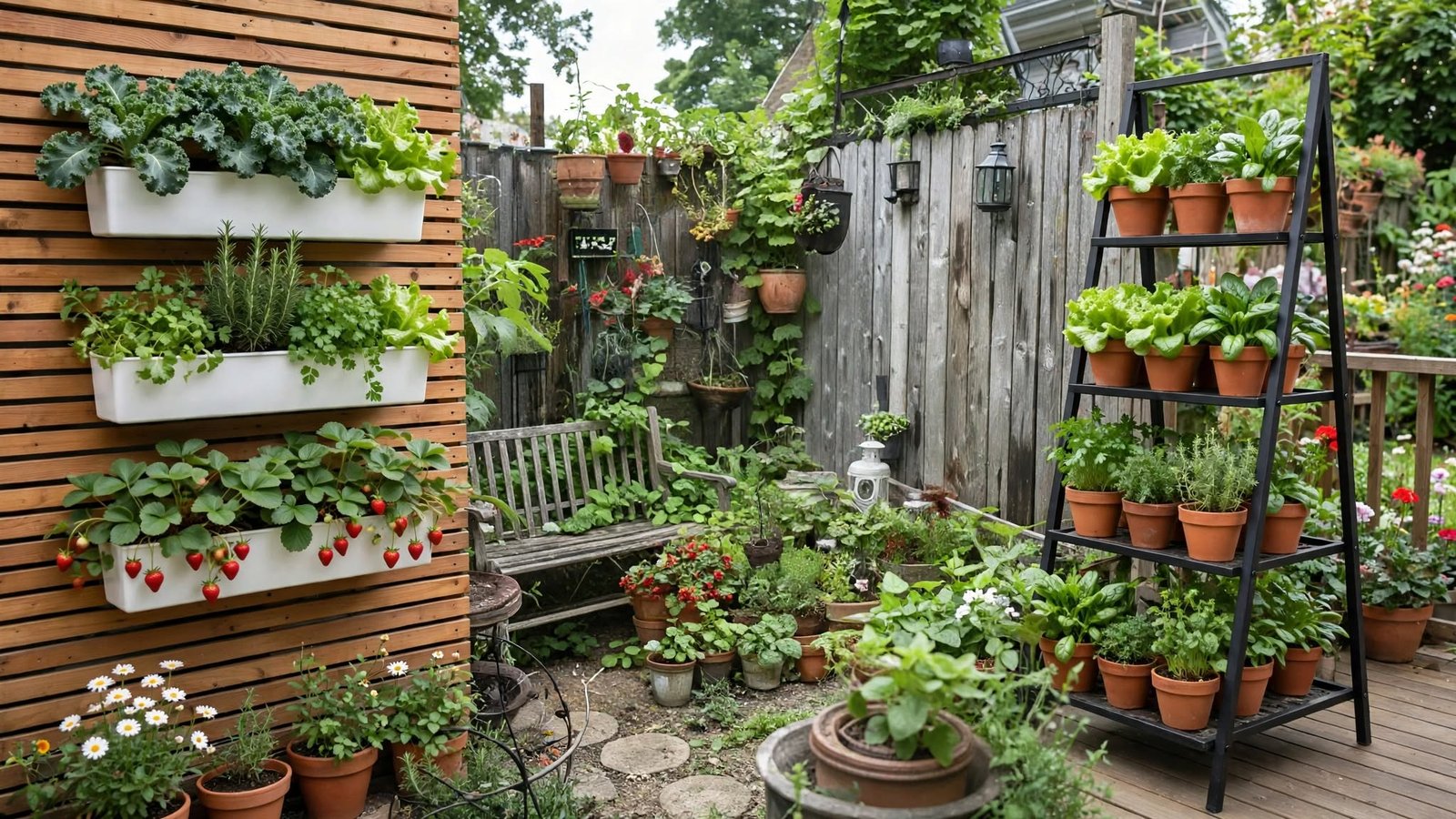
Creating a kitchen garden does not require a large backyard, expensive equipment, or professional gardening skills. With the right pots, containers, and plant choices, you can grow fresh herbs, leafy vegetables, and even fruiting plants in a small balcony, sunny windowsill, patio, rooftop, or unused corner of your home.
The best small kitchen garden ideas using pots and containers focus on saving space, choosing suitable plants, and making everyday gardening easy to manage. By arranging containers creatively and providing the right amount of sunlight, water, and nutrients, you can turn even a limited area into a productive garden that supplies fresh ingredients for your meals.
Container gardening is especially convenient for beginners because you can move pots when sunlight changes, separate plants according to their needs, and start with just a few inexpensive supplies. Whether you want a simple herb collection or a variety of homegrown vegetables, a well-planned container garden can fit naturally into your daily routine.
1. Choose the Right Pots for Your Kitchen Garden
Choosing suitable pots is the first step toward creating a healthy and productive container garden. Different plants require different amounts of root space, so the size and depth of each container should match the plant you intend to grow. Small herb plants can often thrive in modest pots, while tomatoes, chillies, eggplants, and other larger vegetables need wider or deeper containers to support their roots and continued growth.
Clay pots are attractive and allow moisture to evaporate through their sides, which can help keep the growing medium well aerated but also means they may dry out faster. Plastic pots are lightweight and retain moisture for longer, making them useful for balconies and rooftops, while fabric grow bags offer flexibility and good airflow around roots. Whatever material you choose, make sure the container is sturdy, food-safe, and equipped with drainage holes to prevent excess water from collecting around the roots.
2. Grow Fresh Herbs in Small Containers
Herbs are among the easiest plants to grow in a small kitchen garden because many varieties fit comfortably into individual containers.Herbs like basil, parsley, mint, coriander, and chives add fresh flavor to everyday meals, including soups, salads, curries, and sauces.
Keeping them close to your kitchen also makes harvesting quick and convenient.
Use separate pots for herbs with different growth habits or watering needs. Mint, for example, spreads vigorously and is best kept in its own container, while basil generally prefers warmth and plenty of light. Coriander can grow well in a suitable pot but may bolt quickly during hot weather, so sowing it during a cooler period and providing some afternoon protection can help extend the harvest.
3. Create a Container Garden on Your Balcony
A balcony can become a productive kitchen garden when you use its space carefully. Instead of scattering pots across the floor, arrange containers along suitable walls, use narrow plant stands, and consider secure railing planters where permitted. This layout keeps the area organized while leaving enough room to walk, water plants, and enjoy the outdoor space.
Select plants based on how much sunlight your balcony gets throughout the day. A bright balcony may support cherry tomatoes, chillies, basil, and other sun-loving plants, while a partially shaded area may be more suitable for certain leafy greens and herbs. Secure containers against strong winds, ensure water drains safely, and avoid overloading balconies with heavy pots filled with wet soil.
4. Use Recycled Containers for Budget-Friendly Gardening
You can start growing vegetables at home without spending money on new pots. Reuse clean, food-safe buckets, sturdy tubs, or other suitable containers to create affordable planters while reducing household waste. Before planting, wash each container thoroughly and add drainage holes to allow excess water to escape, then fill it with a suitable potting mix.
Always consider the material and its previous use before repurposing a container for edible plants. Avoid containers that held pesticides, industrial chemicals, or other hazardous substances, and be cautious with materials that may release unwanted substances into the soil. Thin containers may also deteriorate in strong sunlight, so choose durable options that can withstand outdoor conditions.
5. Grow Vegetables in Large Pots
Larger pots make it possible to grow vegetables that need more root space than small herb containers can provide. Tomatoes, chillies, dwarf eggplants, and compact varieties of peppers can perform well in appropriately sized pots when they receive sufficient sunlight, nutrients, and water. Growing these crops at home allows you to harvest fresh produce without dedicating an entire garden bed to each plant.
Before planting, check the mature size of your chosen vegetable and select a container accordingly. A compact tomato plant generally needs a substantially larger pot than a small herb, and taller varieties may require a stake or cage for support. Use a high-quality potting mix, position the container in a suitable sunny spot, and water consistently without leaving the roots permanently saturated.
6. Make a Vertical Garden with Stacked Pots
Stacked pots are an effective way to grow several plants while using very little floor space. You can arrange containers on a sturdy tiered stand or use a purpose-designed vertical planter with separate planting pockets. This arrangement is particularly useful for herbs, strawberries, and compact leafy vegetables that do not require deep root space.
A successful vertical garden needs more than an attractive arrangement. Upper containers may dry out quickly, and plants on lower levels can receive less sunlight, so position each variety according to its light and moisture requirements. Ensure that the entire structure is stable, that water can drain freely, and that every plant remains accessible for harvesting and routine care.
7. Turn a Sunny Windowsill into a Mini Kitchen Garden
A sunny windowsill can provide an excellent starting point for home gardening, particularly if outdoor space is unavailable. You can arrange small pots of basil, parsley, chives, and other herbs on a sunny windowsill, keeping fresh ingredients within easy reach whenever you cook. A narrow windowsill planter can also accommodate certain leafy greens if the container offers enough depth and the light is adequate.
Observe the window throughout the day before deciding which plants to grow there. A windowsill receiving several hours of direct sunlight may support a wider selection of crops than one that remains shaded for most of the day. Use containers with drainage trays where appropriate, protect plants from excessive heat against glass, and avoid allowing water to spill onto wooden frames or indoor surfaces.
8. Grow Leafy Vegetables in Shallow Containers
Leafy vegetables are useful choices for small container gardens because many varieties grow well without the deep root space required by larger crops. Lettuce, spinach, arugula, and some Asian greens can be planted in rectangular planters or wide, shallow containers, provided the growing medium is deep enough for the selected variety. Their compact growth makes them suitable for balconies, patios, and bright outdoor corners.
For a more consistent harvest, sow seeds in small batches at regular intervals rather than planting everything at once. Many leafy greens allow you to harvest outer leaves while leaving the central growing point intact, giving the plant an opportunity to produce more growth. In hot weather, choose heat-tolerant varieties where possible and provide partial shade during the hottest part of the day if the leaves begin wilting or the plants bolt prematurely.
9. Grow Chillies in Individual Pots
Chilli plants are a practical choice for home container gardening because many varieties grow into manageable bushes and produce useful quantities of fruit. They can be placed on sunny balconies, patios, rooftops, or other outdoor areas where they receive sufficient light and warmth. A single healthy plant may provide fresh chillies for everyday cooking throughout its productive period.
Select a container that allows the roots to develop properly and provides room for the plant to grow without becoming unstable. Use a free-draining potting mix, water when the upper layer begins to dry, and provide support if the plant becomes top-heavy with fruit. Avoid excessive nitrogen fertilizer, which can encourage leafy growth at the expense of flowering and fruit production.
10. Use Rectangular Planters to Save Space
Rectangular planters are particularly useful when you want to grow several plants along a narrow balcony, windowsill, or patio wall. Their shape allows them to fit neatly beside railings or along edges where round pots might waste valuable space. Depending on the planter’s dimensions, you can grow a row of herbs, spring onions, or compact leafy vegetables in an organized arrangement.
Although rectangular containers make efficient use of space, plants still need enough room to grow. Avoid packing seedlings too closely together, because overcrowding can reduce airflow and create competition for moisture and nutrients. Check the spacing recommendations for each crop, and group plants with similar watering and sunlight requirements to make maintenance easier.
11. Grow Tomatoes in Containers with Proper Support
Tomatoes are popular in kitchen gardens because fresh fruit can be used in salads, sandwiches, sauces, and cooked meals. Compact or determinate varieties are often easier to manage in containers than vigorous indeterminate types, although both can grow successfully when given adequate space and support. Cherry tomatoes are another useful option for gardeners who want regular harvests from a limited area.
Choose a large pot with drainage holes and fill it with a suitable container-growing mix. Place the pot in a location that receives several hours of direct sunlight, and install a stake or tomato cage early so that the growing plant can be supported before its branches become heavy. Keep the moisture level reasonably consistent, as repeated cycles of severe drying and heavy watering can contribute to problems such as fruit cracking and blossom-end rot.
12. Start a Kitchen Garden with Grow Bags
Grow bags provide a lightweight and flexible alternative to traditional pots. Available in different sizes, they can be used for herbs, leafy greens, chillies, tomatoes, and other vegetables that suit container growing. Fabric bags are particularly useful when you want to rearrange your garden or store containers away at the end of a growing season.
Because grow bags allow air and moisture to move through their sides, they may dry out faster than plastic containers, especially during hot or windy weather. Check the soil regularly rather than assuming that every plant needs water on the same schedule. Choose larger bags for crops with extensive roots, and place them on a suitable surface where drainage will not damage the surrounding area.
13. Combine Herbs and Vegetables in One Container
Combining compatible herbs and vegetables can help you grow more variety without adding many extra containers. For example, a sufficiently large planter may accommodate lettuce and spring onions, or basil alongside a suitable compact tomato plant. The arrangement can be attractive as well as practical, especially when you choose plants that complement the ingredients you use most often.
The most important consideration is compatibility. Plants sharing a container must have enough space and similar requirements for sunlight, water, and nutrients. Avoid combining vigorous plants with delicate, slow-growing crops, and remember that a container that looks spacious at planting time can become crowded as the plants mature.
14. Create a Kitchen Garden on Your Rooftop
A rooftop can offer plenty of sunlight and room for container gardening, making it a useful option when there is no yard or balcony. Arrange pots in groups according to plant type, place taller containers where they will not shade smaller crops, and maintain clear pathways so that watering and harvesting remain easy. A few carefully selected containers can produce herbs, chillies, leafy vegetables, and suitable tomato varieties.
Before setting up a rooftop garden, make sure the roof can safely support the additional weight of containers, growing medium, plants, and water. Wet soil can be considerably heavier than dry soil, and strong winds may overturn lightweight pots or damage taller plants. Rooftops can also become extremely hot, so monitor moisture closely and provide appropriate protection during severe heat.
15. Choose the Right Soil for Container Gardening
Healthy soil is essential for growing productive plants in pots and containers. Ordinary garden soil is often too dense for containers, where limited space and restricted drainage can make it difficult for roots to receive enough air. A quality potting mix designed for containers is generally a better choice because it balances moisture retention with drainage and aeration.
Different crops may benefit from different growing conditions, but most common kitchen garden plants need a medium that remains slightly moist without becoming waterlogged. Choose a mix suitable for edible plants, and add nutrients according to the requirements of the crop and the product instructions. Over time, nutrients are depleted as plants grow and produce leaves, flowers, or fruit, so feeding may be necessary to maintain healthy growth.
16. Water Potted Plants the Right Way
Container plants often need more frequent watering than plants growing in the ground because their limited growing medium can dry out quickly. The rate of drying depends on container size, material, plant maturity, sunlight, wind, and temperature. A small pot in direct summer sun may need attention much more often than a large container placed in a cooler, shaded location.
Check the moisture in the growing medium before watering instead of following a fixed schedule. When watering is needed, apply enough water to moisten the root zone thoroughly and allow excess water to drain from the bottom. Empty standing water from trays when appropriate, and avoid keeping plants continuously saturated, since oxygen-starved roots can become unhealthy even when the soil appears moist.
17. Arrange Pots According to Sunlight Requirements
The position of each pot can strongly influence plant health and harvest quality. Fruiting vegetables such as tomatoes and chillies generally perform best with several hours of direct sunlight, while some leafy greens and herbs can tolerate partial shade. Understanding these differences helps you use your limited growing space more effectively.
Observe how sunlight moves across your balcony, patio, or windowsill during the day. Place sun-loving crops in the brightest suitable positions and reserve areas with less direct light for plants that can tolerate those conditions. If your garden receives very little natural light, consider a suitable grow light rather than expecting sun-loving vegetables to produce well in a dim corner.
18. Maintain Your Container Garden Through the Seasons
Seasonal care is particularly important when growing plants in containers, as their roots are more exposed to changes in temperature than roots growing in the ground. In hot weather, containers may heat up quickly and lose moisture, while cold conditions can slow growth or damage sensitive plants. Adjust watering, plant placement, and crop selection according to the season rather than treating every month the same way.
In warmer parts of Punjab, including areas with very hot summers, many gardeners find that cool-season crops such as coriander, spinach, radishes, and peas perform better during the cooler months. Warm-season crops such as chillies and suitable tomato varieties are generally better suited to periods when temperatures support their growth, although extreme heat can interfere with flowering and fruit development. Check local planting guidance, select suitable varieties, and use shade during severe heat when necessary.
Common Mistakes to Avoid When Growing Plants in Pots
One frequent mistake is choosing a container based only on appearance rather than the plant’s needs. A decorative pot may look attractive but can restrict root development if it is too small or lack drainage if it has no suitable outlet for excess water. Always consider the plant’s mature size, root depth, and moisture requirements before deciding where to grow it.
Another problem is overcrowding containers with too many plants. Although planting several seedlings together may initially seem like a way to increase production, competition for light, water, and nutrients can leave all of them weaker. Follow recommended plant spacing, thin seedlings when necessary, and give larger crops their own containers whenever possible.
Overwatering and underwatering can also affect plant health. Some gardeners water every pot daily without checking the growing medium, while others wait until leaves wilt severely before responding. Learning to assess soil moisture and adapting your routine to the weather will help you maintain healthier roots and more consistent growth.
Finally, do not overlook regular inspection and harvesting. Check leaves for signs of pests or disease, remove badly damaged plant material, and harvest produce when it is ready. Early attention to small problems is usually easier than trying to revive a plant after it has become severely stressed.
Frequently Asked Questions
Which pots are best for a small kitchen garden?
Plastic pots, clay containers, fabric grow bags, and sturdy food-safe recycled containers can all work well. The best option depends on the plant, the available space, and how often you can water. Regardless of the material, choose a container with adequate root space and drainage holes.
What vegetables grow best in pots at home?
Chillies, compact tomatoes, lettuce, spinach, radishes, spring onions, and suitable varieties of eggplant can grow well in containers. Herbs such as basil, mint, and parsley are also useful choices for small spaces. Select varieties according to the amount of sunlight available and the size of your containers.
How many plants can I grow in one container?
The number depends on the container’s size and the mature dimensions of the plants. A small pot may suit one herb plant, while a large rectangular planter can accommodate several smaller plants when they are spaced correctly. Follow the spacing guidance for each crop rather than relying on the number of seedlings that fit at planting time.
Can I grow a kitchen garden indoors?
Yes, you can grow some herbs and leafy greens indoors if they receive sufficient natural light or suitable supplemental lighting. A bright windowsill is a good starting point, but a room with little daylight may not provide enough energy for healthy growth. Choose indoor-friendly crops, use containers with drainage, and provide good airflow.
How often should I water vegetables in containers?
There is no single watering schedule that works for every plant or location. Check the growing medium regularly and water when its moisture level indicates that the plant needs it. During hot, dry weather, containers may need more frequent watering, while cool or rainy conditions can reduce their water requirements.
Is container gardening suitable for beginners?
Container gardening is an excellent option for beginners because it allows you to start small and learn gradually. You can grow a few herbs, observe how they respond to sunlight and watering, and add vegetables as your confidence increases. Beginning with easy-to-manage plants makes the process less expensive and easier to maintain.
Final Thoughts
Small kitchen garden ideas using pots and containers make it possible to grow fresh ingredients even when outdoor space is limited. By choosing the right containers, selecting suitable plants, using quality potting mix, and arranging your garden according to sunlight, you can create a productive growing area in almost any home.
Start with a few herbs or easy vegetables that you regularly use in your cooking, and pay attention to how they respond to your local weather and available light. As you gain experience, you can experiment with larger pots, vertical planters, grow bags, and seasonal crops to make better use of every available corner.
The goal is not to grow everything at once but to create a garden that is convenient, healthy, and enjoyable to maintain. With thoughtful planning and consistent care, even a handful of containers can bring fresh flavors, greenery, and the satisfaction of homegrown food into your everyday life.

1 Comment
Pingback: Best Soil for Container Vegetables: 7 Secrets to Bigger, Healthier Harvests