



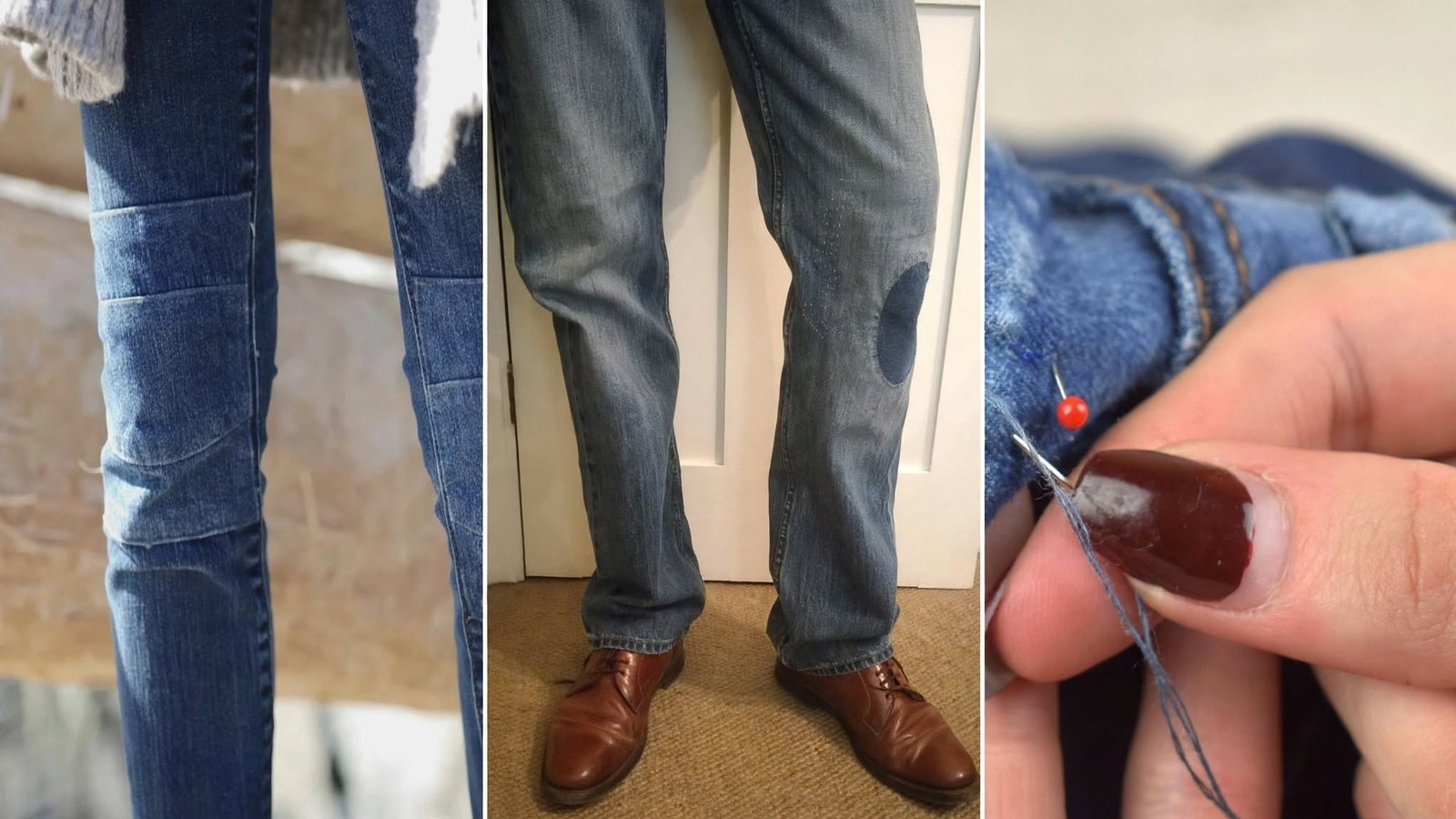
Patching jeans at the knee is one of the easiest ways to repair torn denim, strengthen worn-out fabric, and extend the life of your favorite pair of jeans. The most reliable method is to place a denim patch behind the damaged area and secure it with strong stitching that covers the hole and reinforces the surrounding fabric. With a suitable patch, a needle and thread or sewing machine, and a little patience, you can create a durable repair that withstands everyday movement.
Whether your jeans have a small tear, a large hole, or thinning fabric that is close to ripping, the right repair technique can help prevent further damage. The key is to prepare the fabric properly, choose a patch that matches the weight of your jeans, and stitch beyond the weakest edges rather than focusing only on the visible hole.
Why Patching Jeans at the Knee Is Important
The knees of jeans are constantly exposed to bending, stretching, and friction during everyday activities such as walking, sitting, and kneeling. Over time, these repeated movements can weaken the denim fibers, especially in jeans that are worn frequently or have a slim fit. Once the fabric begins to thin, even a small tear can quickly develop into a larger hole.
Repairing the knee before the damage spreads can save you money and help preserve a comfortable pair of jeans. A properly attached patch distributes tension across a wider section of fabric instead of allowing the weakened edges to carry all the stress. It can also improve the appearance of worn denim while giving you the option of creating either a nearly invisible repair or a decorative feature.
Materials Needed to Patch Jeans at the Knee
Before starting, gather a piece of denim, a sharp pair of fabric scissors, sewing pins or clips, a needle or sewing machine, and strong polyester or denim thread. Select a denim patch with a similar thickness to your jeans to ensure the repaired area remains comfortable and flexible without adding unnecessary bulk.
For jeans with a substantial hole, use a patch large enough to extend at least 2–3 centimeters beyond the damaged area on every side, increasing the margin if the surrounding fabric is badly worn. A matching blue denim patch can blend into the original fabric, while a contrasting shade creates a more noticeable repair. An iron can help smooth the fabric before sewing, and a thimble may make hand stitching easier when working through several layers of thick denim.
Step 1: Examine the Hole and Prepare the Jeans
Start by turning your jeans inside out and examining the knee carefully. Look beyond the visible hole to identify any thin, frayed, or weakened fabric around its edges, because these areas may tear again if they are left unsupported.
Wash and dry the jeans before repairing them if they are dirty, following the care instructions on the garment. Lay them flat on a table and smooth out wrinkles without stretching the fabric. Use scissors to trim only loose threads that interfere with the repair, and avoid cutting away healthy denim unnecessarily. If the hole has ragged edges, gently bring the remaining fabric together without pulling it so tightly that the knee becomes puckered.
Step 2: Cut a Suitable Denim Patch
Choose a piece of denim that is large enough to cover the hole and support the surrounding weakened area. The patch should extend beyond the damaged section on every side, allowing the stitches to attach to stronger fabric rather than ending close to the tear.
Round the corners of the patch slightly to reduce the chance of the edges lifting or catching during washing and wear. If you’re using fabric from an old pair of jeans, choose a section that is still durable and has no signs of thinning or stretching. For jeans made with elastane, a patch with a similar degree of stretch can improve comfort, although a stable denim patch can also work if it is positioned carefully and does not restrict knee movement.
Step 3: Position the Patch Behind the Knee Hole
Keep the jeans inside out and slide the patch behind the damaged area. Center it so that it covers the entire hole and extends well beyond the frayed edges, then check that the patch lies flat against the inside of the leg without folds or wrinkles.
Secure the patch with sewing pins or clips, keeping the fabric smooth but not stretched. Turn the jeans right side out briefly to check how the patch looks from the outside and make sure the hole is fully supported. If the knee opening is too small to reach comfortably, use a long, narrow sewing tool or carefully open a suitable seam if you have the skills to sew it closed again afterward. Avoid stitching through both sides of the jeans leg, as this can accidentally sew the front and back of the leg together.
Step 4: Sew Around the Patch for a Strong Hold
For a durable repair, sew around the patch’s perimeter using small, even stitches that pass through both the patch and the original denim. A sewing machine makes it easier to create consistent stitching, but hand sewing works well when the needle is strong enough for the fabric and the stitches are kept secure.
A straight stitch is suitable for many repairs, while a tight backstitch provides additional strength when sewing by hand. Follow the shape of the patch and keep the stitching close enough to its edge to hold it securely without allowing the fabric to fray beyond the seam. Reinforce the beginning and end of the stitching so that the thread does not unravel with repeated movement.
For jeans with a large hole or extensive thinning, sew additional rows around the damaged area or stitch across the opening in parallel lines. The goal is to distribute pressure over the patch instead of concentrating it along a single line of stitches.
Step 5: Reinforce the Hole and Weak Fabric
After attaching the patch, turn the jeans right side out and inspect the knee. The patch should sit flat behind the opening, and the surrounding denim should not pull tightly or form deep wrinkles when the leg is bent.
To strengthen the damaged section further, stitch back and forth across the hole and its weakened edges. This technique, often called darning or reinforcement stitching, helps hold frayed fibers in place and reduces the chance of the tear spreading. Use thread that matches the jeans if you want the repair to blend in, or choose a contrasting color for a visible, decorative finish.
For very small holes, closely spaced rows of stitching may be enough to reinforce the fabric. However, when the denim has worn thin across a wide area, a backing patch is usually more reliable than stitching directly over the hole alone.
How to Patch Jeans at the Knee Without a Sewing Machine
You can patch jeans by hand using a denim scrap, a sturdy needle, and strong thread. Place the patch behind the hole, secure it with pins, and sew around the edges using a backstitch or small running stitches reinforced with additional passes. Work slowly through thick sections, keeping the stitches close and evenly spaced.
Once the patch is attached, add rows of stitches across the hole to support the remaining fabric. A thimble can protect your finger when pushing the needle through multiple layers of denim. Hand sewing takes longer than machine stitching, but it gives you greater control over the placement and appearance of the repair.
If you do not want to sew, an iron-on denim patch is another option, provided the fabric and patch are suitable for heat application. Follow the manufacturer’s instructions for temperature, pressing time, and cooling, and check whether the patch is intended for the inside or outside of the garment. For knees that experience frequent bending, an iron-on patch may benefit from additional stitching around its edges because adhesive alone can loosen with repeated movement and washing.
How to Make a Knee Patch Look Neat and Natural
The appearance of a knee patch depends largely on the color, texture, size, and stitching method you choose. For a subtle repair, use denim that closely matches the original jeans and thread in a similar shade. Position the patch behind the hole and keep the stitching tidy so that the repair blends into the existing fabric as much as possible.
If the jeans have a faded or distressed finish, an exact color match may be difficult. In that case, choose a patch in a complementary shade or use decorative stitching to make the repair look intentional. A contrasting patch can add character to casual jeans, especially when the stitching follows the shape of the damaged area.
Avoid making the patch unnecessarily thick, particularly if the jeans are slim-fitting. Excessive layers can feel uncomfortable when the knee bends, while a patch that is too small may fail to support the weakened fabric. A well-sized patch with neat stitching usually provides a better balance of durability, comfort, and appearance.
Common Mistakes to Avoid When Patching Jeans
One common mistake is sewing only around the visible hole without supporting the surrounding fabric. The weakened denim may continue tearing just outside the repaired area, so the patch should extend into stronger fabric and cover any signs of thinning.
Another mistake is choosing thread that is too weak or making stitches that are too loose. Loose stitching can snag or unravel, while overly tight stitching can cause the denim to pucker and restrict movement. Use strong thread, secure the ends properly, and maintain even tension throughout the repair.
It is also important not to stretch the jeans while attaching the patch. If the fabric is pulled out of shape during sewing, the repaired knee may become uncomfortable or develop wrinkles when worn. Keep both layers flat and relaxed, and test the finished repair by gently bending the knee area before wearing the jeans.
How to Care for Patched Jeans
After repairing the knee, handle the jeans gently during the first wash and inspect the stitching before putting them through a regular laundry cycle. Turn the jeans inside out, use a suitable washing temperature, and avoid harsh treatment that could weaken the thread or damage an adhesive patch.
Air-drying is a practical choice because it reduces heat exposure and gives you an opportunity to check whether the patch remains securely attached. If you use a dryer, follow the garment’s care instructions and the requirements of any adhesive patch. Trim loose threads when necessary, but do not cut into the actual seam.
Check the repaired knee occasionally, especially if you wear the jeans for work, outdoor activities, or frequent kneeling. If the stitches begin to loosen or the surrounding fabric starts thinning again, reinforce the area early rather than waiting for another large hole to develop.
Final Thoughts
Patching jeans at the knee is a practical way to repair damaged denim, improve its durability, and keep a favorite pair in use for longer. The strongest approach is to place a suitable denim patch behind the hole, secure it through healthy surrounding fabric, and reinforce the damaged area with neat, durable stitching.
Whether you use a sewing machine or work by hand, careful preparation and the right patch size make a significant difference. With a little attention to stitch quality and fabric condition, you can create a repair that feels comfortable, looks neat, and stands up better to everyday wear.
