



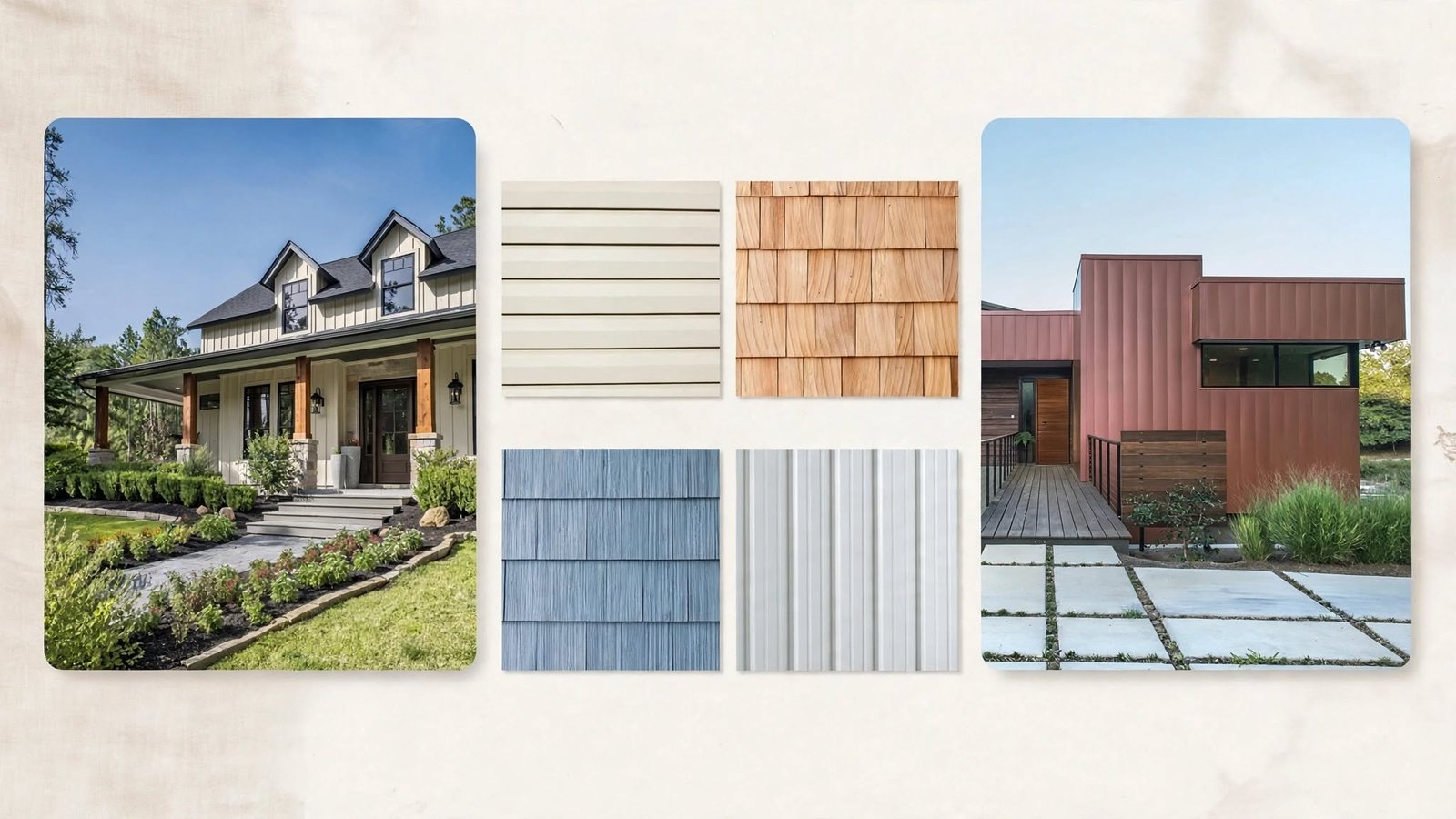
Choosing the right siding can dramatically change the appearance, durability, energy efficiency, and maintenance needs of a home. With so many types of siding available today, homeowners can choose from traditional materials, modern engineered products, and budget-friendly options designed to suit a wide range of architectural styles.
Siding does more than improve curb appeal. It creates an important protective layer between your home and the weather, helping shield exterior walls from moisture, wind, sunlight, and temperature changes. Understanding the differences between siding materials can make it easier to find an option that fits your home’s style, climate, maintenance preferences, and budget.
What Is Home Siding?
Home siding is the exterior material installed over a home’s walls to provide protection and create a finished appearance. Depending on the material and installation method, siding can also contribute to insulation, moisture management, and the overall energy performance of a home.
Modern siding comes in many colors, textures, profiles, and finishes. Some materials are designed to replicate the appearance of natural wood or stone, while others offer a distinctly contemporary look.
The best siding choice depends on several factors, including durability, maintenance, installation requirements, appearance, climate, and cost. Considering these factors together is generally more useful than choosing a material based on appearance alone.
1. Vinyl Siding
Vinyl siding is one of the most widely used siding materials because it combines affordability, versatility, and relatively low maintenance. It is manufactured primarily from PVC and is available in a broad selection of colors, textures, and profiles.
One of its biggest advantages is that it generally does not require painting. Routine cleaning with appropriate methods can help maintain its appearance, making vinyl siding an appealing option for homeowners who want to reduce ongoing exterior maintenance.
Vinyl siding can also mimic the appearance of traditional wood siding without requiring the same level of upkeep. However, quality and installation matter, and extreme heat or impact can damage some vinyl products.
2. Fiber Cement Siding
Fiber cement siding is an engineered material typically made from a combination of cement, cellulose fibers, sand, and other components. It has become popular because it can offer the appearance of wood while providing substantial resistance to common exterior problems.
Fiber cement siding is available in several styles, including lap siding, shingles, and panels. It can also be painted in a wide variety of colors, allowing homeowners to customize the exterior design.
This type of siding is generally resistant to moisture, insects, and fire compared with many traditional wood products. However, fiber cement is relatively heavy and typically requires careful installation, which can increase labor costs.
3. Wood Siding
Wood siding remains a classic choice for homeowners who want a natural and traditional exterior. Cedar, pine, redwood, and other wood species can be used in different siding profiles to create distinctive architectural appearances.
The natural grain and texture of real wood can provide a warmth that manufactured materials attempt to replicate. Wood siding can also be stained or painted, giving homeowners considerable flexibility when updating the exterior.
The main consideration is maintenance. Wood siding generally requires regular inspection and maintenance to help protect it from moisture, insects, rot, and weather-related deterioration.
4. Engineered Wood Siding
Engineered wood siding is designed to provide the appearance of natural wood while using manufactured materials and processes to improve consistency and performance. It is available in a variety of styles and finishes, making it suitable for both traditional and contemporary homes.
Compared with some natural wood products, engineered wood can offer more uniform dimensions and may require less maintenance when properly installed and maintained. Manufacturers also offer products designed to resist moisture and common exterior threats.
Homeowners should still pay close attention to installation instructions and moisture management. Proper flashing, sealing, drainage, and maintenance are important for maximizing the lifespan of engineered wood siding.
5. Metal Siding
Metal siding, particularly steel and aluminum siding, provides a durable alternative to several traditional exterior materials. It is available in different profiles and finishes and can be used to create anything from a traditional residential appearance to a modern industrial-inspired design.
Steel siding is known for its strength, while aluminum siding is relatively lightweight and does not rust in the same way steel does. Metal siding can also be resistant to insects and does not rot like natural wood.
Potential drawbacks include dents from significant impacts and, depending on the product, fading or surface wear over time. The type and quality of the finish can make a significant difference in long-term appearance and performance.
6. Stucco Siding
Stucco is a popular exterior finish in many regions and is particularly associated with Mediterranean, Spanish, Southwestern, and contemporary architectural styles. Traditional stucco is typically made from cementitious materials, sand, and water, although modern systems can use different formulations and layers.
A properly installed stucco system can create a seamless appearance with relatively few visible joints. Its texture and color options also allow homeowners to achieve a variety of exterior designs.
However, stucco requires careful installation because cracks and moisture intrusion can create problems if they are not properly addressed. Climate and construction details should therefore be considered before selecting stucco for a home.
7. Brick Siding
Brick is valued for its distinctive appearance, durability, and long service life. Traditional brick masonry can provide a substantial exterior finish, while brick veneer can offer a similar appearance with a different construction approach.
Brick siding can withstand many forms of weather exposure and generally requires relatively little routine maintenance. Its timeless appearance can also complement both historic and modern architectural designs.
The primary consideration is cost. Brick can be more expensive to install than some siding alternatives, particularly when specialized masonry work is required.
8. Stone and Stone Veneer Siding
Natural stone creates a high-end, textured appearance that can dramatically enhance a home’s exterior. Different types of stone provide different colors, patterns, and textures, allowing homeowners to create highly distinctive designs.
Stone veneer offers another approach by providing the appearance of natural stone with a different construction and weight profile. It can be used across an entire exterior or as an accent around entryways, chimneys, garages, and other architectural features.
Installation quality is especially important with stone and stone veneer. Proper preparation, drainage, flashing, and installation methods help protect the wall assembly from moisture-related problems.
9. Composite Siding
Composite siding is made from engineered materials designed to provide durability, consistent appearance, and resistance to various exterior conditions. Depending on the product, composite siding may be manufactured from combinations of wood fibers, polymers, resins, or other materials.
One of the attractions of composite siding is its ability to reproduce the appearance of other materials while offering different maintenance and performance characteristics. It is available in numerous colors, profiles, and textures.
Because composite siding varies considerably between manufacturers, homeowners should examine the product specifications rather than treating all composite siding as the same. Warranty coverage, installation requirements, moisture resistance, and maintenance instructions are particularly important factors to review.
10. Insulated Siding
Insulated siding is generally a form of siding with an attached layer of rigid insulation, often designed to fit closely against the exterior wall. The insulation can help reduce thermal bridging and may contribute to improved comfort and energy performance.
Insulated siding is available in several styles, including products designed to resemble traditional horizontal lap siding. This allows homeowners to combine a familiar exterior appearance with additional insulation.
The actual energy benefits depend on the entire wall assembly, climate, existing insulation, installation quality, windows, air sealing, and other factors. Insulated siding should therefore be considered as one component of a home’s overall energy-efficiency strategy.
How to Choose the Right Type of Siding
Choosing between the different types of siding starts with understanding the priorities of your home. Appearance is important, but durability, maintenance, climate suitability, installation requirements, and long-term costs should also influence the decision.
For example, homeowners who want minimal routine maintenance may focus on vinyl, fiber cement, metal, or certain composite products. Those who prioritize a natural appearance may prefer wood or stone, while homeowners interested in a traditional masonry appearance may consider brick or brick veneer.
Climate is another major consideration. Siding must be able to handle the weather conditions common in the region, including humidity, heavy rainfall, strong sunlight, freezing temperatures, or high winds. A siding material that performs well in one environment may require different maintenance or installation considerations in another.
Siding Cost and Long-Term Value
The cost of siding depends on much more than the price of the material itself. Installation labor, removal of existing siding, wall preparation, trim, flashing, insulation, painting, and other construction requirements can significantly affect the final project cost.
Less expensive siding may have a lower initial price but require more maintenance over time. Conversely, a more expensive material may provide longer service life or lower maintenance requirements, although the higher upfront investment does not automatically make it the better choice for every homeowner.
When comparing siding costs, consider both the initial installation expense and the expected maintenance over the material’s useful life. Getting detailed estimates from qualified local contractors can provide a more realistic picture of the total project cost.
Siding Maintenance and Durability
Every siding material requires some level of maintenance, even products marketed as low-maintenance. Regular inspections can help homeowners identify loose panels, cracks, damaged finishes, deteriorating caulk, moisture problems, or other issues before they become more expensive repairs.
Cleaning requirements vary considerably among siding materials. Some products may need occasional washing, while wood siding may require painting or staining and more frequent inspections for moisture and insects.
Proper installation is just as important as material selection. Even a highly durable siding product can experience premature problems if water is allowed to enter behind the siding or if essential components such as flashing and drainage systems are improperly installed.
Siding and Curb Appeal
Siding has a major influence on the visual character of a home because it covers such a large portion of the exterior. Color, texture, profile, trim, and installation pattern can all affect how large, traditional, modern, or distinctive a property appears.
Horizontal lap siding can create a familiar traditional look, while vertical panels can emphasize the height of a building. Shingle-style siding, board-and-batten designs, and mixed-material exteriors can add visual interest when used thoughtfully.
Color selection should also take the home’s architecture, roof, windows, doors, and surrounding environment into account. A coordinated exterior generally creates a more cohesive appearance than choosing siding color in isolation.
Can You Combine Different Types of Siding?
Combining siding materials is an increasingly popular way to create visual contrast and highlight architectural features. A home might use one primary siding material across most walls while incorporating stone veneer, shingles, metal panels, or another material as an accent.
Mixed siding can help define sections of a house, such as gables, porches, entryways, or upper stories. It can also be useful when homeowners want to add character without covering the entire exterior in a more expensive material.
The key is coordination. Materials should complement one another in terms of color, texture, scale, and architectural style so that the combination feels intentional rather than visually disconnected.
Frequently Asked Questions About Types of Siding
What is the most common type of siding?
Vinyl siding is among the most common residential siding choices because of its broad availability, relatively affordable cost, variety of styles, and low-maintenance characteristics. However, popularity varies by region, housing style, climate, and construction practices.
Which siding requires the least maintenance?
Several siding materials can be considered relatively low maintenance, including vinyl, some metal products, fiber cement, and certain engineered or composite siding products. The actual maintenance requirements depend on the specific product, installation, local climate, and manufacturer’s recommendations.
Is wood siding still a good choice?
Wood siding can be an excellent choice for homeowners who value natural appearance and are prepared to perform regular maintenance. Painting, staining, moisture protection, and inspections can help preserve wood siding and extend its service life.
Which siding is most durable?
Durability depends on the specific material, product quality, installation, climate, and maintenance. Fiber cement, brick, stone, and certain metal siding products can provide substantial durability, but no siding material is completely maintenance-free or immune to damage.
Does new siding improve home value?
New siding can improve a home’s exterior appearance and may contribute to its overall market appeal. The financial return from a siding project varies based on the material, installation quality, local housing market, and condition of the existing exterior.
Final Thoughts
The best type of siding for a home depends on a combination of appearance, durability, maintenance, climate, installation requirements, and budget. Vinyl, fiber cement, wood, engineered wood, metal, stucco, brick, stone veneer, composite, and insulated siding each offer different advantages and considerations.
Before making a final decision, compare several materials and obtain professional estimates that account for both installation and long-term maintenance. By looking beyond appearance and considering how each siding option will perform on your specific home, you can choose an exterior solution that provides the balance of style, protection, and practicality you need.

1 Comment
Pingback: Honeywell Thermostat Return Meaning Explained: How It Affects Your HVAC System