



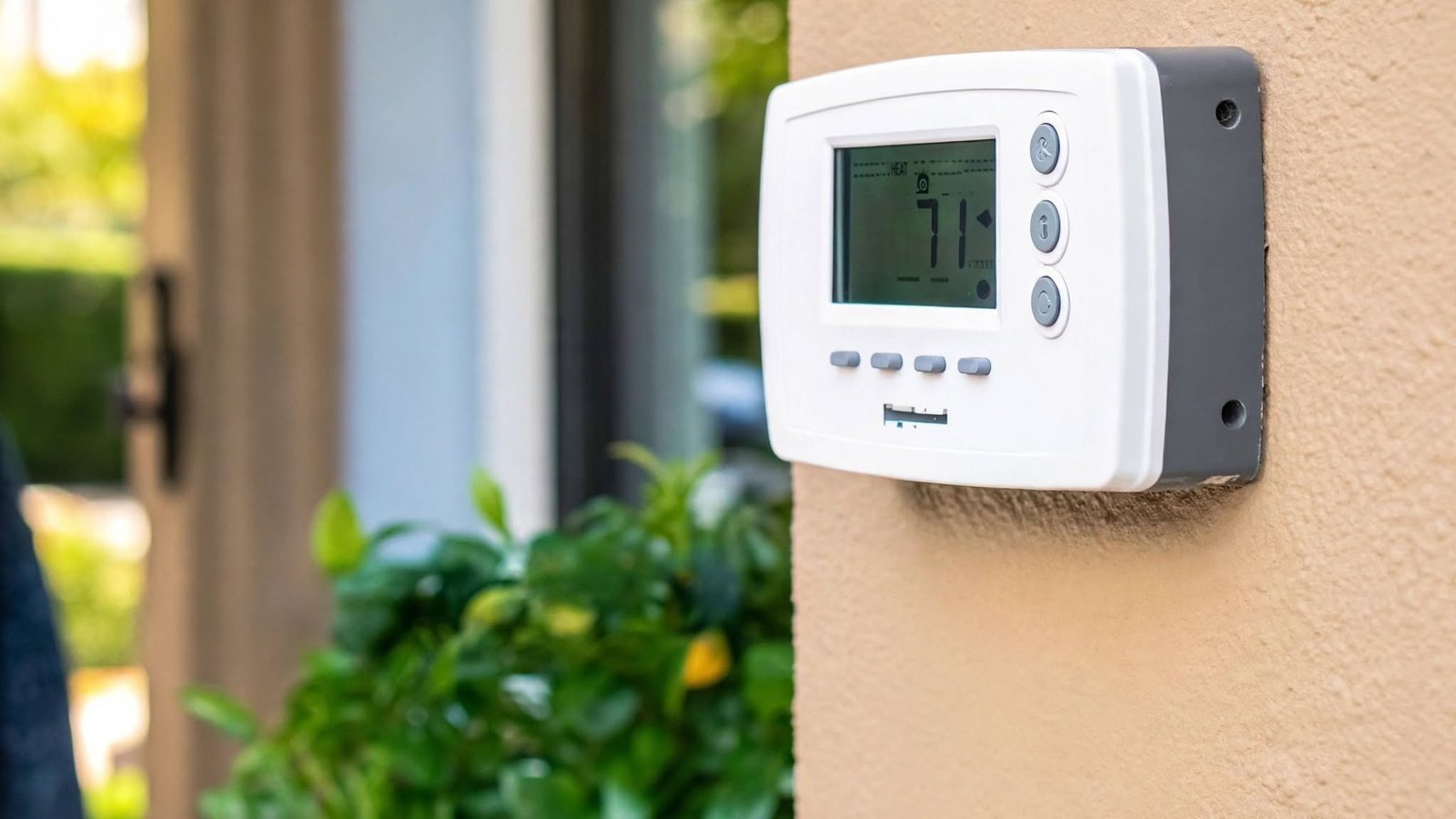
If you have noticed the word “Return” on your Honeywell thermostat or HVAC system and are unsure what it means, you are not alone. Thermostat terminology can sometimes be confusing, especially when a display shows a word that seems to describe an action rather than a temperature or setting.
In most HVAC systems, the term return refers to the return-air side of the system. Return air is the air that is pulled from the rooms in your home and sent back toward the heating or cooling equipment.
Understanding what “return” means can help you better understand how your Honeywell thermostat and HVAC system work together. It can also make it easier to identify airflow problems, temperature inconsistencies, or installation issues when something does not seem right.
What Does “Return” Mean on a Honeywell Thermostat?
The word “return” generally relates to return air, which is the air that travels from your living space back to the HVAC system. Your heating or cooling system needs a continuous flow of air to operate efficiently, and the return side is an important part of that process.
When your HVAC system is running, air from inside your home is drawn through return vents. That air then travels through ductwork toward the furnace, air conditioner, heat pump, or air handler, depending on the type of system installed in your home.
After the air is processed by the HVAC equipment, it is sent back into your rooms through supply vents. This creates a continuous circulation pattern in which conditioned air enters the living space while existing indoor air is drawn back through the return system.
How Return Air Works With Your HVAC System
Your HVAC system relies on both supply air and return air to maintain indoor temperatures. Supply vents distribute heated or cooled air into your rooms, while return vents collect indoor air and carry it back to the equipment.
This process allows the system to repeatedly condition the air instead of constantly relying on completely new outdoor air. As a result, proper return airflow is essential for maintaining consistent temperatures throughout your home.
For example, when your air conditioner is operating, warm indoor air is pulled through the return system. The HVAC equipment removes heat from that air before sending the cooler air back through the supply vents.
The same basic circulation principle applies during heating. Indoor air travels through the return system, passes through the heating equipment, and is then redistributed throughout the house at a higher temperature.
Is “Return” a Setting on a Honeywell Thermostat?
Whether “return” represents a thermostat setting, a system label, or simply terminology associated with the HVAC installation depends on the specific Honeywell thermostat model and system configuration.
Honeywell produces a wide range of thermostats, including programmable, non-programmable, smart, and equipment-specific models. Their displays and menus can therefore differ considerably from one model to another.
If you are seeing the word “Return” directly on the thermostat screen, it is important to distinguish it from a physical return vent or return-air label elsewhere in the HVAC system. The exact meaning can depend on where and how the word appears.
Looking at the thermostat’s model number and installation documentation is often the easiest way to determine exactly what a particular display message means. This is especially important if the thermostat is connected to a heat pump, multi-stage system, humidifier, dehumidifier, or other HVAC accessories.
Why Return Air Matters for Temperature Control
Return airflow has a direct effect on how effectively your HVAC system can heat or cool your home. When return air can move freely through the system, the equipment can properly circulate indoor air and respond to the thermostat’s temperature settings.
A restricted return path can make the HVAC system work harder than necessary. In some situations, restricted airflow may also contribute to uneven temperatures, longer heating or cooling cycles, reduced comfort, or increased energy consumption.
For this reason, return vents should generally remain unobstructed. Furniture, curtains, boxes, rugs, or other household objects placed directly over or in front of return openings can interfere with the movement of air.
What Happens When Return Airflow Is Restricted?
A restricted return-air system can affect the entire HVAC cycle. If the equipment cannot draw enough air from the home, the system may not operate as efficiently as intended.
You might notice that some rooms feel warmer or cooler than others, even though the thermostat appears to be maintaining the selected temperature. In other cases, the HVAC system may run for unusually long periods while struggling to reach the desired setting.
Airflow problems can have several possible causes, including a dirty filter, blocked return vent, undersized ductwork, closed dampers, or other duct-system problems. The thermostat itself may not be the source of the problem.
If you consistently experience poor airflow or unusual HVAC operation, checking the easily accessible components is reasonable, but more complicated ductwork or equipment problems may require inspection by a qualified HVAC professional.
Return Air vs. Supply Air: Understanding the Difference
The simplest way to understand the HVAC airflow cycle is to think of return air as the air going back to the equipment and supply air as the conditioned air coming out of the equipment.
Return vents are commonly located on walls, ceilings, or in central areas of a home. They are often larger than supply registers because they need to move a substantial volume of air back toward the HVAC equipment.
Supply vents, on the other hand, are the openings where conditioned air enters individual rooms. Depending on the home’s design, supply registers may be installed in floors, walls, or ceilings.
Together, these two sides form the basic air-distribution loop that allows a central HVAC system to maintain indoor comfort.
Does the “Return” Meaning Indicate a Problem?
Seeing the word “return” does not automatically mean that your Honeywell thermostat or HVAC system has a fault. The word itself is associated with normal HVAC terminology and does not necessarily indicate an error condition.
However, if “Return” appears alongside an unusual warning, flashing display, unexpected system behavior, or another message, the complete display should be considered rather than interpreting the word by itself.
The thermostat model is also important because Honeywell uses different interfaces and terminology across its product range. A message or menu option on one thermostat may not have exactly the same meaning on another.
How Your Thermostat Controls the HVAC System
A thermostat acts as the control point for your HVAC system. It monitors indoor temperature and, depending on the system and thermostat configuration, tells the heating or cooling equipment when to operate.
When the measured temperature differs from the selected setting, the thermostat can initiate a heating or cooling cycle. The HVAC equipment then conditions the air and distributes it through the home’s duct system.
The return-air system supports this process by bringing indoor air back to the equipment. Without an effective return path, the system cannot circulate air as intended, even if the thermostat itself is functioning correctly.
Why a Clean Air Filter Is Important
The air filter is another important part of the return-air path. In many central HVAC systems, air passes through a filter before reaching the heating or cooling equipment.
The filter captures airborne particles such as dust and helps protect the HVAC equipment. Over time, however, a filter can become loaded with debris and restrict airflow if it is not replaced or maintained according to the manufacturer’s recommendations.
A dirty filter does not necessarily mean there is a problem with the Honeywell thermostat. Instead, it can create an airflow issue that affects how the entire HVAC system performs.
Can Return Air Affect Energy Efficiency?
Yes, return-air performance can influence HVAC efficiency. A system that has to work against significant airflow restrictions may have difficulty operating under its intended conditions.
Poor airflow can potentially lead to longer operating cycles and reduced comfort, which may increase energy use depending on the nature and severity of the problem. Maintaining clear return vents and following the recommended filter-maintenance schedule can help support normal system operation.
However, energy consumption depends on many factors, including outdoor temperature, insulation, equipment efficiency, thermostat settings, ductwork, home size, and HVAC system condition. The presence of a “return” label alone does not indicate high energy usage.
What Should You Do If You See “Return”?
The first step is to determine where the word “Return” appears and what else is shown on the thermostat display. If it is simply identifying a return-air function or part of the thermostat interface, it may require no corrective action.
If the thermostat is displaying an unfamiliar message together with “Return,” consult the documentation for your exact Honeywell model. The model number is usually located on the thermostat itself or behind the removable faceplate, depending on the design.
You can then compare the display with the manufacturer’s documentation and determine whether the message refers to a normal setting, a navigation option, an HVAC function, or an alert.
When to Contact an HVAC Professional
If you have checked the thermostat settings and basic airflow conditions but the HVAC system continues to behave unusually, professional assistance may be appropriate.
Persistent temperature differences, weak airflow, strange noises, repeated system cycling, unexpected shutdowns, or other abnormal behavior can have causes that are not visible from the thermostat.
An HVAC technician can inspect the return and supply ductwork, filter, blower, equipment, controls, and other components to determine whether an airflow or equipment issue is affecting system performance.
Final Thoughts on Honeywell Thermostat Return Meaning
The term “return” in HVAC terminology generally refers to the return-air side of the system, where indoor air travels back toward the heating or cooling equipment. It is a fundamental part of the air-circulation process in many central HVAC systems.
When your HVAC system operates normally, air moves through a continuous cycle: conditioned air leaves the equipment through the supply system, enters your rooms, and eventually travels back through the return system.
If you see “Return” on a Honeywell thermostat, the exact interpretation depends on the particular thermostat model and where the term appears on the display. Checking the model-specific documentation is the most reliable way to understand an unfamiliar message.
Keeping return vents unobstructed, maintaining the air filter as recommended, and paying attention to unusual HVAC behavior can help support proper airflow and comfortable indoor temperatures. If the system continues to show unexpected messages or performance problems, professional HVAC diagnosis can help identify the underlying cause.

1 Comment
Pingback: Why Bensons for Beds Is a Popular Choice for Bedroom Furniture