



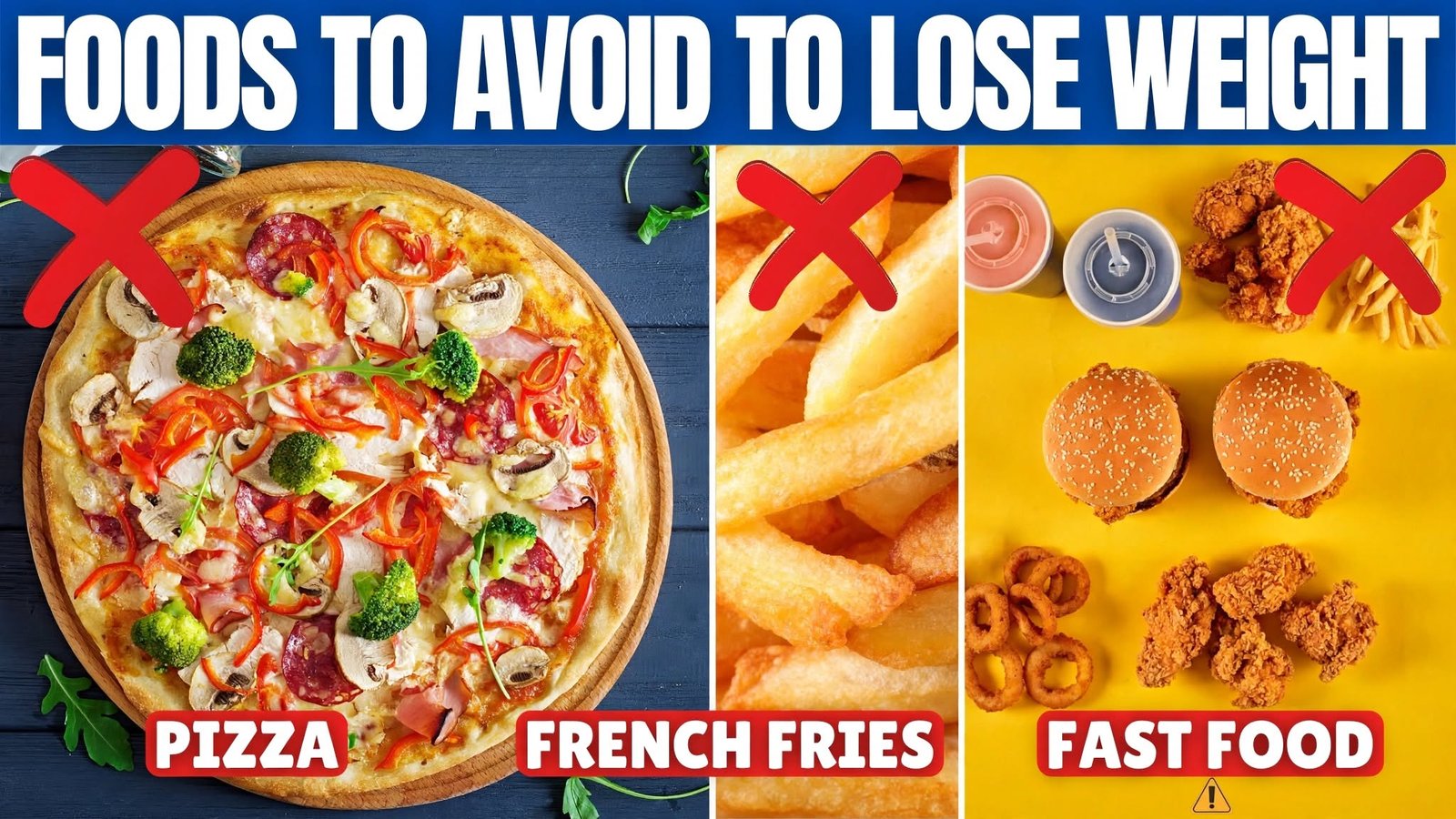
Losing weight is not simply about eating less food. The quality, portion size, and nutritional value of the foods you choose can have a major impact on your ability to create a sustainable calorie deficit while still feeling satisfied and energized.
Some foods are particularly easy to overeat because they are high in calories, added sugars, unhealthy fats, or refined carbohydrates. Understanding which foods to limit can make a weight-loss plan easier to follow without requiring extreme dieting or eliminating entire food groups.
1. Sugary Soft Drinks
Sugary soft drinks are among the easiest sources of excess calories to overlook when trying to lose weight. Regular soda, sweetened fizzy drinks, and similar beverages can contain substantial amounts of added sugar while providing very little nutritional value.
Because liquid calories are often less filling than solid foods, it is possible to consume a large amount of energy from beverages without feeling significantly fuller afterward. Replacing sugary drinks with water, unsweetened tea, or sparkling water can be a simple way to reduce unnecessary calorie intake.
2. Candy and Chocolate Bars
Candy, chocolate bars, and other confectionery products are typically high in added sugar and calories. They can be enjoyable occasionally, but eating them frequently can make it harder to maintain the calorie deficit needed for weight loss.
The biggest issue is often portion control. A small serving can fit into a balanced diet, but regularly eating large portions may add considerable calories without providing much protein, fiber, vitamins, or minerals.
3. Cakes, Cookies, and Pastries
Cakes, cookies, doughnuts, and pastries often combine refined flour, sugar, butter, oils, and other calorie-dense ingredients. This combination can make them both highly palatable and easy to overeat.
You do not necessarily need to eliminate these foods completely. However, limiting how often you eat them and paying attention to portion sizes can help you manage overall calorie intake while still allowing occasional treats.
4. French Fries and Fried Potatoes
Fried potatoes can be significantly more calorie-dense than potatoes prepared with minimal added fat. Deep frying adds oil, increasing the energy content of the meal.
French fries can also be easy to eat quickly and in large portions, particularly when served alongside burgers or other fast foods. Choosing baked, roasted, or air-fried potatoes with a controlled amount of oil can provide a more weight-loss-friendly alternative.
5. Fast Food Meals
Many fast-food meals contain a combination of refined carbohydrates, added fats, sauces, cheese, and large portions. Burgers, fried chicken meals, loaded sandwiches, and similar options can therefore provide a substantial amount of calories in a single sitting.
Fast food does not automatically prevent weight loss, but frequent large meals can make calorie management more difficult. Choosing smaller portions, grilled options, vegetables, and water instead of sugary drinks can make an occasional fast-food meal easier to fit into a balanced eating pattern.
6. Processed Meats
Processed meats such as sausages, bacon, hot dogs, and certain deli meats can be high in calories, saturated fat, and sodium depending on the product and preparation.
They may also be less filling per calorie than many minimally processed protein sources. For regular meals, consider alternatives such as eggs, fish, chicken, beans, lentils, or other nutrient-dense protein foods.
7. Sugary Breakfast Cereals
Some breakfast cereals contain considerable amounts of added sugar and relatively little fiber or protein. Eating a large bowl may therefore provide more calories and sugar than expected while leaving you hungry again relatively soon.
A more filling breakfast can include foods such as oats, plain yogurt, eggs, fruit, or whole-grain options. Combining protein and fiber can help make a meal more satisfying.
8. Sweetened Coffee Drinks
Coffee itself is generally low in calories when consumed without significant additions. The calorie content can rise considerably, however, when coffee is prepared with large amounts of flavored syrup, sugar, whipped cream, or sweetened creamers.
Specialty coffee drinks can sometimes resemble desserts in terms of their sugar and calorie content. If you drink coffee regularly while trying to lose weight, reducing added sugar and high-calorie toppings can be an easy adjustment.
9. Ice Cream and Frozen Desserts
Ice cream and other frozen desserts can contain significant amounts of added sugar and fat. Because they are often eaten as snacks rather than as part of a structured meal, it can also be easy to consume more than one serving.
You can still enjoy ice cream occasionally while losing weight. The key is to treat it as an occasional portion-controlled food rather than something that needs to be consumed freely every day.
10. White Bread and Refined Bakery Products
White bread and other products made primarily from refined flour are not inherently “bad,” but they can be less filling than higher-fiber whole-grain alternatives. This becomes more relevant when large portions are combined with calorie-dense spreads, sauces, or fillings.
Choosing whole-grain bread more often can increase fiber intake and may help meals feel more satisfying. Portion size still matters, because even nutritious carbohydrates contribute calories.
11. Sugary Sauces and Condiments
Ketchup, barbecue sauce, sweet chili sauce, salad dressings, and other condiments can add extra sugar, fat, and calories to otherwise moderate meals.
Because sauces are often used without measuring, their calories can be easy to underestimate. Using smaller portions or choosing lower-calorie versions can help control your overall intake without dramatically changing the meal itself.
12. Highly Processed Snack Foods
Chips, crackers, cheese-flavored snacks, and similar packaged foods are often designed to be highly appealing and easy to eat. Their combination of salt, fat, refined carbohydrates, and flavorings can encourage frequent snacking.
The problem is not necessarily one individual serving. The greater concern is repeatedly eating these foods directly from a large package, which can make portion control difficult.
13. High-Calorie Takeaway Foods
Pizza, creamy pasta dishes, fried appetizers, loaded wraps, and other takeaway meals can contain more calories than expected because of large portions, cooking oils, cheese, sauces, and processed ingredients.
If you enjoy takeaway food, you can make weight loss easier by choosing smaller portions and adding vegetables or lean protein. Saving part of a large meal for later can also help prevent accidental overeating.
14. Alcoholic Drinks
Alcohol can contribute a significant amount of energy while providing relatively little nutritional value. Cocktails can be particularly calorie-dense when they contain sugary mixers, syrups, juices, or cream.
Alcohol may also reduce inhibitions around food, making it easier to snack or choose high-calorie foods. Limiting alcohol or choosing lower-calorie options can therefore support weight-management efforts.
15. “Healthy” Foods That Are Easy to Overeat
Not every food that interferes with weight loss looks unhealthy. Nuts, nut butters, granola, dried fruit, smoothies, avocado, and certain energy bars can provide valuable nutrients but can also be calorie-dense.
The important distinction is between nutritious and low-calorie. A food can be healthy and still contribute a substantial number of calories when eaten in large quantities, so portion awareness remains important.
Why These Foods Can Make Weight Loss Difficult
The main reason these foods can interfere with weight loss is not that they are universally forbidden. Weight change is influenced largely by overall energy balance, and regularly consuming more energy than your body uses can make losing weight difficult.
Many highly processed and calorie-dense foods simply make this balance harder to manage. They can provide substantial calories without offering the same level of fullness that comes from meals containing adequate protein, fiber, and minimally processed foods.
What to Eat Instead
Instead of focusing entirely on foods to avoid when trying to lose weight, it can be more useful to build meals around foods that are nutritious and filling. Vegetables, fruits, whole grains, legumes, lean proteins, eggs, fish, and minimally processed foods can form the foundation of a balanced eating pattern.
Protein is particularly useful because it can help support fullness and preserve muscle during weight loss. Fiber-rich foods can also contribute to satiety while providing important nutrients for overall health.
You Do Not Have to Completely Eliminate Your Favorite Foods
One of the biggest mistakes people make when trying to lose weight is creating a list of foods that are completely forbidden. Extremely restrictive diets may be difficult to maintain and can make normal eating situations unnecessarily stressful.
A more sustainable approach is to eat nutritious foods most of the time while allowing reasonable portions of favorite foods. Weight loss does not require perfection; consistency over time is generally more important.
Pay Attention to Portion Sizes
Even nutritious foods can contribute to weight gain when portions are consistently larger than your body’s energy needs. Portion awareness is therefore just as important as food selection.
Eating slowly, using appropriate serving sizes, and paying attention to hunger and fullness signals can help you recognize how much food you actually need.
Be Careful With Liquid Calories
One of the most overlooked weight-loss mistakes is drinking calories without accounting for them. Sugary beverages, specialty coffees, milkshakes, smoothies, and alcoholic drinks can increase daily calorie intake quickly.
Water should generally be the main beverage for people trying to reduce unnecessary calorie consumption. Unsweetened tea and coffee can also be useful choices depending on individual preferences.
Read Nutrition Labels
Nutrition labels can help you identify foods that contain substantial amounts of added sugar, saturated fat, sodium, or calories. Comparing serving sizes is particularly important because the amount listed on the package may not reflect the amount you typically eat.
Learning to read labels can turn weight loss from a guessing game into a more informed process. You do not need to obsess over every number, but understanding what you are consuming can improve portion and food choices.
Focus on What You Can Add, Not Only What You Should Avoid
Successful weight loss is often easier when the focus shifts from restriction to nourishment. Adding vegetables, fruit, lean protein, whole grains, and high-fiber foods can naturally make meals more filling.
When your meals are satisfying, you may find it easier to reduce frequent cravings for highly processed snacks and sugary foods. This approach can also make a weight-loss diet feel more like a normal eating pattern rather than a temporary punishment.
Final Thoughts
Knowing which foods to avoid or limit when trying to lose weight can help you make better choices, but there is no single list of foods that everyone must completely eliminate. Foods such as sugary drinks, fried foods, pastries, processed snacks, and calorie-dense takeaway meals are worth limiting because they can make it easier to consume excess calories.
The most effective approach is usually a balanced one that emphasizes nutritious, filling foods while keeping highly processed and calorie-dense foods in moderation. By combining sensible portions, regular physical activity, adequate sleep, and consistent eating habits, you can create a more sustainable approach to weight management.
