



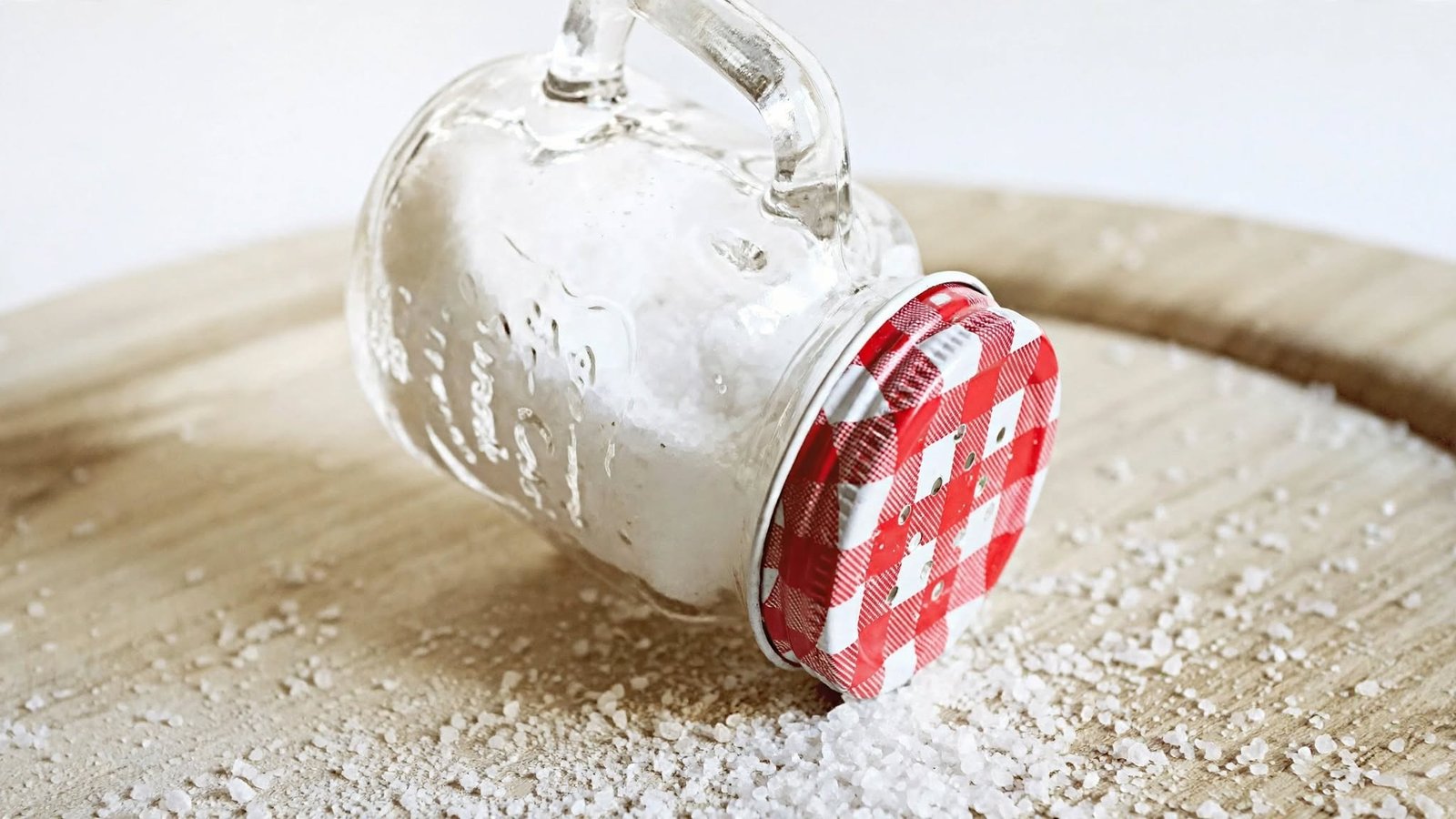
Yellow prussiate of soda is generally considered safe for consumption in the small amounts permitted in food-grade salt when it is used according to food safety regulations. Despite its unusual name, this additive is commonly used as an anti-caking agent to prevent salt crystals from sticking together, helping keep table salt dry, free-flowing, and easy to use.
The ingredient may sound concerning because the word prussiate is associated with cyanide chemistry. However, yellow prussiate of soda is the common name for sodium ferrocyanide, a chemical compound with different properties from free cyanide. Its safety depends on its chemical form, the amount used, and whether it meets food-grade standards.
For most healthy people, eating ordinary iodized or table salt containing approved amounts of sodium ferrocyanide is not considered a significant health concern. Nevertheless, understanding how this additive works, why it is used, and what its potential risks are can help consumers make informed decisions about the salt they use every day.
What Is Yellow Prussiate of Soda?
Yellow prussiate of soda, also known as sodium ferrocyanide, is a chemical compound with the formula Na₄[Fe(CN)₆]. It is used in certain food products, particularly salt, to prevent clumping caused by moisture and the formation of salt crystals sticking together. On ingredient labels, it may appear as sodium ferrocyanide, yellow prussiate of soda, or E535.
Although its name may sound unfamiliar, sodium ferrocyanide has a specific technological purpose in food production. Salt naturally attracts moisture from the surrounding air, and this moisture can cause individual crystals to bind together into hard lumps. An anti-caking agent helps reduce this problem, allowing salt to flow smoothly through a shaker and making it easier to measure during cooking.
Yellow prussiate of soda is typically added in very small quantities rather than used as a major ingredient. It does not serve as a preservative in the usual sense, nor is it added to make salt taste saltier. Its primary role is to improve the physical handling and storage of salt without substantially changing its flavor when used appropriately.
Why Is Yellow Prussiate of Soda Added to Table Salt?
The main reason manufacturers add yellow prussiate of soda to table salt is to prevent caking. Salt is exposed to humidity during manufacturing, packaging, transportation, and storage, and even a small amount of moisture can make it difficult to pour. This is especially inconvenient in humid climates, where salt may become lumpy even when the container is kept in a kitchen cupboard.
By helping salt crystals remain separate, sodium ferrocyanide improves the product’s consistency and convenience. Consumers can sprinkle salt more easily, measure it more accurately, and store it without dealing with large, hardened clumps. These practical benefits explain why anti-caking agents are used in many commercially produced salts.
The additive is not essential to every type of salt. Some specialty salts, coarse salts, and products marketed without anti-caking agents may rely on different processing methods or may be sold in forms that do not require the same degree of free-flowing performance. Choosing salt without this ingredient is possible, but the absence of an anti-caking agent does not automatically make one salt healthier than another.
Is Yellow Prussiate of Soda Safe to Eat?
Yes, yellow prussiate of soda is generally considered safe to eat when it is used in food-grade salt at levels permitted by applicable food regulations. Food safety assessments consider how a substance behaves in the body, how much people are likely to consume, and whether normal dietary exposure presents a meaningful risk. Approved uses are based on these considerations rather than simply on whether a chemical name sounds unfamiliar.
Sodium ferrocyanide contains cyanide groups chemically bound within a stable complex with iron. This structure is different from free cyanide, which is highly toxic because it interferes with the body’s ability to use oxygen. Under ordinary food-use conditions, sodium ferrocyanide is sufficiently stable that its presence in regulated table salt is not expected to cause cyanide poisoning.
However, this does not mean that every form, quantity, or use of the compound is automatically safe. Excessive exposure, contamination, improper handling, or conditions that alter the compound’s chemical stability may create different risks. The safety conclusion applies to approved food-grade uses, not to industrial chemicals, concentrated preparations, or attempts to consume the additive directly.
It is also important to distinguish the safety of this additive from the health effects of salt itself. Even when table salt contains an approved anti-caking agent, eating too much sodium can raise blood pressure and increase the risk of cardiovascular disease. For most consumers, controlling total salt intake is a more important everyday health consideration than avoiding an approved anti-caking agent in ordinary table salt.
Does Yellow Prussiate of Soda Contain Cyanide?
Yellow prussiate of soda contains cyanide groups as part of its chemical structure, which is why some consumers worry about its safety. The crucial distinction is that the cyanide groups in sodium ferrocyanide are tightly coordinated with iron, rather than freely available in the same way as cyanide ions from highly toxic cyanide compounds.
Chemical form matters greatly when evaluating toxicity. Two substances can contain the same element or chemical group but behave very differently in the body because of differences in their molecular structures, stability, and ability to release harmful components. Sodium ferrocyanide is an example of why a chemical name alone is not enough to determine whether a food additive is dangerous.
Under normal food-use conditions, the compound is not expected to release dangerous quantities of free cyanide. It is therefore misleading to assume that eating salt containing a permitted amount of sodium ferrocyanide is equivalent to consuming free cyanide. At the same time, the additive should only be used in approved food applications and handled according to appropriate safety standards.
What Are the Potential Side Effects of Yellow Prussiate of Soda?
For most people, sodium ferrocyanide in properly manufactured food-grade salt is not expected to cause harmful effects at permitted levels. Food safety evaluations have examined its absorption, toxicity, and potential long-term effects, with findings supporting its use under established conditions. This reassurance applies to regulated exposure, not to unlimited quantities or unapproved uses.
Research reviewed by food safety experts indicates that ferrocyanide compounds are absorbed poorly by the body and do not appear to accumulate significantly under normal dietary exposure. Studies have identified the kidneys as an organ that can be affected at sufficiently high exposure levels, which is one reason safety limits are important. Scientific assessments have also found no safety concern regarding genotoxicity or carcinogenicity at currently authorized food-use levels.
It is worth remembering that evidence about a food additive does not always address every possible circumstance. Individual exposure can vary according to dietary habits, the amount of salt consumed, and the concentration of the additive in a product. Although ordinary consumption of regulated table salt is not generally considered a cause for concern, avoiding excessive salt intake remains an important part of a healthy diet.
Consumers should also avoid confusing the additive’s approved use with exposure to industrial-grade sodium ferrocyanide. Chemicals intended for industrial applications may have different purity specifications and are not necessarily suitable for food. Only products manufactured and sold for their intended food use should be consumed.
Is Yellow Prussiate of Soda Carcinogenic?
Current scientific assessments do not indicate that sodium ferrocyanide poses a cancer risk at the levels authorized for use as a food additive. In its evaluation of ferrocyanide compounds, the European Food Safety Authority concluded that their authorized uses and use levels did not raise a safety concern, including with respect to carcinogenicity.
This distinction matters because concerns about chemical ingredients often arise from their names rather than from evidence about their actual behavior. The presence of a cyanide-related chemical group does not automatically mean that a substance causes cancer or behaves like free cyanide in the human body. Its structure, stability, dose, and biological effects all matter when assessing risk.
However, no food additive should be described as completely risk-free under every conceivable condition. Scientific conclusions apply to the available evidence and the exposure levels assessed. For consumers, the practical takeaway is that there is no established reason to regard permitted amounts of sodium ferrocyanide in ordinary table salt as a significant cancer hazard.
How Much Yellow Prussiate of Soda Is Allowed in Salt?
The amount of sodium ferrocyanide permitted in salt depends on the regulations of the country where the product is manufactured or sold. Food authorities establish maximum levels or other conditions of use to ensure that an additive performs its intended function without exposing consumers to unnecessary amounts.
In the United States, federal regulations permit yellow prussiate of soda as an anti-caking agent in salt, with a maximum level of 13 parts per million calculated as anhydrous sodium ferrocyanide. Parts per million, or ppm, is a measurement of concentration; 13 ppm corresponds to 13 milligrams of the substance per kilogram of salt.
This is a very small proportion of the finished product. The additive is used at a level intended to prevent clumping, not to contribute a substantial amount of material to the diet. Other jurisdictions may set different limits or specify permitted food categories differently, so the applicable rules should be considered when evaluating products sold internationally.
These regulatory limits are important because safety depends on both the nature of a substance and the amount to which people are exposed. A permitted concentration does not mean that the ingredient should be used freely in other foods or added to homemade products without appropriate guidance. Food manufacturers are responsible for ensuring that their products comply with the requirements that apply to them.
Is Yellow Prussiate of Soda Safe for Daily Consumption?
For most people, consuming small amounts of yellow prussiate of soda through food-grade table salt every day is not considered a significant health concern when the additive is present at permitted levels. Daily exposure is one of the factors considered in food safety assessments, rather than an automatic reason to classify an ingredient as dangerous.
The more important question is how much salt a person consumes overall. Salt contains sodium, and excessive sodium intake can contribute to high blood pressure, which increases the risk of heart disease and stroke. A person who uses large amounts of salt may face health risks from the sodium itself, regardless of whether the product contains sodium ferrocyanide, another anti-caking agent, or no anti-caking agent at all.
For this reason, choosing salt based solely on whether it contains yellow prussiate of soda may overlook a more meaningful dietary concern. Using less salt, tasting food before adding extra seasoning, and limiting heavily salted packaged foods can help reduce sodium intake without requiring consumers to eliminate every approved additive from their diets.
People with specific medical dietary restrictions should follow the advice of their healthcare professionals. If a clinician has recommended limiting sodium, switching to a salt without an anti-caking agent will not, by itself, address that concern because both products may contain similar amounts of sodium chloride.
Is Yellow Prussiate of Soda Safe for Children and Pregnant Women?
Food safety assessments support the use of sodium ferrocyanide at authorized levels, but the available evidence is not identical for every population or life stage. The European Food Safety Authority’s evaluation found no safety concern at currently authorized use levels, although it also noted limitations in some areas of the reproductive toxicity evidence. Such limitations are considered when experts establish exposure limits and determine whether a substance can be used in food.
For children, the most practical consideration is maintaining a balanced diet and avoiding excessive salt. Children need less sodium than adults, and frequent consumption of salty snacks, processed meats, instant noodles, and other high-sodium foods can make it easier to exceed recommended intake levels. The presence of a permitted anti-caking agent in table salt is generally a less important concern than the overall amount of sodium in a child’s diet.
During pregnancy, using ordinary table salt containing an approved amount of sodium ferrocyanide is not generally considered a significant safety concern. However, pregnancy does not eliminate the need to pay attention to sodium intake, particularly when a healthcare professional has provided specific dietary advice because of an individual medical concern.
Pregnant women and parents who prefer to minimize food additives can choose salt products that do not contain sodium ferrocyanide. That is a personal preference rather than a general medical requirement based on established evidence of harm from permitted amounts of this additive. Regardless of the salt selected, moderation remains important.
Yellow Prussiate of Soda vs. Salt Without Anti-Caking Agents
Salt containing yellow prussiate of soda and salt without anti-caking agents can both be suitable options for everyday cooking. The main difference is often convenience and texture rather than a meaningful nutritional advantage. Salt with an anti-caking agent tends to pour more freely, while salt without one may absorb moisture and form clumps during storage.
Some consumers choose sea salt, rock salt, kosher salt, or specialty salts because they prefer their texture, taste, processing methods, or ingredient lists. However, these categories do not automatically indicate whether a product contains an anti-caking agent. Some sea salts contain added ingredients, while some conventional table salts do not, so checking the label is more reliable than judging a product by its name.
There may also be differences in iodine content. Iodized salt provides iodine, a nutrient needed for normal thyroid function, while non-iodized salt may not provide a meaningful amount. People considering a switch should check whether their alternative salt is iodized and consider their overall dietary iodine intake.
It is also important to understand that specialty salts are not necessarily lower in sodium. By weight, many salts contain broadly similar amounts of sodium chloride, although crystal size can affect how much fits into a teaspoon. Choosing a different variety does not automatically reduce sodium consumption unless the amount used also changes.
How to Identify Yellow Prussiate of Soda on a Food Label
If you want to know whether your salt contains this additive, begin by checking the ingredient list on the package. Manufacturers may identify it as yellow prussiate of soda, sodium ferrocyanide, or E535, depending on the country’s labeling conventions and the product’s formulation.
The ingredient may appear alongside salt, iodine-related ingredients, or other additives used to maintain product quality. Its presence indicates that the manufacturer uses it for a technological purpose, usually to help prevent clumping. It does not, by itself, indicate that the salt is contaminated or unsafe.
If the label states that the product contains no anti-caking agents, this may be a useful option for consumers who prefer a shorter ingredient list. However, terms such as natural, pure, sea salt, and mineral salt should not be treated as proof that a product contains no additives. Reading the actual ingredients provides more useful information than relying on front-of-package marketing claims.
Consumers should also purchase salt from reputable manufacturers and avoid products with damaged packaging, unclear labeling, or uncertain origins. Proper storage in a clean, dry, tightly closed container can help keep salt usable whether or not it contains an anti-caking agent.
Should You Avoid Salt Containing Yellow Prussiate of Soda?
Most people do not need to avoid salt containing yellow prussiate of soda solely because of the additive’s name. When used in accordance with applicable food regulations, sodium ferrocyanide serves a useful purpose and has been evaluated by food safety authorities. There is no established evidence that ordinary dietary exposure at authorized levels presents a significant health risk to the general population.
Nevertheless, consumers have different preferences, and choosing salt without anti-caking agents is a reasonable personal option. If you prefer products with fewer added ingredients, you can compare ingredient lists and select a suitable alternative. Just remember that the absence of one additive does not automatically make a product nutritionally superior or guarantee that it contains less sodium.
A more effective everyday strategy is to focus on the overall quality of your diet. Use salt in moderation, pay attention to sodium in packaged foods, and choose iodized salt when appropriate for your nutritional needs. These steps are more directly relevant to many common dietary health concerns than avoiding an approved anti-caking agent without a specific reason.
Final Verdict: Is Yellow Prussiate of Soda Safe in Salt?
Yes, yellow prussiate of soda is generally considered safe in food-grade table salt when used at levels permitted by applicable regulations. It is another name for sodium ferrocyanide, an anti-caking agent that keeps salt free-flowing and reduces the formation of hard lumps during storage. Although its chemical name may sound alarming, it should not be confused with free cyanide, which has very different toxicological properties.
Scientific evaluations have found no safety concern with the authorized food uses and levels of ferrocyanide additives, while recognizing that exposure limits and proper manufacturing standards remain important. For most consumers, there is no compelling health-based reason to avoid ordinary table salt simply because it contains this ingredient.
Ultimately, the best approach is to make informed choices rather than judge a food additive by its name alone. Check product labels if you prefer salt without anti-caking agents, choose products from reliable manufacturers, and pay particular attention to your total sodium intake. These practical habits can help you use salt confidently while supporting your long-term health.
