



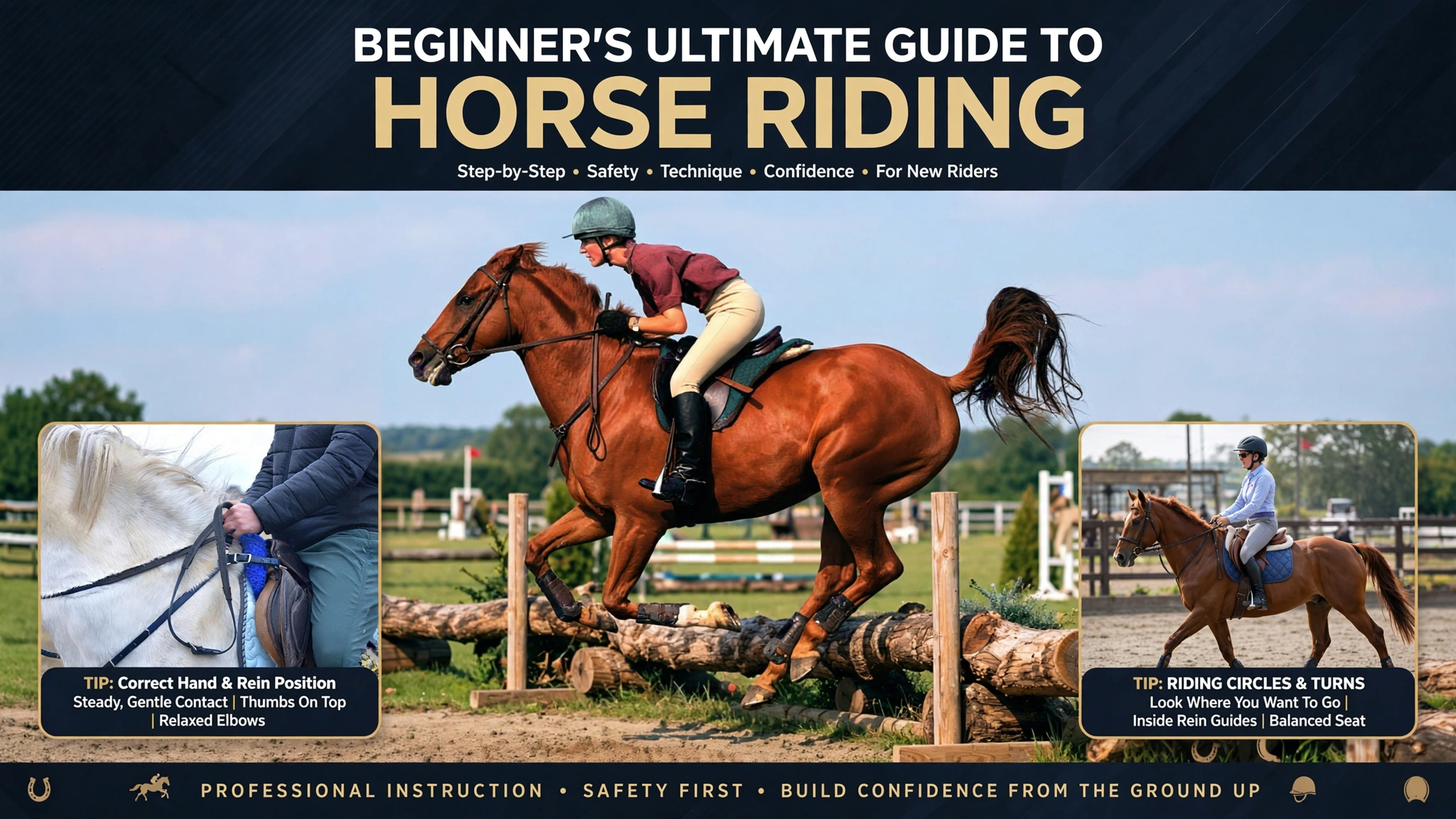
Learning to ride a horse is an exciting experience that combines balance, coordination, communication, and confidence. For beginners, the first few rides can feel unfamiliar because you are learning to control your own body while responding to an animal that has its own movements, instincts, and personality.
The good news is that horse riding can be learned progressively with proper instruction and a calm, well-trained horse. By understanding the basics of horse safety, mounting, posture, rein control, leg aids, stopping, turning, and riding at different speeds, beginners can build a strong foundation and enjoy riding more confidently.
Before You Ride: Learn the Basics
Before getting on a horse, spend some time learning how horses behave and how to approach them safely. A horse may be large and powerful, but it is also sensitive to movement, sounds, pressure, and body language.
Approach a horse calmly from the side where it can see you, speak quietly, and avoid sudden movements. Beginners should never assume that a familiar-looking horse is automatically safe to handle, and it is best to learn under the supervision of an experienced instructor.
Understanding basic horse behavior can also make the first riding lesson less intimidating. Horses communicate through their ears, eyes, posture, tail movement, and overall body language, so learning to recognize signs of relaxation, tension, or discomfort is an important part of becoming a responsible rider.
Wear the Right Riding Gear
Proper riding equipment is an essential part of learning to ride a horse. The most important item for a beginner is a properly fitted, certified riding helmet designed for equestrian use.
Wear comfortable clothing that allows your legs and hips to move freely without becoming caught on equipment. Long pants are generally preferable because they help protect your legs from rubbing against the saddle and the horse.
Footwear is equally important. Riding boots or suitable boots with a small heel can help prevent the foot from sliding too far through the stirrup, while smooth soles make it easier to remove your feet when necessary.
Meet and Prepare the Horse
A beginner should learn how to prepare a horse before attempting to ride independently. Depending on the riding facility, this may include grooming the horse, checking its hooves, putting on the saddle pad and saddle, and fitting the bridle correctly.
Grooming is more than simply making the horse look clean. It provides an opportunity to check for unusual swelling, cuts, sensitive areas, or dirt that could cause discomfort under the saddle.
When tacking up, beginners should work carefully and follow their instructor’s instructions. The saddle should be correctly positioned and secured, and the bridle and reins should be fitted appropriately for the particular horse.
Step 1: Approach the Horse Calmly
Start by standing where the horse can see you and approach at a controlled pace. Avoid walking directly behind a horse because it may be startled if it cannot see you approaching.
Use a calm voice and pay attention to the horse’s reaction. If the horse becomes nervous, moves away, pins its ears, or shows other signs of discomfort, stop and ask an experienced handler for assistance.
Learning to read the horse before riding helps establish good habits from the beginning. A successful riding session starts with a calm partnership rather than simply getting into the saddle.
Step 2: Mount the Horse Safely
Mounting is one of the first physical skills a beginner needs to learn. Your instructor may have you use a mounting block because it reduces the height you need to lift yourself and can place less strain on the horse’s back.
Stand on the horse’s left side, unless your instructor directs you otherwise. Hold the reins appropriately, place your left foot into the stirrup, and use the saddle or mane for support rather than pulling heavily on the reins.
Push gently through your left foot, rise smoothly, and bring your right leg over the horse without kicking or hitting its hindquarters. Sit down softly and place your right foot into the opposite stirrup.
Step 3: Find the Correct Riding Position
Once seated, focus on creating a balanced and relaxed position. Your head should remain up, your eyes should look in the direction you want to travel, and your shoulders should be relaxed rather than rounded forward.
Your hips should remain centered over the horse, while your knees should stay relaxed and your lower legs should rest naturally against the horse’s sides. Avoid gripping tightly with your knees because excessive tension can make it harder to maintain balance.
Your heels should generally be lower than your toes, although the exact position depends on your riding discipline and instructor’s guidance. The goal is not to force your body into a rigid shape but to maintain a stable, flexible position that allows you to follow the horse’s movement.
Step 4: Learn How to Hold the Reins
Reins are used to communicate with the horse, but they should not be treated like handles for maintaining balance. Beginners sometimes hold the reins too tightly because they feel nervous, which can create unnecessary tension for both rider and horse.
Keep your hands steady and relatively low, with your elbows relaxed and capable of following the movement. Your instructor will teach you how to hold the reins according to the riding style you are learning.
Remember that riding is a form of communication involving your hands, legs, seat, posture, and voice. Good riders aim to use the smallest clear aid necessary rather than constantly pulling or kicking.
Step 5: Ask the Horse to Walk
Once you are balanced in the saddle, your instructor can teach you how to ask the horse to move forward. A gentle leg aid, combined with the appropriate rein and voice cue, can encourage the horse to begin walking.
When the horse moves, allow your body to follow its motion rather than becoming stiff. Your hips should remain flexible, and your hands should avoid bouncing or pulling backward.
At first, concentrate on staying balanced and relaxed. You do not need to master every riding skill during your first lesson; learning to sit correctly while the horse walks calmly is already an important achievement.
Step 6: Learn to Stop
Knowing how to stop is just as important as knowing how to move forward. Your instructor will teach you how to use your seat, body position, voice, and reins together to ask the horse to slow down and halt.
A beginner should never suddenly yank backward on the reins. Instead, learn to give clear, controlled signals while maintaining a balanced position in the saddle.
Practice stopping repeatedly at a walk until the response becomes familiar. Feeling comfortable with stopping can significantly increase confidence because you know you have a way to control the pace when necessary.
Step 7: Learn How to Turn
Turning requires coordination between your eyes, hands, legs, and body position. Begin by looking toward the direction you want to travel rather than staring straight ahead.
Your instructor may teach you to use an opening rein, supporting rein, and appropriate leg pressure to guide the horse around a corner. The exact technique can vary depending on the riding discipline and the horse’s training.
Start with large, gentle turns rather than attempting tight circles. Large turns give beginners more time to coordinate their aids while maintaining balance.
Step 8: Practice Steering
Steering becomes easier when you think about directing the horse’s entire body rather than simply moving its head. Your hands provide guidance, while your legs and seat help communicate where you want the horse to go.
Practice steering around cones, poles, or other safe markers in an enclosed riding arena. These exercises can improve your ability to judge distance, maintain a line, and coordinate your aids.
Avoid constantly changing direction without purpose. Instead, focus on making deliberate movements and developing a consistent connection with the horse.
Step 9: Learn the Trot
After becoming comfortable walking, a beginner may eventually progress to the trot under an instructor’s supervision. The trot is a faster, two-beat gait that creates considerably more movement beneath the rider.
Many beginners initially find the trot difficult because it can feel bouncy. Rather than trying to resist every movement with your muscles, learn to stay balanced and allow your body to move with the horse.
Your instructor may introduce rising trot, in which the rider moves up and down in rhythm with the horse’s stride. This technique can make the trot more comfortable and is an important foundational skill for many English riding disciplines.
Step 10: Learn to Change Direction and Speed
As your confidence improves, you can begin combining individual skills. You might walk along the arena, make a turn, halt, walk forward again, and eventually transition between walking and trotting.
Transitions are useful because they teach you to communicate clearly with the horse while maintaining your own balance. A smooth transition should feel controlled rather than rushed.
At this stage, focus on quality rather than speed. Riding faster does not automatically mean riding better, and beginners benefit more from developing good habits at a controlled pace.
Common Beginner Horse-Riding Mistakes
One common mistake is gripping the horse tightly with the knees or holding the reins too firmly. These habits often develop because beginners are trying to prevent themselves from losing balance, but they can make the rider tense and interfere with effective communication.
Another frequent problem is looking down at the horse’s head or the ground. Your eyes influence your balance and direction, so learning to look ahead toward where you want to go is an important habit.
Beginners may also try to use too many aids at once. Clear, simple communication is usually more effective than constant kicking, pulling, or shifting around in the saddle.
How to Build Confidence as a New Rider
Confidence develops through repetition rather than by forcing yourself to perform skills before you are ready. Start with manageable goals, such as mounting independently, maintaining a balanced walk, steering around the arena, or stopping smoothly.
It is normal to feel nervous during your first few lessons. Horses can sense tension in a rider, so learning breathing and relaxation techniques can help you remain calm and communicate more clearly.
A good instructor will adjust lessons according to your experience level and the horse’s behavior. If something feels unsafe or overwhelming, communicate with your instructor rather than trying to push through the situation.
Horse Riding Safety Tips for Beginners
Horse riding involves inherent risks, so safety should always come before speed or advanced skills. Ride under appropriate supervision, particularly when you are still learning how to mount, steer, stop, and respond to unexpected horse behavior.
Always use appropriate protective equipment and check that your tack is correctly fitted before riding. Beginners should ride in a suitable enclosed area or another environment appropriate to their skill level rather than attempting challenging terrain without sufficient experience.
Keep an appropriate distance from other horses and riders, and learn the basic arena rules used at your riding facility. Stay alert instead of becoming distracted by phones or conversations while mounted.
How Often Should Beginners Ride?
Riding regularly can help you develop balance and muscle memory more efficiently than taking lessons only occasionally. For many beginners, a consistent weekly lesson provides a practical starting point.
Progress will vary depending on your previous experience, fitness, confidence, instruction, and the type of riding you want to learn. Some people become comfortable walking and steering relatively quickly, while developing a secure seat and more advanced skills takes considerably longer.
The most important factor is consistency. Even when progress seems slow, each lesson can reinforce your understanding of horse behavior, body position, communication, and safety.
How Long Does It Take to Learn to Ride a Horse?
There is no single timeline for learning horse riding. A beginner may learn basic mounting, walking, steering, and stopping within several lessons, but becoming a genuinely confident and independent rider requires much more practice.
Horse riding is a skill that continues to develop over years. Even experienced riders regularly work on improving their balance, timing, communication, fitness, and understanding of individual horses.
Instead of asking how quickly you can become an expert, focus on becoming safer and more comfortable with each lesson. Small improvements add up and create a strong foundation for more advanced riding.
Benefits of Learning to Ride a Horse
Horse riding can develop balance, coordination, body awareness, and physical fitness. Because the rider must respond to a moving animal, riding also encourages concentration and adaptability.
There is also a significant communication element. Riders learn to pay attention to subtle changes in the horse’s movement and behavior while using controlled physical cues to communicate their intentions.
For many people, the relationship formed with a horse is one of the most rewarding aspects of the activity. Developing trust through responsible handling and consistent training can make riding much more than simply sitting on a horse.
Final Thoughts: Start Slowly and Learn Correctly
Learning how to ride a horse is a gradual process that begins with safety, proper equipment, good posture, and an understanding of basic horse behavior. Once these fundamentals become comfortable, beginners can progress from walking and steering to trotting, transitions, and eventually more advanced riding skills.
The best way to learn horse riding is to work with a qualified instructor and a suitable, well-trained horse. Stay patient, listen carefully, practice consistently, and remember that confidence comes from developing reliable skills rather than rushing through the learning process.
With time and regular practice, the movements that initially feel unfamiliar can become natural. Whether your goal is recreational trail riding, English or Western riding, competition, or simply building a connection with horses, a strong beginner foundation will make the journey safer, more enjoyable, and more rewarding.
