



A DUI ignition interlock device, commonly known as an IID, is a breath-testing device installed in a vehicle after certain DUI, DWI, or impaired-driving offenses. The device is connected to the vehicle’s ignition system and requires the driver to provide a breath sample before the engine can start.
If the device detects alcohol above its programmed limit, it can prevent the vehicle from starting. Depending on the program and device, the driver may also be required to provide additional breath samples while the vehicle is being operated.
Ignition interlock requirements vary considerably from one state to another. The rules may depend on factors such as the type of DUI offense, the driver’s prior record, the circumstances of the arrest, the driver’s license status, and whether the requirement comes from a court or a state licensing agency.
Understanding the installation process, operating requirements, costs, and potential violations can help drivers complete an ignition interlock program without unnecessary complications.
What Is a DUI Ignition Interlock Device?
An ignition interlock device is an electronic breath-testing system installed directly into a vehicle. Its primary purpose is to prevent a driver from starting the vehicle after providing a breath sample that exceeds the programmed alcohol limit.
The driver generally turns on the vehicle’s ignition and follows the instructions displayed or communicated by the device. After providing an acceptable breath sample, the system allows the vehicle to start.
If alcohol is detected above the permitted threshold, the vehicle may remain locked until the applicable procedure is completed. The event may also be recorded and reported to the appropriate monitoring authority.
Many modern ignition interlock devices can require additional breath tests after the vehicle has started. These are commonly called rolling retests and are intended to discourage a driver from consuming alcohol after initially starting the vehicle.
The device may record information such as breath-test results, failed attempts, vehicle starts, and other events. Depending on the applicable program, this information may be reviewed by a monitoring agency, court, licensing authority, or authorized service provider.
When Is an Ignition Interlock Required After a DUI?
An ignition interlock requirement is generally determined by state law and the circumstances of the individual DUI case. Some states require an IID for certain DUI convictions, while others apply the requirement to particular categories of offenders.
For example, an interlock requirement may apply following a repeat DUI offense, a DUI involving a higher alcohol concentration, or another circumstance specifically identified by state law.
In some jurisdictions, an IID may also be connected with a restricted or hardship driving privilege. The driver may be required to install the device before receiving permission to drive during a license suspension or restriction period.
A DUI case can involve both criminal and administrative proceedings. A court may impose one set of requirements while the state motor vehicle agency imposes separate licensing conditions.
Because of these differences, drivers should carefully review their court documents and state licensing requirements before arranging installation.
How Does the DUI Ignition Interlock Installation Process Work?
The installation process usually begins by determining whether the driver is required or permitted to use an ignition interlock device. This information may come from a court order, driver’s license agency, restricted-license program, or another official source.
The driver may then need to choose an approved ignition interlock provider. Many states require drivers to use providers and technicians that meet specific certification or equipment standards.
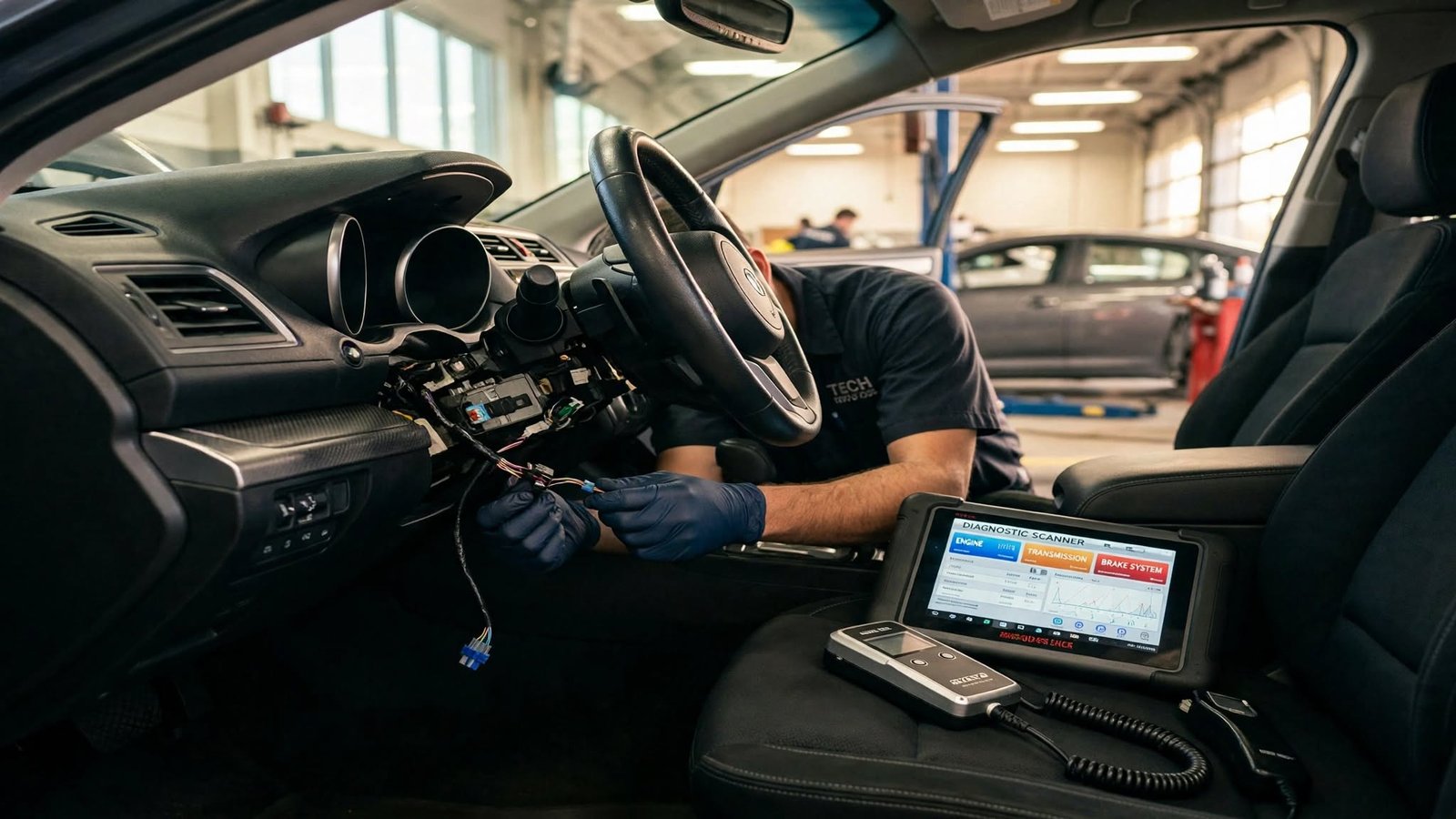
After selecting a provider, the driver schedules an installation appointment. The vehicle is taken to the authorized service location, where a trained technician installs the device and connects it to the vehicle’s ignition system.
The technician will normally test the equipment after installation to make sure it operates correctly. The driver is also shown how to provide a breath sample and how to respond to the device’s instructions.
Before leaving the installation center, the driver should understand how the system works, what the warning signals mean, when service is required, and what actions could be considered a violation.
How Long Does Ignition Interlock Installation Take?
The installation time can vary depending on the vehicle, device, provider, and requirements of the particular program. Many installations can be completed during a scheduled service appointment, although drivers should ask the provider how long they should expect the vehicle to remain at the facility.
The driver may need to bring identification, vehicle information, authorization documents, proof of insurance, or other paperwork required by the provider or state program.
Planning ahead can help prevent delays. It is also useful to confirm the total installation cost and any additional fees before arriving at the appointment.
What Happens After the IID Is Installed?
Once the ignition interlock device is installed, the driver generally must use it whenever operating the vehicle covered by the program. The driver provides a breath sample each time the device requires one.
If the sample is within the permitted range, the system normally allows the vehicle to start. If the sample exceeds the programmed limit, the vehicle may not start and the event may be recorded.
Drivers may also receive rolling retest requests while driving. These tests should be completed according to the device’s instructions and only when it is safe to do so.
A driver should never attempt to bypass, disconnect, manipulate, or otherwise interfere with the device. Such actions can potentially result in a violation and may create additional legal or licensing problems.
How Long Must an Ignition Interlock Stay Installed?
There is no single nationwide installation period for every DUI offender. The required duration depends on the applicable state law and the circumstances of the driver’s case.
Some programs establish a specific number of months, while others impose additional requirements when violations occur during the interlock period.
The required period may also depend on whether the driver is completing a restricted-license program or complying with a court order.
Drivers should not assume that the device can automatically be removed once a certain number of months has passed. In many cases, removal must follow an approved process and may require confirmation that all program requirements have been satisfied.
How Much Does DUI Ignition Interlock Installation Cost?
The cost of an ignition interlock program can include several separate charges. These may include installation, monthly equipment rental, monitoring, calibration, maintenance, service appointments, and removal.
The total amount can therefore be considerably higher than the initial installation fee.
Costs vary by state, provider, vehicle, and length of participation. Some programs may also offer financial assistance to qualifying individuals who demonstrate financial hardship.
Before choosing an installer, drivers should ask for a complete explanation of the fees. Understanding the full cost of the program can help prevent unexpected charges later.
What Can Cause an Ignition Interlock Violation?
A failed breath test can result in an ignition interlock event or violation, depending on the circumstances and rules of the applicable program.
Other potential violations can include failing to provide a required rolling retest, tampering with the device, attempting to disconnect it, missing required service appointments, or interfering with its normal operation.
The exact consequences depend on state law and the driver’s individual program. A violation could potentially result in additional monitoring, an extended interlock period, administrative action, or other consequences.
Not every unexpected breath-test result necessarily means that the driver intentionally violated the program. Equipment problems or other circumstances can sometimes affect a test.
If a driver believes the device produced an incorrect result, the appropriate response is to follow the provider’s procedures, document the circumstances, and seek assistance promptly.
Can Someone Else Drive a Vehicle With an Ignition Interlock?
Whether another person can operate a vehicle equipped with an IID depends on the applicable state and program rules.
In some situations, another licensed driver may be permitted to use the vehicle. However, that person may still need to provide a breath sample and follow the normal device procedures.
Drivers should not assume that someone else can start the vehicle on their behalf. Providing a breath sample for another person or attempting to bypass the system can potentially result in a violation.
If family members, friends, employees, or other authorized drivers need to use the vehicle, the driver should first understand the specific rules governing the interlock program.
Can You Drive a Different Vehicle Without an IID?
Whether a driver can operate another vehicle without an ignition interlock depends on the terms of the license restriction and state law.
Some programs may require an IID in every vehicle the restricted driver operates. Other programs may have more specific rules concerning personal vehicles, employer-owned vehicles, commercial vehicles, or other types of transportation.
Driving a vehicle that is not authorized under the driver’s restrictions can potentially create additional licensing or legal problems.
For this reason, drivers should confirm which vehicles they are legally permitted to operate before driving a vehicle that does not have an approved interlock installed.
What Happens If the IID Detects Alcohol?
If the device detects alcohol above its programmed limit, the vehicle may not start. The event may also be stored in the device’s records and handled according to the rules of the applicable monitoring program.
A driver should never attempt to defeat the device by asking another person to provide a breath sample or by manipulating the equipment.
If the driver believes the result was caused by an equipment problem or another legitimate circumstance, the event should be handled through the official provider or monitoring process.
Drivers should also remember that the device is not a substitute for responsible driving decisions. The safest approach is to avoid driving after consuming alcohol.
What Should You Do If the IID Stops Working?
Ignition interlock devices are electronic systems and can occasionally experience technical problems. A device may display an error message, fail to respond correctly, or require service.
If this happens, the driver should contact the authorized provider and follow the instructions provided by the monitoring program.
Drivers should not attempt to repair, disconnect, remove, or modify the device themselves. Unauthorized interference can potentially be treated as tampering.
Keeping records of error messages, service appointments, receipts, and communications with the provider can also be helpful if the equipment problem later needs to be reviewed.
Does an Ignition Interlock Damage Your Vehicle?
An ignition interlock is installed into the vehicle’s electrical and ignition system, which means installation should be performed by a qualified and authorized technician.
Proper installation is intended to allow the vehicle and device to operate together as required by the program. Drivers should use an approved provider rather than attempting a do-it-yourself installation.
If the device causes unusual vehicle behavior or electrical problems, the driver should contact the installer rather than attempting to modify the equipment independently.
When the required interlock period ends, removal should also be completed by an authorized technician when required by the applicable program.
Common DUI Ignition Interlock Questions
How does an ignition interlock work?
An ignition interlock requires the driver to provide a breath sample before starting the vehicle. If the detected alcohol level is above the device’s programmed limit, the system can prevent the vehicle from starting.
Does every DUI require an ignition interlock?
No. IID requirements vary by state and by the circumstances of the individual case. Factors such as the type of offense, previous DUI history, alcohol concentration, and license status can affect whether an interlock is required.
Can an IID be installed before a DUI conviction?
In some jurisdictions, an IID may be used as part of an administrative or restricted-license process before a criminal case is fully resolved. In other situations, installation may depend on a conviction or court order.
How often does an ignition interlock need service?
Service and calibration schedules vary by state and provider. Drivers must follow the schedule established by their particular program because missing a required appointment can potentially create a compliance issue.
Can I remove the IID myself?
Drivers should not remove or disconnect an ignition interlock themselves. Removal should be performed through the authorized provider and according to the applicable licensing or court requirements.
What happens if I fail an IID breath test?
The consequences depend on the circumstances and applicable program rules. The event may be recorded and could potentially affect the driver’s interlock period or licensing status.
If the driver believes the result was inaccurate, the appropriate provider or monitoring procedure should be followed.
Who pays for an ignition interlock?
In many programs, the driver is responsible for some or all of the costs associated with installation and continued use. Depending on the jurisdiction, financial assistance may be available to qualifying participants.
Can I drive immediately after installing an IID?
Installing the device does not necessarily mean that all driving restrictions have been satisfied. The driver may also need an appropriate license, insurance, court authorization, or other required documentation before legally driving.
Tips for Completing an Ignition Interlock Program
The best way to avoid unnecessary problems is to understand every condition associated with the interlock requirement. Drivers should keep copies of their court documents, licensing paperwork, installation records, service receipts, and other program-related documents.
Required calibration and service appointments should be treated as important compliance obligations. Drivers should also contact the provider promptly if the device develops a technical problem.
It is equally important to understand how the device operates before driving. Drivers should know how to provide an accurate breath sample, how rolling retests work, and what to do when the device displays an error or warning.
Most importantly, drivers should never attempt to circumvent the ignition interlock. Trying to bypass the device can create additional problems that may extend beyond the original DUI requirements.
Why Are Ignition Interlocks Used After DUI Offenses?
The primary purpose of an ignition interlock is to prevent a vehicle from starting when the driver’s breath sample exceeds the device’s programmed alcohol threshold.
The technology allows some drivers with restricted licenses to continue driving while placing a specific restriction on alcohol-impaired vehicle operation.
Ignition interlocks are therefore commonly used as part of broader DUI programs that may also include license restrictions, alcohol education, treatment, probation, fines, or other legal requirements.
The specific combination of requirements depends on the jurisdiction and the individual circumstances of the case.
Final Thoughts on DUI Ignition Interlock Installation
DUI ignition interlock installation is an important part of many restricted-driving programs following an alcohol-related driving offense. The process typically involves obtaining authorization, selecting an approved provider, having the device professionally installed, completing regular service requirements, and following the program’s operating rules.
The exact requirements can differ significantly between states and individual cases. Installation alone may not restore driving privileges, and drivers may have additional licensing, insurance, court, or program requirements to complete.
Understanding the rules before installation can make the process easier and help prevent avoidable violations. Drivers should always confirm the requirements that apply to their specific case with the relevant licensing authority, court, or approved ignition interlock provider.
