


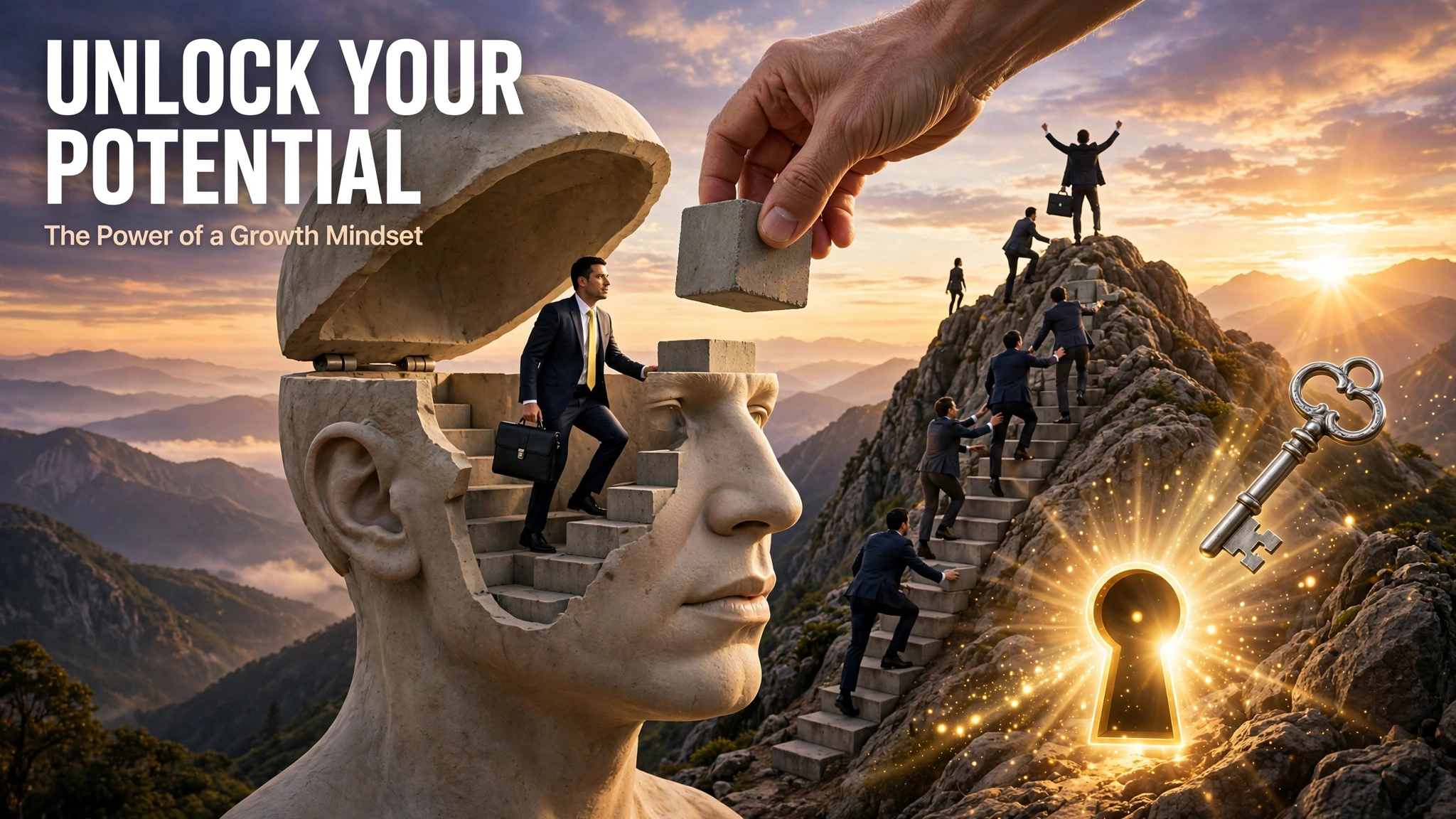
Creativity and growth are closely connected forces that influence how people learn, solve problems, adapt to change, and achieve meaningful success. Creativity allows us to look at familiar situations from new perspectives, while growth encourages us to keep learning, improving, and moving beyond our current limitations.
Whether you are developing your career, building a business, improving your personal life, or simply looking for new ways to approach everyday challenges, combining creativity with a growth mindset can help you unlock your full potential. When these two qualities work together, they create a foundation for continuous learning, innovation, and long-term progress.
What Is Creativity?
Creativity is the ability to generate original ideas, make meaningful connections, and approach problems in different ways. It is often associated with artistic activities such as writing, painting, music, and design, but creativity extends far beyond the arts.
In everyday life, creativity can appear in the way someone solves a difficult problem, develops a new business strategy, communicates an idea, organizes their work, or finds a better way to complete a task. Creativity is not simply about producing something completely new; it is also about combining existing knowledge and experiences in useful and unexpected ways.
Creativity becomes particularly valuable when there is no obvious answer to a problem. Instead of relying exclusively on familiar methods, creative thinking encourages experimentation, curiosity, and exploration.
Understanding Growth and Personal Development
Growth refers to the process of becoming better, more capable, and more knowledgeable over time. Personal growth can involve developing new skills, improving emotional intelligence, strengthening relationships, building confidence, or changing habits that limit progress.
Professional growth can take place through education, practical experience, mentorship, leadership opportunities, and exposure to new challenges. In both personal and professional environments, growth requires a willingness to learn from experiences rather than viewing mistakes as permanent failures.
A growth-oriented person understands that abilities can be developed through consistent effort, effective strategies, feedback, and persistence. This perspective creates an environment where challenges become opportunities to improve rather than reasons to give up.
Why Creativity and Growth Work Together
Creativity provides new possibilities, while growth provides the motivation to explore and develop those possibilities. An individual may have an excellent idea, but without a willingness to learn and take action, that idea may never become meaningful progress.
At the same time, continuous growth without creativity can sometimes lead to repetitive thinking. People may continue improving their existing methods without questioning whether a completely different approach could produce better results.
When creativity and growth are combined, individuals become more adaptable. They can generate fresh ideas while also developing the knowledge and discipline needed to turn those ideas into practical outcomes.
How Creativity Supports Personal Growth
Creative thinking can play an important role in personal development because it encourages people to question assumptions and explore different possibilities. When you approach personal challenges creatively, you may discover solutions that would not have been obvious through traditional thinking.
For example, someone struggling to manage their time might experiment with different routines, planning methods, or working environments instead of repeatedly using an approach that does not work. This willingness to experiment can turn an ordinary challenge into a learning experience.
Creativity can also increase self-awareness. Activities such as writing, brainstorming, drawing, designing, or simply reflecting on personal experiences can help people understand their thoughts and identify patterns that influence their decisions.
Creativity in Professional Growth
In the workplace, creativity is increasingly important because organizations operate in environments shaped by changing customer expectations, technology, competition, and economic conditions. Employees who can think critically and creatively are often better prepared to respond to unexpected challenges.
Professional growth is not limited to earning promotions or increasing income. It also involves becoming more effective at communication, decision-making, collaboration, leadership, and problem-solving.
Creative professionals are willing to learn new approaches and challenge outdated processes. They look for ways to improve efficiency, create better experiences, and provide greater value while remaining open to feedback and new information.
The Role of a Growth Mindset
A growth mindset is the belief that abilities and skills can develop through learning, practice, persistence, and constructive feedback. This mindset can have a significant influence on how a person responds to difficulty.
Instead of thinking, “I am not good at this,” a growth-oriented individual may ask, “What can I learn to become better at this?” That small change in perspective can encourage experimentation and reduce the fear of failure.
A growth mindset does not mean believing that everyone can achieve anything without limitations. Rather, it means recognizing that improvement is possible and that effort, learning, strategy, and support can contribute to better performance.
Overcoming Fear of Failure
Fear of failure is one of the biggest barriers to creativity and growth. People may avoid sharing ideas or trying new approaches because they worry about criticism, mistakes, or disappointing results.
However, failure can provide useful information when it is approached thoughtfully. An unsuccessful experiment can reveal what needs to change, which assumptions were incorrect, or which strategy should be tested next.
Developing a healthier relationship with failure allows people to take calculated risks. Instead of treating every mistake as evidence of inadequacy, they can use experience as feedback and continue improving.
Curiosity as a Foundation for Creativity
Curiosity is one of the most powerful drivers of creativity. Curious people ask questions, investigate unfamiliar subjects, and look beyond obvious explanations.
A simple question such as “Why is this done this way?” can lead to new ideas and improvements. Curiosity encourages people to explore subjects outside their immediate area of expertise, creating opportunities to make connections between seemingly unrelated concepts.
Developing curiosity can be as simple as reading about unfamiliar topics, speaking with people who have different experiences, learning a new skill, or experimenting with a different approach to a familiar task.
Building an Environment That Encourages Creativity
Creativity does not develop equally well in every environment. Constant pressure, excessive criticism, fear of mistakes, and a lack of autonomy can discourage people from expressing new ideas.
An environment that supports creativity allows individuals to ask questions, exchange perspectives, experiment responsibly, and receive constructive feedback. Psychological safety is particularly important because people are more likely to contribute unconventional ideas when they do not expect immediate ridicule or punishment.
For businesses and teams, encouraging creativity can involve providing time for experimentation, recognizing useful ideas, supporting collaboration, and treating thoughtful mistakes as opportunities for learning.
How to Develop Creativity Every Day
Creativity is not necessarily a fixed talent that some people possess while others do not. Like many skills, creative thinking can be strengthened through regular practice and exposure to new experiences.
One effective approach is to deliberately change familiar routines. Taking a different route, learning a new skill, reading outside your usual interests, or approaching a common problem from another perspective can encourage the brain to form new connections.
Writing ideas down is another useful practice. Many creative thoughts disappear because people assume they are unimportant or fail to record them. Keeping a notebook or digital collection of ideas creates a place where concepts can be revisited and developed later.
The Importance of Continuous Learning
Continuous learning supports both creativity and growth because new knowledge provides raw material for new ideas. The more perspectives and information a person encounters, the more opportunities they have to identify relationships between different concepts.
Learning does not always require formal education. Books, courses, podcasts, professional experiences, conversations, workshops, practical projects, and independent research can all contribute to personal and professional development.
The key is to remain an active learner. Instead of waiting for opportunities to appear, individuals can intentionally identify areas where they want to improve and seek experiences that challenge their current level of knowledge.
Creativity, Growth, and Problem-Solving
Many of life’s most difficult problems cannot be solved by following a single predetermined formula. They require people to understand the situation, consider multiple possibilities, test solutions, and adjust their approach based on results.
Creativity expands the number of possible solutions, while growth provides the patience and discipline needed to evaluate those solutions. Together, they create a flexible approach to problem-solving.
This combination is especially useful during periods of uncertainty. When circumstances change, people who are comfortable learning and experimenting can adapt more effectively than those who depend entirely on familiar routines.
How Creativity Can Improve Confidence
Creative activities can also contribute to confidence because they provide opportunities to create, experiment, and see personal progress. Completing a project, solving a difficult problem, or developing an original idea can reinforce the belief that effort can produce meaningful results.
Confidence does not always come before action. In many situations, confidence develops because people repeatedly take action, learn from their experiences, and recognize their improvement.
This creates a positive cycle. Creativity encourages experimentation, experimentation produces experience, experience contributes to learning, and learning supports greater confidence and future growth.
The Connection Between Creativity and Innovation
Creativity and innovation are related but not identical. Creativity generally involves generating ideas, while innovation involves applying useful ideas to create value or produce meaningful change.
An organization can have many creative ideas without becoming innovative if those ideas are never tested or implemented. Similarly, innovation often requires creative thinking to identify new opportunities and approaches.
Successful innovation therefore depends on more than imagination. It requires research, collaboration, execution, evaluation, and a willingness to refine ideas based on real-world results.
Balancing Creativity With Discipline
Creativity is powerful, but creativity alone is not enough to guarantee success. Ideas need structure, planning, execution, and persistence if they are going to produce meaningful outcomes.
Discipline gives creativity direction. It helps transform an interesting thought into a practical project and encourages people to continue working even when initial excitement disappears.
The most effective approach is not to choose between creativity and discipline. Instead, use creativity to generate possibilities and discipline to develop those possibilities into achievable goals.
Turning Ideas Into Meaningful Growth
Having ideas is only the beginning. Meaningful growth happens when ideas are evaluated, tested, improved, and applied.
A useful way to approach this process is to start with curiosity, explore different possibilities, select a promising direction, and take a manageable first step. After receiving feedback or observing results, the approach can be adjusted and developed further.
This process removes some of the pressure associated with trying to create a perfect solution immediately. Progress often comes through repeated cycles of experimentation and improvement rather than one moment of inspiration.
Creativity and Growth in the Digital Age
Technology has created new opportunities for creative expression, learning, collaboration, and professional development. Digital tools allow individuals to research ideas, create content, communicate globally, and access educational resources from almost anywhere.
At the same time, the abundance of information can make it difficult to focus. Creativity requires space for thinking, while meaningful growth requires the ability to distinguish valuable information from constant digital distractions.
Using technology intentionally can therefore make a significant difference. Digital tools should support learning and creative work rather than continuously competing for attention.
Creating a Long-Term Growth Strategy
Long-term growth becomes easier when it is connected to clear goals. Rather than attempting to improve everything at once, individuals can identify a few important areas and focus their attention on gradual progress.
Goals can be supported by practical habits such as regular learning, reflection, experimentation, and feedback. Tracking progress can also make improvement more visible and provide motivation to continue.
A long-term strategy should remain flexible. As people gain knowledge and experience, their goals may change, and being willing to adjust the plan is itself an important part of growth.
Final Thoughts on Creativity and Growth
Creativity and growth are not limited to artists, entrepreneurs, students, or business leaders. They are valuable abilities that can benefit anyone who wants to learn, adapt, solve problems, and create a more fulfilling future.
Creativity helps us imagine what could be possible, while growth helps us develop the skills and resilience required to make those possibilities real. When combined with curiosity, continuous learning, experimentation, and discipline, these qualities can create powerful opportunities for personal and professional development.
Unlocking your full potential does not happen overnight. It is an ongoing process of asking better questions, exploring new ideas, learning from experience, and taking consistent action.
The most important step is simply to begin. Give yourself permission to think differently, learn continuously, make mistakes, and improve. Over time, creativity and growth can become more than concepts—they can become a practical way of approaching challenges and building a better future.
