

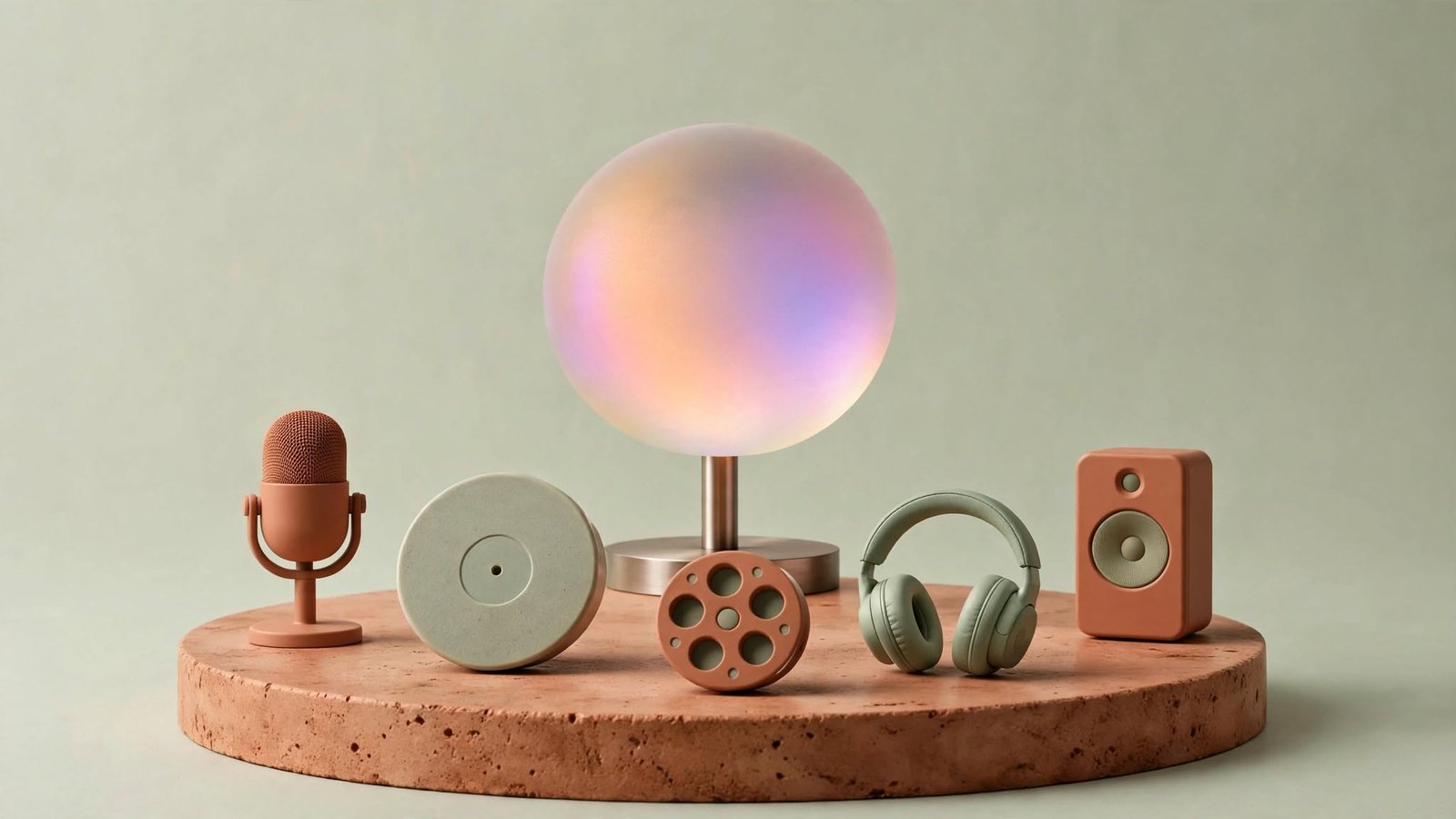
Soundverse AI is an AI-powered music creation platform designed to help musicians, content creators, producers, and beginners turn ideas into complete audio projects without needing a traditional recording studio. It combines AI song generation, beat creation, vocal production, audio editing, and music analysis in one workspace. The biggest advantage of Soundverse AI is that it does more than generate music: it gives creators tools to develop, edit, customize, and prepare their audio for real projects. However, its usefulness depends on how much creative control someone needs, how comfortable they are with AI-generated music, and whether the available subscription features justify the cost.
For creators who regularly need background music, original songs, instrumentals, or experimental sounds, Soundverse can significantly simplify the production process. It is not necessarily a replacement for professional music production software or experienced musicians, but it can serve as a practical creative assistant that reduces the time between having an idea and hearing an actual musical result.
What Is Soundverse AI and How Does It Work?
Soundverse AI is a browser-based music production environment that uses artificial intelligence to generate and manipulate audio based on user instructions. Instead of requiring someone to understand every technical aspect of music production, the platform allows users to describe their desired sound through text prompts, lyrics, musical styles, moods, and other creative directions.
For example, a user might request an energetic electronic instrumental with deep bass, atmospheric synthesizers, and a cinematic introduction. Soundverse processes the instructions and generates music that attempts to match the description. Users can then experiment with different prompts, adjust their creative direction, and explore additional production tools to refine the result.
One particularly interesting feature is its conversational approach through Agent One. Rather than manually opening separate tools for every task, users can describe a larger objective and allow the AI agent to coordinate different stages of the process. A creator might ask it to develop lyrics, generate a song, produce supporting artwork, and prepare promotional content. This makes the platform more approachable for people who prefer describing what they want instead of navigating complicated production interfaces.
Main Features That Make Soundverse AI Stand Out
Soundverse offers a considerably broader collection of tools than a basic text-to-music generator. Its features cover several stages of the creative process, from the initial musical idea to editing and release preparation.
AI Song and Music Generation
The central attraction is its AI music generator, which allows users to create songs and instrumentals from written descriptions. Creators can explore different genres, moods, arrangements, and musical directions without having to compose every element manually.
This can be especially useful for YouTube creators, independent musicians, social media publishers, and small businesses that need original audio regularly. Instead of searching through large music libraries for something that almost fits a project, users can generate music around the intended atmosphere and purpose.
The technology is also useful during early songwriting. Someone who has a lyrical concept but cannot imagine the accompanying arrangement can use AI-generated music to explore possible directions. The output may not be a finished commercial production, but it can provide a starting point that would otherwise take considerable time to develop.
AI Vocals and Voice Tools
Soundverse includes tools for generating and working with vocals, making it useful for creators who want to experiment with complete songs rather than instrumental tracks alone. Users can work with lyrics and explore different vocal styles without arranging a conventional recording session.
Its voice-related capabilities also include voice model training and voice swapping, subject to the applicable plan and feature restrictions. These tools can help creators develop consistent vocal identities for their projects, provided they have the necessary rights and consent for the recordings they use.
However, AI-generated vocals are not automatically equivalent to professional human performances. Pronunciation, emotional delivery, phrasing, and the natural expression of certain lyrics can still require improvement. Musicians who prioritize a distinctive personal performance may prefer to record their own vocals and use AI tools selectively.
AI Beat Maker and Instrumental Creation
For producers, rappers, and independent musicians, the beat-making functionality is one of Soundverse’s most practical features. The platform can generate complete instrumental arrangements involving drums, basslines, melodies, and other musical elements.
This is more useful than simply producing a short repeating loop because creators can explore fuller arrangements and develop material that supports an entire song. Different generations can also provide alternative interpretations of the same creative idea.
Another advantage is the ability to move generated material into a more traditional production workflow. WAV files, separated stems, and MIDI-related capabilities can support further editing, depending on the feature and subscription available.
Stem Separation and Audio Editing
Stem separation is particularly important for anyone who wants more control over AI-generated music. Instead of treating a finished song as one inseparable audio file, creators can work with individual musical components.
For example, a producer might want to lower the drums, remove an instrumental layer, adjust the bass, or isolate vocals for another project. Separate audio stems make these tasks easier and provide more flexibility during mixing.
Soundverse also offers editing-related capabilities such as remixing, extending tracks, and modifying selected audio sections. These tools can help users improve a promising generation rather than repeatedly starting from scratch.
AI Studio and Agent One
The combination of AI Studio and Agent One gives Soundverse a more complete production environment. AI Studio provides a workspace for arranging and editing audio, while Agent One focuses on understanding instructions and coordinating the available tools.
This distinction matters because music generation and music production are not the same thing. Generating a song is only one stage of the process. Creators may still need to adjust arrangements, balance instruments, refine transitions, and prepare an export suitable for their intended platform.
Having these capabilities connected within one ecosystem can make the workflow more convenient, particularly for beginners who do not want to switch between multiple applications.
Music Analysis and Creative Assistance
Soundverse also includes tools that analyze existing audio. These can identify musical characteristics such as tempo, key, song structure, and lyrics.
The Audio to Prompt feature is another interesting addition because it can turn an existing audio reference into a reusable description of its musical characteristics. This may help creators communicate the type of sound they want when developing new material.
The platform also provides AI-assisted release planning, promotional writing, artwork creation, and playlist pitch descriptions. These features extend its usefulness beyond music production and into the practical business activities that independent musicians often handle themselves.
The Pros of Using Soundverse AI
One of Soundverse’s strongest advantages is accessibility. Traditional music production can involve expensive equipment, complicated software, recording spaces, and years of technical learning. Soundverse reduces some of these barriers by allowing users to begin with simple written instructions and gradually explore more advanced tools.
Another significant advantage is creative speed. A musician can test several arrangements, moods, and musical directions without building every version from the beginning. This is especially valuable when working under deadlines or producing content for multiple platforms.
The platform’s broad feature collection is another positive. Song generation, vocals, stem separation, remixing, audio analysis, and release preparation are available within the same ecosystem. Having these tools together can reduce the need for multiple subscriptions and complicated file transfers.
Soundverse is also useful for experimentation. A beginner can explore genres they have never produced before, while an experienced musician can use AI-generated material to overcome creative blocks. The technology can introduce unexpected musical combinations that might inspire a different approach to an existing project.
Its availability through web and mobile platforms adds further convenience. Creators can develop ideas on different devices and continue working through their account rather than depending entirely on a single computer.
Finally, the platform offers an entry-level free option, allowing users to explore its capabilities before committing to a paid subscription. This makes it easier to evaluate the actual quality of its output and determine whether the workflow suits their needs.
The Cons of Soundverse AI
Despite its extensive feature set, Soundverse AI has limitations that potential users should understand before relying on it for serious production work.
The first concern is creative consistency. AI-generated music can sound impressive in one attempt and considerably less convincing in another. Even when users provide detailed instructions, the resulting track may not reproduce every requested instrument, arrangement detail, or emotional quality.
This means that generating a good song may require multiple attempts. For someone who needs a very specific musical arrangement, that process can become frustrating.
Another limitation involves artistic originality. AI-generated music can provide fresh combinations of sounds, but it does not automatically produce the personal experiences, musical instincts, and emotional decisions that distinguish an individual artist. Musicians who want a recognizable identity should treat AI as a production assistant rather than allowing it to determine every creative decision.
Pricing and token consumption are also worth considering. Different tools and generations can consume different amounts of credits, making it important to understand how much usage a subscription actually provides. A plan that initially appears affordable may become less attractive if someone regularly generates multiple versions of songs or uses resource-intensive features.
Commercial licensing is another area requiring attention. The right to use generated music can depend on the subscription tier and the applicable licensing terms. A free account should not automatically be treated as providing the same commercial permissions as a paid account.
Finally, some results still require human editing. AI-generated vocals may need refinement, instrumental balances may need adjustment, and finished tracks may benefit from professional mixing and mastering. Soundverse can simplify production, but it does not guarantee that every generated track will be ready for professional release.
Real Creator Results: What Can Users Actually Achieve?
The most useful way to evaluate Soundverse AI is to look beyond its feature list and consider the practical outcomes creators can achieve. Although individual experiences vary, its capabilities suggest several realistic applications.
YouTube and Social Media Content Creators
For video creators, finding suitable background music can be a recurring challenge. A travel video might need uplifting cinematic music, while a technology review could benefit from a subtle electronic soundtrack.
Soundverse allows creators to develop audio around the mood and subject of their videos. This can reduce dependence on generic background music libraries and make it easier to experiment with different soundtracks.
A realistic result is a collection of custom audio tracks that can support different types of content. However, creators should check their licensing permissions before publishing or monetizing the material.
Independent Musicians and Songwriters
Independent musicians can use Soundverse to turn unfinished ideas into more developed musical concepts. A songwriter might have a chorus and a rough lyrical structure but lack the production experience to build a complete arrangement.
AI-generated instrumentals and vocal tools can help transform that early idea into something easier to evaluate. The musician can then identify what works, rewrite weaker sections, and develop the strongest version through additional editing.
This is particularly valuable during songwriting experiments, although artists seeking a distinctive professional sound will probably want to combine AI assistance with their own production skills.
Podcast Creators
Podcasters often need introductory themes, transitions, background instrumentals, and short audio elements that create a consistent listening experience.
Soundverse can help generate music that matches the subject and tone of a podcast. A serious educational program may need something subtle and atmospheric, whereas an entertainment podcast might benefit from a more energetic theme.
The practical benefit is the ability to experiment with custom audio instead of repeatedly searching through pre-existing music collections.
Beginner Music ProducersFor beginners, Soundverse can function as a learning and experimentation environment. Someone without extensive knowledge of music theory can explore different genres, arrangements, and instrument combinations through simple instructions.
The ability to analyze tempo, key, and song structure can also make the platform useful for understanding how music is organized.
However, beginners should not assume that AI-generated results automatically teach professional production techniques. Learning arrangement, sound selection, mixing, and mastering remains valuable for anyone who wants to develop independent production skills.
Small Businesses and Marketing Teams
Businesses frequently need short musical pieces for advertisements, product demonstrations, social media campaigns, and promotional videos.
Soundverse can help generate audio concepts around a campaign’s intended mood without requiring every project to begin with a separate composer or recording session.
For smaller teams with limited creative resources, this can make customized audio more accessible. Larger organizations, however, should carefully review licensing, usage rights, and internal approval requirements before incorporating AI-generated music into commercial campaigns.
Soundverse AI Pricing: Is It Worth Paying For?
Soundverse follows a tiered subscription model, with a free entry point and paid plans designed for users who need more generations, additional production capabilities, or broader usage rights.
The important thing to understand is that the free and paid experiences are not identical. Free access provides an opportunity to experiment, while paid subscriptions unlock additional features and licensing options.
The Creator, Pro, and higher-level plans are aimed at users with increasingly demanding creative requirements. Depending on the current plan, these can include expanded token allowances, additional models, advanced editing, commercial permissions, and other production capabilities.
Before subscribing, users should examine three things: the number of tokens included, the cost of the specific tools they intend to use, and the licensing permissions attached to their chosen tier. These details are more important than simply comparing monthly subscription prices.
For occasional experimentation, the free plan may be sufficient. Regular content creators and independent musicians may find a paid plan more practical if they consistently generate and export audio.
The best approach is to test several projects first, calculate how frequently the tools will be used, and upgrade only when the additional capabilities provide a clear benefit.
Soundverse AI vs Traditional Music Production Software
Soundverse and conventional digital audio workstations serve related but different purposes. Traditional software such as Ableton Live, FL Studio, and Logic Pro provides detailed control over instruments, recording, arrangement, effects, and mixing.
Soundverse focuses more heavily on AI-assisted creation and automation. It can generate musical material from instructions and provide tools for modifying that material without requiring users to build everything manually.
For beginners, this can make Soundverse easier to approach. For experienced producers, however, a conventional DAW may still provide more precise control over individual production decisions.
The two approaches are not necessarily competitors. A creator can use Soundverse to develop an initial composition, export the available audio material, and continue refining it inside a professional production environment.
This combined workflow may be more useful than relying exclusively on either approach.
Is Soundverse AI Suitable for Professional Music Production?
Soundverse can contribute to professional music workflows, particularly during ideation, songwriting, sound design, and the production of supporting audio. Its stem separation, editing tools, and AI-assisted generation capabilities make it more versatile than a simple music-generation website.
Nevertheless, professional production requires more than generating an attractive track. Audio quality, arrangement consistency, mixing, mastering, originality, and licensing all influence whether a song is suitable for commercial distribution.
A professional musician may use Soundverse to generate a starting arrangement or explore a musical direction before making substantial changes. A video producer might use it for custom background music, while a songwriter could experiment with alternative instrumental arrangements.
The final result depends on how carefully the generated material is evaluated and refined. Soundverse can become part of a professional workflow, but it should not be mistaken for a guarantee of professional-quality output.
Copyright, Ownership, and Commercial Usage
Copyright and licensing deserve particular attention when using AI music generators. Creators should understand that the ability to download a track does not necessarily mean they have unrestricted permission to use it commercially.
Soundverse distinguishes between different usage permissions depending on the subscription and license. Its free offering is intended for personal use, while paid tiers provide additional commercial rights under their applicable terms.
Users should also ensure that any uploaded recordings, reference tracks, lyrics, and voice samples are materials they have permission to use. This is especially important when working with recognizable voices or music belonging to other artists.
The platform’s copyright-checking and watermark-related tools can provide additional information about audio files, but they should not be treated as a universal legal guarantee. Creators remain responsible for checking the relevant licensing terms and resolving potential rights issues before releasing music commercially.
For anyone planning to distribute AI-assisted music through streaming services, advertising campaigns, or client projects, reviewing the applicable license before publication is essential.
Practical Tips for Getting Better Results With Soundverse AI
The quality of AI-generated music depends partly on how clearly users communicate their creative intentions. Broad instructions such as making a beautiful song or creating an exciting beat may produce unpredictable results.
A more effective approach is to describe the genre, mood, tempo, instruments, vocal characteristics, and intended arrangement. For example, requesting a mellow acoustic instrumental with gentle percussion, warm guitar, and a gradual emotional build gives the generator a clearer creative direction.
It is also useful to experiment with variations rather than accepting the first generation. Small changes to the prompt can produce different arrangements and reveal possibilities that were not immediately obvious.
Creators should listen carefully to the entire result, not just the opening seconds. Some tracks may begin convincingly but contain awkward transitions, repetitive sections, or inconsistent vocals later in the arrangement.
When a generation has potential, editing and stem separation can help improve it. Rather than discarding an almost-finished track, users can identify its strongest elements and make targeted changes.
Finally, keep organized copies of important projects and check export settings before publishing. A good creative workflow involves not only generating music but also managing files, reviewing quality, and confirming usage permissions.
Who Should Use Soundverse AI?
Soundverse is particularly suitable for creators who want to produce music quickly without building every element from scratch. YouTube publishers, podcast producers, independent musicians, social media creators, and beginner beatmakers can all benefit from its combination of generation and editing tools.
It is also worth exploring for experienced producers who want an additional source of musical inspiration or a faster way to experiment with different arrangements.
However, it may not be the best standalone solution for musicians who require extremely detailed manual control, specialized recording capabilities, or consistently precise results. Those users may prefer combining it with a traditional digital audio workstation.
People who rarely create audio may also find that a subscription is unnecessary. In that situation, occasional access to free features or a conventional royalty-cleared music library may provide better value.
Final Verdict: Is Soundverse AI Worth Trying?
Soundverse AI is a promising all-in-one music creation environment that brings together AI songwriting, beat generation, vocals, audio editing, music analysis, and release-related assistance. Its biggest strength is the ability to connect different creative tasks within one platform, making music production more approachable for beginners and more flexible for experienced creators.
Its limitations are equally important. Generated music can require repeated experimentation, some results need additional editing, subscription costs should be evaluated against actual usage, and commercial licensing depends on the selected plan.
Overall, Soundverse AI is worth exploring if you want to turn musical ideas into usable audio more quickly, experiment with new sounds, or simplify parts of your content production workflow. It is less convincing as a complete replacement for human creativity and professional production skills.
The most realistic expectation is to view Soundverse as a creative assistant rather than an automatic hit-making machine. Creators who combine its speed and convenience with their own artistic judgment are likely to get the greatest practical value from the platform.
Frequently Asked Questions About Soundverse AI
Is Soundverse AI free to use?
Yes. Soundverse offers a free plan with starter tokens that allow new users to explore its music creation capabilities. Some advanced tools and commercial usage permissions require a paid subscription.
Can Soundverse AI generate complete songs?
Yes. The platform supports full-song generation, including songs with vocals and instrumental arrangements. The available models, controls, and generation limits depend on the selected plan.
Can I use Soundverse AI music on YouTube?
Usage depends on the applicable subscription and licensing terms. The free plan is intended for personal use, while paid plans provide additional commercial permissions. Always check the specific license before monetizing a video.
Is Soundverse AI good for beginners?
Yes. Its text-based generation and conversational tools make it accessible to people without extensive music production experience. Beginners can experiment with musical styles and arrangements without mastering complicated production software first.
Does Soundverse AI support professional editing?
Yes. It offers an AI Studio environment, audio editing features, stem separation, and other tools that support further production work. Professional users may still prefer exporting material to a dedicated DAW for more detailed mixing and mastering.
Can Soundverse AI clone voices?
Soundverse provides voice model training and voice-swapping capabilities, subject to plan restrictions. Users should only upload recordings and create voice models when they have the necessary rights and consent.
Is Soundverse AI better than other AI music generators?
That depends on the intended use. Its broad collection of music creation, editing, analysis, and release tools makes it attractive as an all-in-one workspace. Someone who only wants to generate songs quickly may prefer a simpler specialist generator, while producers who need more editing options may appreciate Soundverse’s wider workflow.
Can beginners make professional music with Soundverse AI?
Beginners can generate surprisingly complete musical ideas, but professional results usually require careful selection, editing, mixing, and mastering. The platform can lower the learning barrier without eliminating the value of musical knowledge and production experience.
What is the biggest disadvantage of Soundverse AI?
The biggest disadvantage is that AI-generated results are not always consistent or ready for immediate release. Users may need several attempts, additional editing, and careful licensing checks before a track is suitable for its intended purpose.
Is Soundverse AI worth the subscription?
It can be worthwhile for people who regularly produce music, videos, podcasts, or promotional content. Occasional users should test the free offering first and compare the available features, token allowances, and commercial rights before upgrading.

1 Comment
Pingback: BaddieHub Fashion: The Ultimate Guide to Trendy Baddie Outfits and Style Ideas