



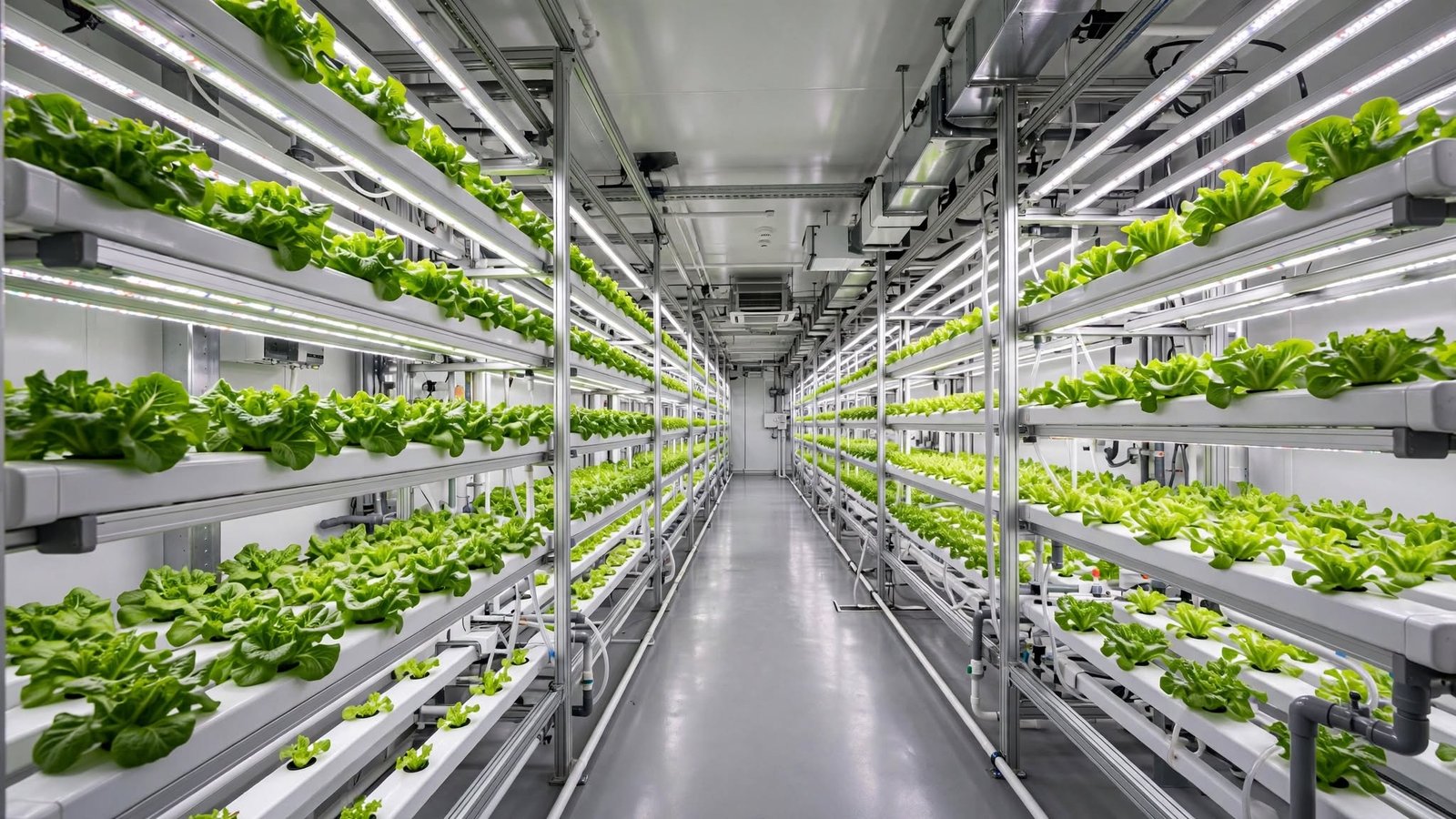
Modern agriculture is changing rapidly as growers look for ways to produce fresh crops more efficiently, consistently, and sustainably. Lit farms represent this shift toward technology-driven growing, combining controlled environments, specialized lighting, automation, and data-based cultivation methods to create carefully managed conditions for plants.
Unlike traditional farming, which depends heavily on outdoor weather, soil conditions, and seasonal changes, modern indoor and controlled-environment farms can regulate many of the factors that influence plant growth. Temperature, humidity, light intensity, airflow, irrigation, and nutrient delivery can all be monitored and adjusted to support healthier and more predictable crops.
What Are Lit Farms?
The term lit farms generally refers to farming environments where artificial lighting plays an important role in plant production. These farms are commonly associated with indoor agriculture, vertical farming, greenhouses, and other controlled growing systems where natural sunlight may be limited or supplemented.
The central idea is simple: instead of leaving plant growth entirely to changing outdoor conditions, growers create an environment designed around the needs of the crop. Lighting becomes one of the most important tools because plants use light as the energy source for photosynthesis.
Modern lit farms can use LED lighting systems to provide specific levels and wavelengths of light throughout different stages of plant development. This allows growers to manage the daily light cycle while reducing their dependence on natural daylight.
The Role of LED Lighting in Modern Growing
LED technology has become a major component of controlled-environment agriculture because LEDs can deliver artificial light efficiently and can be designed for horticultural applications. Growers can adjust factors such as intensity, timing, and, depending on the system, the spectral characteristics of the light.
This level of control can help plants receive consistent lighting even when outdoor weather conditions change. A carefully designed lighting schedule can also support different growth stages, from early development to vegetative growth and production.
Energy efficiency is another important consideration. Lighting can represent a significant portion of the operating costs of an indoor farm, so efficient fixtures and intelligent lighting controls can influence the overall economics of a growing operation.
How Automation Changes Farm Management
Automation is another defining feature of modern lit farms. Instead of requiring workers to manually monitor every environmental condition, sensors and control systems can continuously collect information about the growing environment.
These systems may track temperature, humidity, carbon dioxide levels, light conditions, water usage, and other variables. When conditions move outside a desired range, automated equipment can respond by adjusting ventilation, lighting, irrigation, heating, or cooling.
The result is a more consistent growing environment. Automation does not eliminate the need for skilled growers, but it can reduce repetitive tasks and provide growers with more precise information for making cultivation decisions.
Sensors and Data-Driven Cultivation
Data is becoming increasingly important in modern agriculture. Sensors installed throughout a controlled growing environment can provide a continuous stream of information about conditions affecting plant development.
Instead of relying solely on visual observations, growers can use collected data to identify changes in environmental conditions and respond before problems become more serious. Historical data can also help farms understand how particular growing conditions relate to crop performance.
Over time, this approach can create a more systematic cultivation process. Growers can compare production cycles, identify patterns, and refine environmental settings based on measurable results rather than relying entirely on guesswork.
Hydroponics and Soilless Growing Systems
Many indoor farms use hydroponic or other soilless cultivation systems. In hydroponics, plants receive water and nutrients through a carefully managed solution rather than obtaining their nutrients from conventional agricultural soil.
Soilless systems can provide precise control over nutrient delivery and water management. They can also make it possible to grow crops in places where traditional soil-based agriculture would be difficult.
Different systems can be designed for different crops and production goals. The important principle is that the plant’s root environment is actively managed, giving growers greater control over water, nutrients, oxygen, and other factors that influence development.
Vertical Farming and Space Efficiency
Lit farms can also be connected with vertical farming, in which crops are cultivated in stacked layers rather than spread across a single horizontal field. Artificial lighting makes this approach possible in environments where sunlight cannot reach every growing layer evenly.
Vertical systems can make productive use of indoor spaces, including warehouses and purpose-built agricultural facilities. By growing upward, farms can potentially produce more crops within a smaller physical footprint.
However, vertical farming also introduces challenges. Multiple growing levels require careful management of lighting, airflow, temperature, irrigation, and access, while electricity and equipment costs can significantly affect the economics of production.
Climate Control and Consistent Growing Conditions
One of the biggest advantages of controlled-environment agriculture is the ability to manage climate conditions. Outdoor farms must contend with heat, cold, rainfall, wind, drought, and changing seasonal conditions.
Indoor growing facilities can create a more stable environment by using heating, cooling, ventilation, dehumidification, and other climate-control technologies. Maintaining appropriate conditions can help reduce environmental variability and provide crops with a more predictable growing cycle.
This does not mean indoor agriculture is completely independent of the outside environment. Energy requirements, water availability, electricity prices, and local climate can still influence the operation and sustainability of a farm.
Smart Irrigation and Water Management
Water management is another area where technology can make a significant difference. Modern growing systems can deliver water directly to plant roots and monitor irrigation according to crop requirements.
Rather than applying water uniformly across an entire outdoor field, controlled systems can deliver carefully measured quantities at specific intervals. Recirculating systems may also capture and reuse water, depending on the type of cultivation technology being used.
Efficient water management can be particularly valuable in regions where freshwater resources are limited. At the same time, the environmental benefits depend on the complete system, including energy consumption, water treatment, infrastructure, and the type of crop being produced.
Artificial Intelligence and Predictive Agriculture
Artificial intelligence is increasingly being explored as another tool for controlled-environment farming. AI-powered systems can analyze large amounts of environmental and production data and identify patterns that may be difficult to detect manually.
Computer vision can also be used to monitor plants through cameras and image-analysis software. These technologies may help identify changes in plant appearance, growth patterns, or potential problems.
As these systems become more sophisticated, farms may be able to make increasingly precise adjustments to lighting, irrigation, climate, and other variables. The goal is not simply to automate farming, but to create cultivation systems that learn from previous production cycles and improve over time.
What Makes Lit Farms Different From Traditional Farms?
Traditional agriculture remains essential to global food production, but it operates under fundamentally different conditions. Outdoor farms generally work with natural sunlight, local soil, seasonal weather patterns, and large open growing areas.
Lit farms move some of those variables into a controlled environment. This can provide greater consistency and make year-round production possible for certain crops and locations.
However, greater technological control also comes with greater infrastructure requirements. Indoor farms may require significant investment in lighting, climate control, sensors, irrigation equipment, software, and energy systems, making their economic performance dependent on both technology and farm management.
Sustainability and Energy Considerations
Sustainability is one of the most frequently discussed aspects of modern controlled-environment farming. Indoor agriculture can potentially reduce transportation distances for locally consumed produce, use water efficiently, and produce crops in locations where conventional agriculture is difficult.
At the same time, electricity consumption is an important consideration, particularly for farms that depend heavily on artificial lighting and climate control. The environmental performance of a lit farm therefore depends greatly on the source of its electricity and the efficiency of its equipment.
Renewable energy, efficient LEDs, improved climate-control systems, water recycling, and better farm-management software may help reduce the environmental footprint of controlled agriculture. Evaluating sustainability requires looking at the entire production system rather than focusing on a single technology.
The Future of Lit Farms
The future of lit farms is likely to involve greater integration between lighting, automation, sensors, artificial intelligence, and biological knowledge. As technologies improve, growers may gain increasingly precise control over the conditions in which crops are produced.
The most successful systems will need to balance technological sophistication with practical economics. Producing a crop efficiently requires more than advanced equipment; farms must also manage labor, energy, maintenance, crop selection, distribution, and consumer demand.
For this reason, the development of lit farms is not simply a story about replacing traditional agriculture with technology. It is about creating additional ways to grow food and other plants under controlled conditions where those systems make practical and economic sense.
Conclusion
Lit farms are transforming the way people think about modern growing by bringing technology into nearly every stage of cultivation. Artificial lighting, environmental controls, sensors, automation, hydroponics, and data analysis can work together to create highly managed growing environments.
As agricultural technology continues to develop, these systems may become increasingly efficient and adaptable. Their long-term role will depend on factors such as energy costs, technological advances, crop selection, environmental conditions, and the ability of growers to combine sophisticated tools with sound agricultural practices.
