



What Was 80s Hip Hop Style?
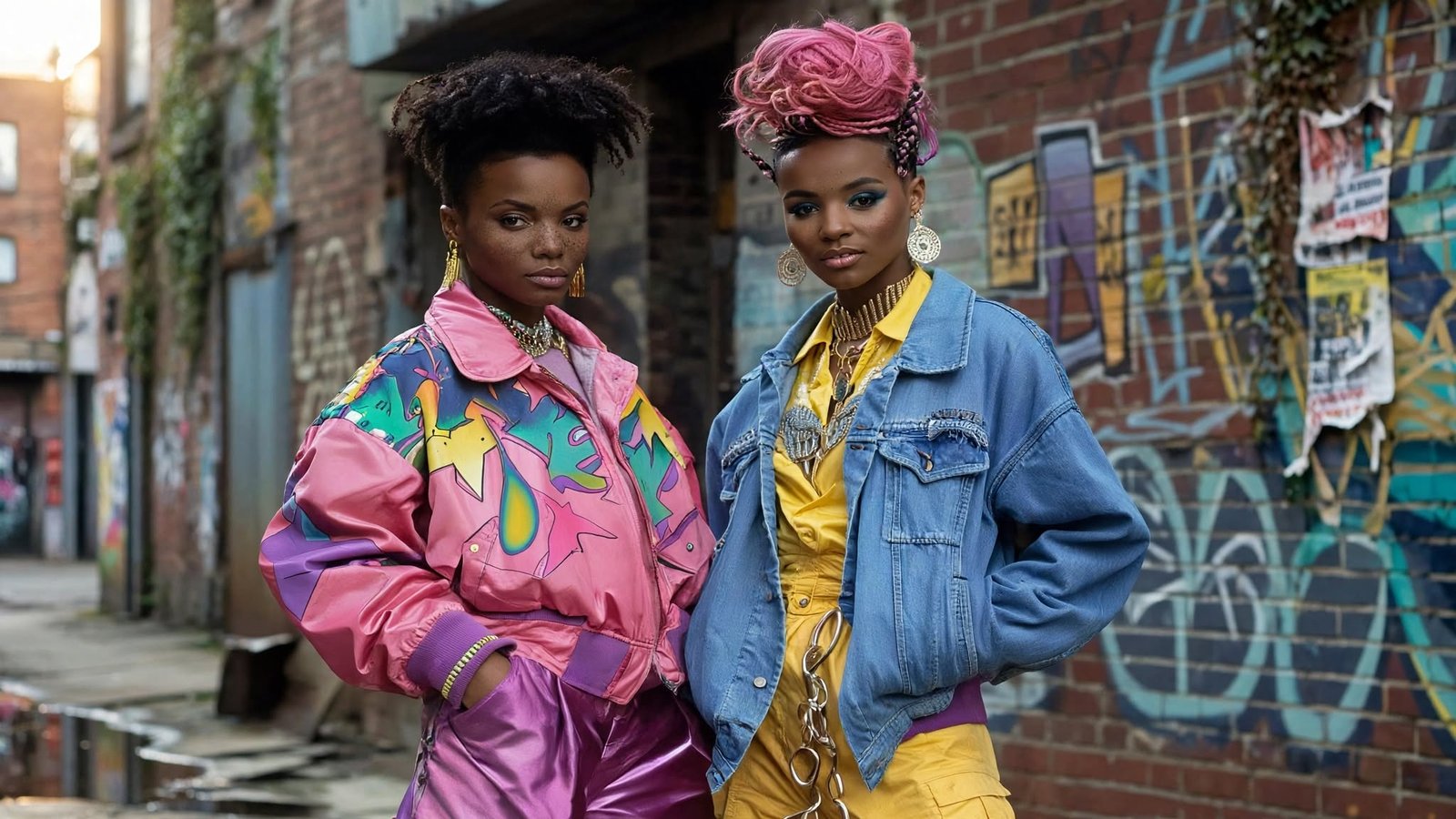
80s hip hop style was a bold combination of streetwear, sportswear, custom accessories, and neighborhood identity that developed alongside the emerging hip hop movement. It was more than a way of dressing; clothing became a visible expression of music, creativity, confidence, and community.
During the 1980s, hip hop was growing from a local cultural movement into a powerful force in music and entertainment. As DJs, MCs, breakdancers, and graffiti artists gained wider attention, their clothing became part of the culture’s visual language.
The look could be colorful, oversized, athletic, practical, or deliberately extravagant. Tracksuits, bomber jackets, sneakers, denim, leather, tracksuits, bucket hats, caps, gold jewelry, and distinctive accessories all became associated with different parts of the scene.
How Hip Hop Shaped 1980s Fashion
Hip hop emerged from urban communities where young people created new forms of artistic expression from the resources around them. Fashion naturally became part of that creativity.
Instead of following traditional ideas about what fashionable clothing should look like, hip hop performers and fans developed their own combinations. Athletic clothing could be worn with expensive jewelry, while workwear or casual street clothing could be transformed through color, proportion, and accessories.
Music groups also played an important role in spreading these styles. Performers appeared in music videos, concerts, photographs, and television programs wearing distinctive outfits, giving audiences across the country new ideas about street fashion.
As hip hop became increasingly visible, its fashion moved beyond individual neighborhoods. What began as community-driven style became recognizable across American popular culture and eventually influenced designers, retailers, celebrities, and international streetwear.
The Rise of Tracksuits and Sportswear
Sportswear was one of the defining elements of 80s hip hop style. Tracksuits offered a combination of comfort and visual impact, making them particularly suitable for performers and dancers.
Bright colors, contrasting panels, shiny fabrics, and coordinated jackets and pants gave tracksuits a strong presence. They could be worn casually on the street or styled as part of a carefully constructed performance outfit.
Sports brands also became increasingly connected with hip hop culture. Sneakers and athletic clothing were not simply practical choices; particular silhouettes, colors, and brand associations could communicate personality and cultural awareness.
The popularity of sportswear helped establish a lasting relationship between hip hop and sneaker culture. That relationship would become even more influential during the following decades.
Sneakers Became a Cultural Statement
Sneakers were essential to the 1980s hip hop wardrobe. Their importance came partly from the practical demands of breakdancing and partly from the growing connection between athletic footwear, music, and identity.
Clean, recognizable sneakers could become the centerpiece of an outfit. High-top basketball shoes, classic running silhouettes, and other athletic designs were often paired with relaxed jeans, tracksuits, sweatshirts, or jackets.
The rise of signature basketball sneakers also gave footwear a new cultural significance. Shoes associated with famous athletes became desirable far beyond the basketball court, particularly as sports and hip hop increasingly intersected.
For a modern interpretation of the era, the key is not simply choosing an old-looking sneaker. The overall shape, proportions, and way the footwear interacts with the rest of the outfit are what create a convincing retro effect.
Denim, Leather, and Bomber Jackets
Jackets added structure and personality to 80s hip hop outfits. Denim jackets were especially versatile because they could be worn with almost anything, while leather and bomber jackets offered a tougher, more polished appearance.
Oversized proportions were common, creating a relaxed silhouette that contrasted with the slimmer clothing associated with some earlier fashion trends. A loose jacket over a sweatshirt or T-shirt could instantly give an outfit a more authentic period feel.
Customization was another important element. Patches, graphics, embroidery, pins, and other personal details allowed people to turn ordinary clothing into something individual.
This emphasis on personalization remains relevant today. A vintage-inspired outfit does not have to look like a costume when the wearer chooses a few recognizable elements and combines them naturally.
Gold Jewelry and Bold Accessories
Accessories were often just as important as clothing. Large chains, rings, bracelets, watches, hats, and sunglasses could dramatically change the appearance of a relatively simple outfit.
Gold jewelry became particularly associated with the visibility and success of hip hop performers. As artists gained recognition and financial success, jewelry could communicate achievement while also becoming part of their stage identity.
The important distinction is that accessories were not merely decorative. They helped establish a recognizable persona.
For a contemporary interpretation, one statement accessory can often achieve the same visual effect without reproducing an entire head-to-toe vintage look.
Hats and Headwear
Headwear was another major component of the era’s fashion. Baseball caps, bucket hats, knit caps, and other styles appeared in different corners of hip hop culture.
A hat could complement an outfit’s colors or become its most recognizable feature. Some performers developed signature looks around particular types of headwear, helping audiences associate the accessory with their identity.
Bucket hats in particular became strongly connected with certain hip hop acts and styles during the decade. Their relaxed shape also worked naturally with oversized clothing and sneakers.
The Influence of Breakdancing
Breakdancing had a major effect on hip hop fashion because dancers needed clothing that allowed freedom of movement while still looking visually striking.
Tracksuits, sweatshirts, loose pants, sneakers, and athletic jackets were practical choices for dancing. At the same time, dancers developed distinctive combinations that made their movements and personalities stand out.
This practical foundation helped separate hip hop clothing from fashion that existed primarily for formal or decorative purposes. Clothes had to work on the street, on the dance floor, and during performances.
The result was a style that combined function with strong visual identity.
Graffiti and Visual Creativity
Graffiti also influenced the broader aesthetic of hip hop culture. Bright colors, large lettering, graphic imagery, and unconventional combinations appeared not only on walls but also in clothing and accessories.
Graphic T-shirts became an effective way for people to display interests, affiliations, humor, or artistic preferences. Bold typography and colorful designs fit naturally within a culture that valued visual expression.
The connection between graffiti and fashion also encouraged customization. Clothing could become another surface for artistic experimentation, reinforcing the idea that personal style did not need to follow conventional rules.
Music Groups and the Evolution of the Look
Different artists and groups helped popularize different interpretations of 80s hip hop style. Some favored athletic clothing and sneakers, while others adopted preppy influences, colorful accessories, tailored pieces, or more flamboyant stagewear.
This diversity is important because there was never one universal hip hop outfit. The culture developed across different cities, neighborhoods, communities, and artistic circles.
New York played a particularly important role in the early development of hip hop, but the culture soon expanded into other parts of the United States. Regional differences contributed to a much broader fashion vocabulary.
Consequently, describing 80s hip hop fashion as a single uniform aesthetic misses much of what made the movement interesting.
How to Create an 80s Hip Hop Outfit Today
Creating an 80s-inspired hip hop outfit does not require wearing every recognizable item from the decade. In fact, combining too many obvious references can make the result feel more like a costume than everyday clothing.
Start with a relaxed silhouette. Loose jeans, track pants, or athletic trousers can establish the foundation, while a graphic T-shirt, sweatshirt, or tracksuit jacket adds recognizable character.
Then introduce one or two strong accessories. Classic sneakers, a cap, a bucket hat, a chain, or a pair of sunglasses can provide the finishing details without overwhelming the outfit.
Color can also make a major difference. Depending on the particular aesthetic you want, consider saturated primary colors, contrasting panels, metallic accents, or a simpler black-and-white combination.
The goal is to capture the attitude and proportions of the era rather than reproduce a historical photograph exactly.
80s Hip Hop Style for Men
Men’s hip hop fashion during the decade frequently emphasized relaxed proportions and athletic influences. Loose pants, tracksuits, sweatshirts, leather jackets, denim, sneakers, and distinctive headwear were common components of the broader style.
A simple modern outfit might pair relaxed denim with a graphic T-shirt, an oversized jacket, classic sneakers, and a modest chain. The combination feels inspired by the decade without requiring every item to be vintage.
For a stronger old-school appearance, matching sportswear, high-top sneakers, and bold accessories can push the look further toward the period.
80s Hip Hop Style for Women
Women also shaped hip hop fashion, although their contributions have sometimes received less attention in popular discussions of the decade. Female artists and fans developed their own approaches to sportswear, denim, bold jewelry, colorful clothing, and accessories.
Some looks emphasized oversized silhouettes, while others incorporated fitted pieces with jackets, sneakers, hats, or statement jewelry. The result was a diverse range of styles rather than one standard formula.
Modern outfits can draw from this variety by combining relaxed streetwear with more fitted or polished pieces. The contrast creates a contemporary interpretation while preserving the visual energy associated with the period.
Why 80s Hip Hop Fashion Still Matters
The influence of 80s hip hop fashion can still be seen in contemporary streetwear, sneaker culture, music videos, luxury fashion, and everyday clothing.
One reason for its longevity is that the style was built around recognizable individual choices. People could take sportswear, denim, jewelry, or accessories and combine them in ways that reflected their personality.
The era also helped change perceptions of what could be considered fashionable. Clothing associated with everyday urban life became increasingly visible in mainstream entertainment and eventually influenced fashion industries around the world.
Modern designers and brands continue to revisit these ideas because the combination of comfort, boldness, nostalgia, and self-expression remains relevant.
The Difference Between Authentic Vintage and Retro-Inspired Style
Authentic vintage clothing comes from the period itself, while retro-inspired clothing is newly produced using older designs, colors, silhouettes, or graphics.
Both approaches can work. Vintage pieces may provide details and materials that are difficult to reproduce, but they can also be harder to find and may require more care.
Retro-inspired clothing is generally easier to incorporate into a modern wardrobe. It allows you to borrow the visual language of the 1980s while choosing contemporary sizes, fabrics, and fits.
For everyday wear, mixing one genuine vintage piece with modern basics can create a balanced result. This approach preserves some historical character without making the outfit feel overly theatrical.
Common Mistakes When Recreating the Look
One common mistake is assuming that more retro elements automatically create a better 80s hip hop outfit. Wearing oversized clothing, bright colors, large jewelry, vintage sneakers, a bucket hat, and multiple accessories simultaneously can make the result visually crowded.
Another mistake is ignoring fit. Clothing from the 1980s had particular proportions, and simply buying modern garments in larger sizes does not always reproduce them.
It is also worth remembering that hip hop fashion was diverse. Copying one famous performer may create a recognizable costume, but understanding the broader relationship between music, sportswear, street culture, and self-expression produces a more convincing interpretation.
The Lasting Legacy of 80s Hip Hop Style
80s hip hop style transformed everyday clothing into a form of cultural expression. Its most influential ideas were not limited to particular brands or individual garments; they involved confidence, creativity, individuality, and the freedom to redefine how street clothing could look.
Tracksuits, sneakers, denim, graphic clothing, jackets, hats, and jewelry became part of a visual vocabulary that continues to evolve. What made the era especially significant was the way fashion developed alongside music, dance, graffiti, and community.
Today, the most successful retro-inspired outfits usually borrow from that spirit rather than simply copying it. By combining relaxed silhouettes, recognizable accessories, strong footwear, and personal touches, anyone can capture the energy of 80s hip hop while still creating a look that feels contemporary.
