



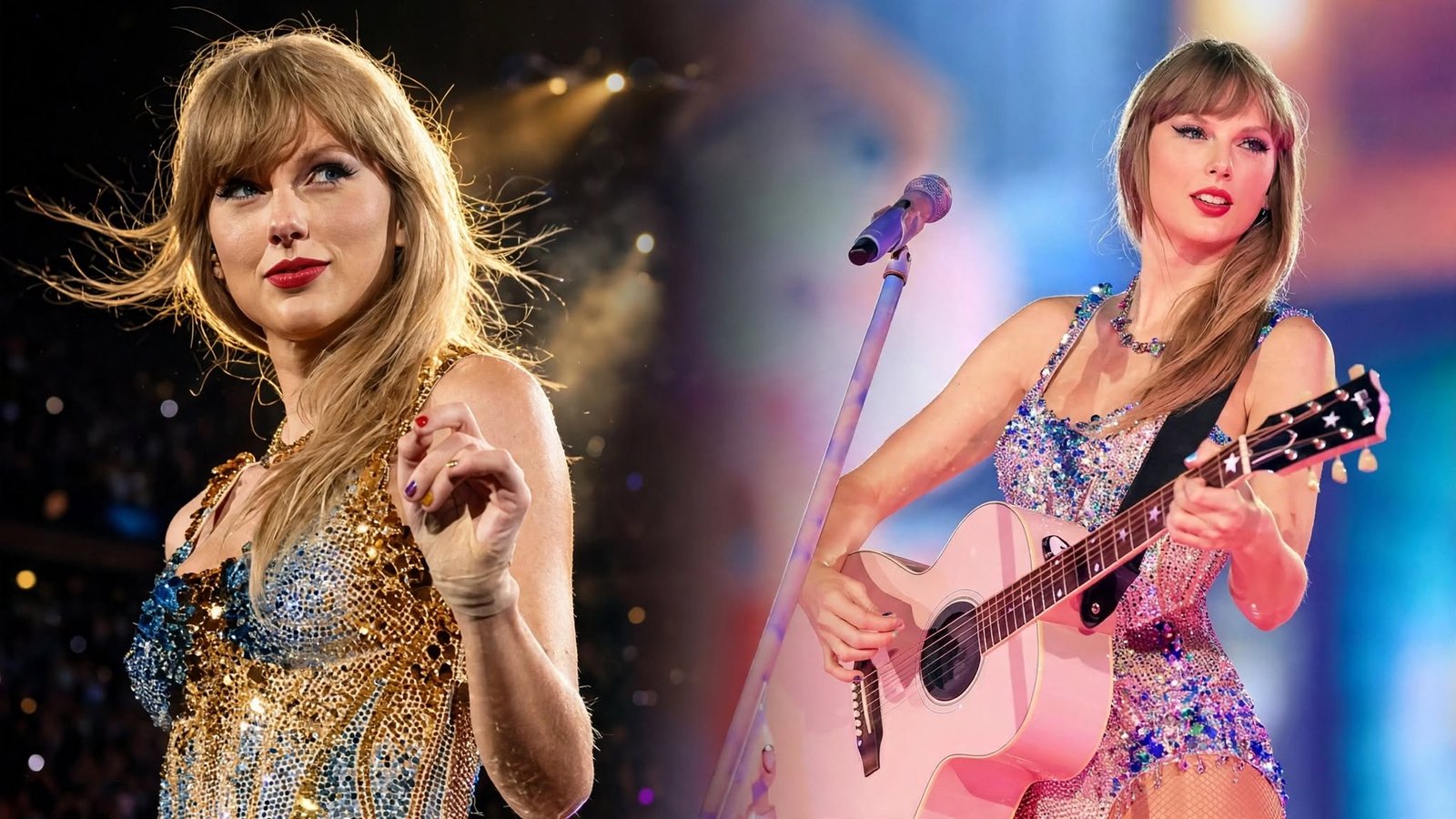
Taylor Swift is more than a globally successful singer-songwriter. She is a cultural phenomenon, a businesswoman, a record-breaking performer, and one of the most influential figures in modern entertainment. Through her songwriting, strategic career decisions, powerful connection with fans, and innovative approach to the music industry, she transformed herself from a teenage country singer into a billionaire music icon.
Her journey is remarkable because she built her fortune primarily through music, songwriting, touring, recorded albums, and ownership of valuable creative work. Rather than relying on a single hit song or a temporary moment of fame, Swift developed a long-lasting entertainment empire that continues to influence the music business.
What makes her story exceptional is not simply how much money she has earned, but how she has maintained creative control, adapted to an evolving industry, and turned her artistic identity into a powerful global brand.
Early Life and Childhood: The Beginning of a Musical Dream
Taylor Alison Swift was born on December 13, 1989, in West Reading, Pennsylvania, United States. She grew up with her parents, Scott and Andrea Swift, and her younger brother, Austin. Her father worked in finance, while her mother had previously worked in marketing.
Swift developed an interest in music at a young age. She was particularly attracted to country music and admired artists whose songs told personal stories about love, relationships, heartbreak, and everyday experiences. Music quickly became more than a hobby; it became the foundation of her ambitions.
During her childhood, Swift participated in local performances and developed her singing and songwriting abilities. She also became interested in musical storytelling, an ability that would eventually distinguish her from many other mainstream performers. Instead of simply performing songs written by other people, she wanted to express her own experiences through lyrics.
Her family recognized her determination and supported her growing interest in pursuing a professional music career. As her ambitions became more serious, the family eventually relocated to Hendersonville, Tennessee, near Nashville, the center of the American country music industry.
That move represented a major turning point. Nashville provided opportunities to meet music professionals, develop songwriting skills, and understand the commercial side of the recording industry.
The Beginning of Her Music Career
Taylor Swift began pursuing professional opportunities while she was still very young. She performed at local events, attended songwriting sessions, and worked to establish relationships within Nashville’s competitive music industry.
One of her early career milestones came when she signed a songwriting deal with Sony/ATV Music Publishing as a teenager. This gave her an opportunity to develop professionally while continuing to refine her songwriting abilities.
Swift eventually attracted the attention of music executive Scott Borchetta, who was establishing an independent record label called Big Machine Records. She became one of the label’s earliest artists, signing a recording contract in 2005.
Her debut single, “Tim McGraw,” was released in 2006 and introduced her to country music audiences. The song demonstrated her ability to combine memorable melodies with emotionally relatable lyrics.
Later that year, she released her self-titled debut album, Taylor Swift. The record performed strongly in the country music market and established her as a promising young songwriter and performer.
Her early success was important because it gave her something more valuable than immediate popularity: a recognizable artistic identity. Listeners began connecting with her songs because they sounded personal, sincere, and relatable.
Fearless: The Album That Made Her a Superstar
Taylor Swift’s second studio album, Fearless, released in 2008, marked a major breakthrough in her career. The album expanded her audience beyond traditional country music listeners and introduced her to a much larger international fan base.
Songs such as “Love Story” and “You Belong with Me” became major hits, demonstrating her ability to create music that connected with listeners across different age groups and musical preferences.
The album’s success also brought significant recognition from the music industry. At the 2010 Grammy Awards, Fearless won Album of the Year, making Swift the youngest artist at that time to receive the award.
This achievement changed the direction of her career. She was no longer simply a promising country singer; she had become an established mainstream recording artist.
Commercially, Fearless helped establish the foundation of her future wealth through album sales, touring, publishing royalties, and growing international recognition.
Transition From Country Music to Global Pop Stardom
As her career progressed, Swift began experimenting with different musical styles. Her 2010 album Speak Now highlighted her songwriting development, while Red, released in 2012, introduced a broader mixture of country, pop, and electronic influences.
The album included popular songs such as “We Are Never Ever Getting Back Together” and “I Knew You Were Trouble.” These releases demonstrated that Swift could evolve musically without abandoning the personal storytelling that had originally attracted her audience.
Her biggest stylistic transformation came with 1989 in 2014. The album represented her official move into mainstream pop music and became one of the defining releases of her career.
Featuring songs such as “Shake It Off,” “Blank Space,” and “Style,” 1989 achieved enormous commercial success and established Swift as a major international pop superstar.
The album also won the Grammy Award for Album of the Year in 2016, making her the first woman to win that category twice as a lead artist.
This period showed that Swift understood the importance of reinvention. Instead of repeating the same musical formula, she continued exploring new sounds while preserving her distinctive songwriting approach.
The Re-Recording Strategy: Taking Control of Her Music
One of the most important chapters in Taylor Swift’s biography involves her fight to regain ownership of her original music. This decision became a defining moment not only in her career but also in the wider conversation about artists’ rights and the economics of the recording industry.
In 2019, the master recordings of her first six albums became part of a business transaction involving Big Machine Records and music executive Scooter Braun. Swift publicly expressed disappointment that she had not been given the opportunity to purchase those recordings under the circumstances she wanted.
For an artist, owning master recordings can be financially significant because it provides greater control over how original recordings are licensed, distributed, and monetized. Swift decided to respond by creating new recordings of her earlier albums, allowing her to develop alternative versions that she could own and commercially exploit.
She introduced these releases under the title “Taylor’s Version.” The strategy began with Fearless (Taylor’s Version) and Red (Taylor’s Version) in 2021, followed by Speak Now (Taylor’s Version) and 1989 (Taylor’s Version) in 2023.
The re-recordings brought renewed attention to songs that had already been successful years earlier. They also encouraged fans to support the new versions, creating additional commercial opportunities while strengthening Swift’s position in negotiations over her artistic property.
The story reached a major conclusion on May 30, 2025, when Swift announced that she had purchased the master recordings of her first six albums from Shamrock Capital. This gave her ownership of the original recordings that had been at the center of the dispute.
The acquisition was particularly meaningful because it reunited her with the work that had shaped the first phase of her career. It also demonstrated that ownership of creative assets can become just as important as popularity and commercial success in the modern music industry.
The Eras Tour: The Business Achievement That Changed Everything
The Eras Tour was arguably the most significant financial milestone in Taylor Swift’s career. Beginning in March 2023 and concluding in December 2024, the worldwide tour celebrated the different musical periods that had defined her journey, from her early country recordings to her contemporary pop albums.
Rather than focusing on one particular album, Swift designed the production as a journey through her musical history. Each section represented a different album era, with distinctive costumes, stage designs, choreography, and visual themes.
The concerts became major cultural events. Fans traveled across countries to attend performances, exchanged handmade friendship bracelets, recreated her outfits, and shared concert experiences across social media platforms.
The tour ultimately included 149 performances across five continents. Reported ticket revenue exceeded $2 billion, making it the highest-grossing concert tour in history at the time of its completion.
However, its financial influence extended far beyond ticket sales. Merchandise, travel demand, hotel bookings, restaurants, transportation, and local tourism all benefited from the enormous audiences attending the concerts.
The tour also generated another major revenue opportunity through Taylor Swift: The Eras Tour, a concert film released in cinemas in October 2023. By taking an unusually direct approach to theatrical distribution, Swift created a new commercial pathway for a concert production.
The film became a major box-office success, demonstrating that an artist’s live performances could generate substantial income even after the concert itself had ended.
The Eras Tour illustrated how Swift had developed a business model that connected music, live entertainment, merchandise, film distribution, and fan engagement into one interconnected commercial operation.
How Taylor Swift Built Her Billion-Dollar Empire
Taylor Swift’s financial success did not come from a single source. Her wealth developed through several connected businesses, each supporting the commercial value of her music and public image.
By 2026, Forbes estimates placed her net worth at approximately $2 billion, although celebrity wealth figures are estimates rather than audited public financial statements. Importantly, this fortune is associated primarily with her music career and related assets rather than a large collection of unrelated business investments.
Music Sales and Streaming Royalties
Music remains the foundation of Swift’s financial empire. Her albums have sold millions of copies worldwide, while digital downloads and streaming platforms have introduced her songs to enormous international audiences.
Every successful release creates several potential income streams, including recording royalties, songwriting royalties, publishing income, and commercial licensing opportunities. The exact amount an artist receives depends on contractual arrangements, ownership rights, distribution agreements, and the platform involved.
Swift’s extensive catalog gives her an advantage because her music continues generating revenue long after its initial release. A song released more than a decade ago can become commercially valuable again when it trends on social media, appears in a film, or attracts a new generation of listeners.
Concert Tours and Live Performances
Live performances have been another major source of income. Touring allows Swift to generate revenue through ticket sales, premium experiences, merchandise, and other event-related commercial activities.
The Eras Tour demonstrated the extraordinary financial potential of this business. Its reported ticket revenue of more than $2 billion was unprecedented for a concert tour.
However, gross ticket revenue should not be confused with personal profit. Large productions involve significant expenses, including venue rentals, stage construction, transportation, staff salaries, security, insurance, and production equipment.
Even after accounting for these costs, the tour represented a landmark commercial achievement and significantly strengthened Swift’s financial position.
Merchandise and Brand Development
Swift has developed a recognizable commercial identity that extends beyond her music. Album-related merchandise, clothing, collectible products, posters, special-edition releases, and tour souvenirs give fans additional ways to participate in her musical world.
Her merchandise strategy is closely connected to the themes and visual identities of individual albums. Each new musical era creates opportunities for fresh designs and collectible products.
This approach makes merchandise feel like an extension of the artistic experience rather than a completely separate business. It also creates additional revenue opportunities around album releases and live performances.
Film and Entertainment Projects
Swift has increasingly explored opportunities beyond traditional music distribution. Her concert films have demonstrated that filmed performances can become commercially successful entertainment products in their own right.
The Eras Tour film was particularly important because it allowed fans who could not attend the concerts to experience the production through cinemas. Its subsequent streaming distribution extended its commercial life.
These projects also show how artists with established audiences can develop alternative distribution strategies rather than relying entirely on conventional entertainment companies.
Real Estate Investments
Real estate is another component of Swift’s wealth. Over the years, she has acquired properties in several locations, including Nashville, New York, Rhode Island, and California.
Her portfolio has included luxury apartments, historic homes, and substantial private residences. These properties represent valuable personal assets, although their estimated market values can change over time.
Real estate also provides a degree of financial diversification. Unlike music royalties, which depend on the performance and licensing of creative works, property values are influenced by location, demand, market conditions, and long-term investment trends.
Brand Partnerships and Endorsements
Swift has also worked with major commercial brands throughout her career. Partnerships and promotional campaigns have helped expand her visibility beyond the music industry.
Her commercial appeal comes partly from her established public identity and her ability to attract attention across different demographic groups. Companies benefit from the exposure associated with her name, while she can earn additional income through carefully selected partnerships.
Nevertheless, endorsements are not the central foundation of her billionaire status. Her songwriting, recorded music, concert performances, and valuable music catalog have played a much more important role in building her fortune.
Taylor Swift’s Net Worth in 2026
Taylor Swift’s estimated net worth reached approximately $2 billion in 2026, placing her among the wealthiest musicians in the world and making her the richest female musician according to Forbes estimates.
Her journey to billionaire status is particularly unusual because her wealth comes predominantly from her own creative work. Many entertainment billionaires build their fortunes through investments, technology companies, fashion businesses, or large corporate holdings. Swift, by comparison, accumulated much of her wealth through songwriting, album sales, touring, music rights, and entertainment projects.
The Eras Tour was a major contributor to this financial achievement, but the value of her music catalog has also become increasingly important. Owning her original recordings gives her greater control over an asset that can continue generating revenue for decades.
Her financial position also reflects the commercial power of a loyal international audience. Millions of fans purchase her albums, attend concerts, stream her songs, collect merchandise, and follow her creative projects. This sustained demand makes her brand commercially valuable across several entertainment markets.
It is important to understand that net worth is not the same as cash in a bank account. The figure includes estimated asset values, intellectual property, and accumulated earnings, while also accounting for financial obligations and relevant expenses.
The Life of a Showgirl and Her Continued Musical Evolution
Swift’s musical journey continued with the release of The Life of a Showgirl in October 2025. The album represented another chapter in her evolving artistic identity and demonstrated that she remained interested in exploring new creative directions even after achieving extraordinary commercial success.
Her ability to generate excitement around new releases is one of the strongest elements of her career. Rather than depending entirely on her established catalog, she continues introducing new material that attracts listeners and creates fresh opportunities for performances, merchandise, and streaming revenue.
Her musical development has also allowed her to maintain relevance across different generations. Fans who discovered her through early country songs can follow her evolution into pop, while younger listeners can encounter her through contemporary releases and social media.
This balance between nostalgia and reinvention has helped make her career unusually durable.
Awards, Records, and Major Career Achievements
Taylor Swift’s commercial success is supported by an impressive collection of industry awards and historical achievements. Her recognition extends across country music, mainstream pop, songwriting, live entertainment, and popular culture.
Among her most significant achievements are:
-
14 Grammy Awards: Recognition for her songwriting, recordings, and artistic contributions.
-
Four Album of the Year Grammy Awards: She became the first artist to win this category four times.
-
Multiple Billboard chart records: Her albums and singles have repeatedly reached the highest positions on major music charts.
-
Historic Eras Tour: Her worldwide tour generated more than $2 billion in reported ticket sales.
-
Billionaire status: She became a billionaire primarily through music and related creative assets.
-
Ownership of her original masters: Her 2025 acquisition of the first six albums’ master recordings marked a major personal and professional achievement.
These accomplishments demonstrate that Swift’s influence extends beyond commercial popularity. Her work has received sustained recognition from music professionals while also maintaining an unusually strong relationship with audiences.
Taylor Swift’s Business Strategy: What Makes Her Different?
One reason Swift’s career stands out is her understanding of the relationship between creativity and business. She has consistently treated her music as an artistic expression while also recognizing that the rights associated with that music have long-term financial value.
Her decision to re-record earlier albums demonstrated how an artist could respond to a difficult ownership situation by creating new commercial opportunities. It was not simply a musical experiment; it was also a carefully considered approach to intellectual property.
Another important factor is her relationship with fans. Swift has developed a communication style that makes listeners feel connected to her creative journey. Album announcements, hidden references, lyrical details, special-edition releases, and personal storytelling encourage audiences to engage more deeply with her work.
She also understands the importance of timing. Her album releases, promotional activities, tours, and entertainment projects often create overlapping periods of public interest, allowing one successful project to support another.
Her career provides an example of how an entertainer can develop a recognizable brand without abandoning the artistic qualities that originally attracted an audience.
Philanthropy and Contributions to Society
Although Taylor Swift is widely recognized for her wealth, she has also contributed to charitable causes and educational initiatives throughout her career.
Her philanthropic activities have included donations supporting education, disaster relief, food assistance, and individuals facing financial difficulties. She has also supported music education and initiatives that help young people access creative opportunities.
One notable contribution was her support for the Taylor Swift Education Center at the Country Music Hall of Fame in Nashville. The facility provides educational opportunities for children and visitors interested in music and creative learning.
During her touring career, Swift has also been associated with donations to food banks and charitable organizations in cities where she performed. These contributions attracted attention because of the scale of her international tours and the communities they reached.
Her charitable activities are another part of her public legacy, although the full financial details of all her contributions are not publicly available.
Personal Life and Its Influence on Her Music
Taylor Swift has generally used songwriting as a way to express personal experiences, emotions, memories, and observations about relationships. This approach has helped create a strong connection between her personal identity and her artistic work.
Many of her songs explore love, disappointment, growing up, self-discovery, friendship, and the pressures of public attention. These themes are familiar to listeners, which helps explain why her music has connected with audiences across different countries and age groups.
Her public relationships and personal experiences have sometimes attracted considerable media attention. However, her artistic identity is much broader than celebrity news or relationship headlines.
Swift has also become increasingly interested in protecting her privacy and maintaining control over how much of her personal life becomes part of her public image.
Her relationship with professional American football player Travis Kelce has attracted significant media interest, introducing her to additional audiences outside the traditional music industry. Nevertheless, her professional accomplishments remain the central foundation of her public reputation.
Taylor Swift’s Global Influence on the Music Industry
Taylor Swift’s influence reaches beyond record sales and concert attendance. Her career has contributed to important discussions about artist compensation, music ownership, streaming economics, concert ticket distribution, and the relationship between musicians and record labels.
Her public dispute over her original master recordings encouraged greater attention to the importance of recording contracts. Many emerging artists and established performers became more interested in understanding who owns their recordings and how royalty arrangements work.
Her re-recording strategy also demonstrated that older music can regain commercial relevance when an artist introduces new versions with a compelling story behind them.
The Eras Tour created another important example of the economic influence of live music. Its enormous audiences generated activity across hotels, restaurants, transportation, tourism, and local businesses.
Swift’s influence is also visible in digital culture. Fans regularly analyze lyrics, identify references between albums, create theories about upcoming projects, and share interpretations across social media platforms.
This level of participation transforms music consumption into a broader cultural experience. Her audience does not simply listen to songs; it actively engages with the stories, themes, and creative decisions surrounding them.
What Is the Secret Behind Taylor Swift’s Success?
There is no single explanation for Taylor Swift’s extraordinary career. Her achievements reflect a combination of songwriting ability, professional discipline, creative development, commercial awareness, and an unusually strong connection with her audience.
One of her greatest strengths is consistency. She has continued writing and releasing music while adapting to major changes in the entertainment industry. Her willingness to explore different musical styles has allowed her to reach new listeners without losing the qualities that made her successful initially.
Another important factor is her understanding of ownership. By recognizing the long-term value of her recordings and taking action to regain control of her original masters, she demonstrated that financial success involves more than earning money from a product. It also involves controlling the rights and assets that generate future income.
Her ability to build anticipation around albums and performances has further strengthened her business model. Each new project creates opportunities for fan engagement, media attention, and additional commercial activity.
Most importantly, she has built her career around a recognizable creative identity. Her songwriting remains the central element connecting her albums, tours, business decisions, and public image.
Conclusion: The Lasting Legacy of Taylor Swift
Taylor Swift’s journey from a young songwriter in Pennsylvania to a billionaire global music icon is one of the most remarkable success stories in modern entertainment. Her career demonstrates how artistic talent, determination, strategic decisions, and a strong relationship with audiences can create an extraordinary business empire.
From her early country music recordings and the breakthrough success of Fearless to her transformation into a global pop superstar, Swift has continually expanded her artistic and commercial reach. The Eras Tour established new standards for live entertainment, while her re-recording project brought international attention to music ownership and artists’ rights.
By 2026, her estimated $2 billion fortune reflects years of successful albums, songwriting royalties, worldwide performances, valuable intellectual property, and entertainment projects.
Yet her greatest achievement may extend beyond her financial position. She has demonstrated that musicians can build successful careers while advocating for greater control over their creative work.
Taylor Swift’s story is ultimately about more than fame or money. It is about turning personal creativity into lasting influence, transforming professional challenges into new opportunities, and building an empire around something she has consistently valued: the power of music and storytelling.

1 Comment
Pingback: Beyond the Biography: Inside Taylor Swift’s Next Billion-Dollar Business Moves