



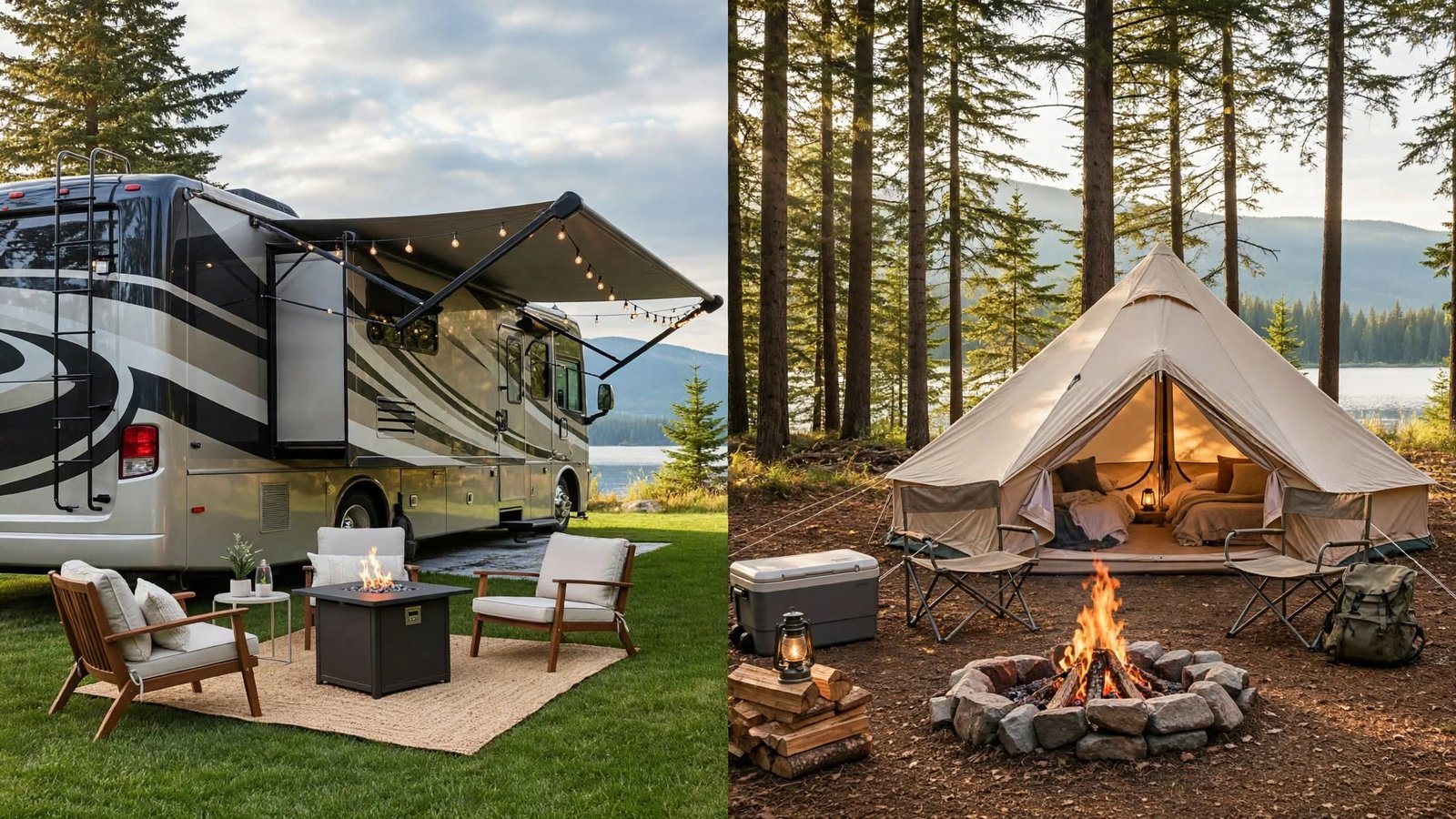
Yes, tent camping is worth the effort in Canada for travelers who enjoy nature, outdoor adventures, and flexible travel experiences without the expense of renting a recreational vehicle (RV). However, planning a camping holiday without an RV requires more preparation, particularly when it comes to transportation, camping equipment, weather protection, food storage, campsite reservations, and access to essential facilities.
Canada offers an incredible range of camping experiences, from lakeside campsites and forest retreats to mountain landscapes and coastal parks. Travelers can enjoy these destinations without an RV by using tents, sleeping bags, rental cars, public transportation where available, or organized camping tours.
The challenge is that a successful camping holiday depends on how well these arrangements fit together. Without a self-contained vehicle, even simple tasks such as carrying supplies, preparing meals, staying warm overnight, and moving between campsites can require additional time and effort.
For travelers who plan carefully, tent camping can provide an affordable and rewarding way to explore Canada’s natural beauty. Understanding the potential difficulties before departure helps you decide whether this style of holiday suits your budget, travel preferences, and expectations.
Understanding the Challenges of Camping Without RV Rentals in Canada
Camping without an RV means relying on traditional tents, cabins, established campgrounds, or other forms of outdoor accommodation instead of traveling in a vehicle equipped with sleeping and living facilities. Although this approach can reduce rental expenses, it introduces several practical considerations that travelers must address before setting off.
One of the biggest challenges is coordinating transportation, accommodation, food, and equipment across a potentially large travel area. Canada’s vast geography means that popular national parks, remote lakes, mountain trails, and coastal destinations may be separated by considerable driving distances, while public transportation can be limited outside major cities.
Travelers also need to consider the facilities available at each campsite. Some campgrounds provide drinking water, washrooms, showers, picnic tables, and cooking areas, while more basic sites may offer little beyond a designated place to pitch a tent. Choosing a campsite that matches your experience level and comfort requirements can make the difference between a relaxing holiday and a frustrating one.
Transportation Can Make Camping Trips More Complicated
Transportation is often one of the first obstacles when planning a camping holiday without an RV. While an RV combines transportation and accommodation, tent campers must arrange separate ways to reach their destination and carry their equipment. A personal vehicle or rental car can simplify the process, but travelers who rely on buses, trains, bicycles, or shuttle services may need to plan their routes much more carefully.
This challenge becomes especially noticeable when visiting remote camping areas. A train or bus might take you to a nearby town, but the final journey to a campground could require a taxi, a seasonal shuttle, or a long walk with heavy bags. Services may operate on limited schedules, so arriving late or missing a connection can create unexpected accommodation and transportation problems.
The best approach is to choose destinations that match your available transport options. If you are traveling without a car, look for campgrounds accessible by public transit, park shuttles, organized tours, or manageable walking routes. If you rent a standard car instead of an RV, confirm that the vehicle can accommodate your luggage, tent, sleeping equipment, and other supplies before booking.
Managing Camping Equipment Without an RV
Packing is another significant challenge because tent campers must bring the equipment needed to sleep comfortably, cook meals, stay dry, and manage changing temperatures. Unlike RV travelers, who may have built-in beds, storage compartments, kitchen facilities, and heating systems, tent campers depend on portable equipment that must be selected, packed, transported, and assembled.
A typical camping setup includes a suitable tent, sleeping bags, sleeping pads, weather-appropriate clothing, lighting, cooking equipment, food containers, and basic first-aid supplies. The exact requirements depend on the destination, season, length of stay, and available campground facilities. Packing too little can leave you uncomfortable or unprepared, while bringing too much can make transportation difficult and increase baggage costs.
Renting equipment at your destination can be a useful alternative, particularly for international visitors or people who camp only occasionally. However, equipment rental services are not available everywhere, and advance reservations may be necessary during busy travel periods. Before leaving home, confirm what is available locally and identify which items you must bring yourself.
A practical strategy is to build a lightweight camping setup around essential needs rather than packing every item that might prove useful. Choose equipment that is easy to carry, simple to assemble, and appropriate for the expected weather, while checking whether your campground already provides picnic tables, fire rings, drinking water, or cooking facilities.
Unpredictable Canadian Weather Requires Careful Preparation
Canada’s weather can change considerably depending on the region, elevation, and season, making weather preparation especially important for tent campers. Even during summer, mountain areas can experience cold nights, rain, strong winds, and sudden temperature changes, while some regions can become hot and humid during the day.
Without an RV’s solid walls and enclosed sleeping area, campers are more exposed to these conditions. A poorly pitched tent, inadequate sleeping bag, or unsuitable sleeping pad can turn a cold or rainy night into an uncomfortable experience. Wet clothing and damp bedding can also make it harder to stay warm, particularly during multi-day trips.
Preparation begins with researching the typical conditions for your destination and checking the forecast shortly before departure. Use a tent designed for the expected conditions, pack waterproof layers, carry warm clothing even when daytime temperatures seem comfortable, and bring a sleeping bag rated for temperatures below the likely nighttime low. A waterproof groundsheet or suitable tent footprint can also help protect your sleeping area from moisture.
Flexibility matters just as much as equipment. If severe weather is forecast, consider changing your itinerary, shortening a remote camping stay, or reserving a cabin or other indoor accommodation as a backup. Being willing to adjust your plans helps keep a camping holiday enjoyable without compromising comfort or safety.
Finding and Booking the Right Campsite
Securing a suitable campsite can be challenging, especially when visiting popular Canadian destinations during the summer holiday season. Well-known national parks, provincial parks, lakeside campgrounds, and mountain destinations often attract travelers who book well in advance, leaving fewer options for people who prefer spontaneous travel.
Tent campers without an RV may also need to pay closer attention to campsite categories. Some campgrounds have designated tent sites, while others offer mixed-use sites, walk-in pitches, or locations where vehicles cannot park directly beside the tent. Each option has different implications for transporting equipment, accessing washrooms, and unloading supplies.
Before making a reservation, check whether the campground allows tents at your selected site and whether the fee includes parking, showers, drinking water, or other amenities. It is also worth checking the distance between the parking area and the actual camping pitch, especially if you have children, bulky equipment, or limited mobility.
Researching several nearby campgrounds can help you avoid relying on a single popular location. If your preferred site is unavailable, an alternative campground outside the busiest area may offer a more peaceful experience and easier access to surrounding attractions. Reserving early for peak travel dates and keeping your itinerary flexible are two of the most effective ways to reduce booking stress.
Food Storage and Meal Preparation Without an RV Kitchen
Preparing meals without an RV kitchen requires a little more organization, but it does not have to be difficult. Tent campers generally rely on portable stoves, designated cooking areas, coolers, and simple meals that require minimal equipment. The main challenge is ensuring that food stays fresh, cooking remains manageable, and supplies can be carried safely between transportation points and the campsite.
Planning meals before departure helps reduce unnecessary purchases and prevents you from carrying more food than you need. Breakfasts such as oatmeal, bread, and fruit, along with straightforward lunches and one-pot dinners, can simplify preparation and reduce washing up. Travelers should also account for drinking water, snacks, cooking fuel, utensils, and appropriate containers when estimating their supplies.
Food storage is particularly important in areas where bears and other wildlife may be present. Campgrounds can have specific rules about food lockers, bear-resistant containers, cooking locations, and the disposal of food waste. Follow local instructions carefully, never leave food or scented items unattended, and do not assume that keeping supplies inside a tent is safe.
Where possible, choose established campgrounds with suitable food-storage facilities and nearby access to groceries. Buying supplies before entering remote areas can save time and money, while keeping meals simple makes it easier to enjoy the surroundings instead of spending much of the holiday preparing food.
Washrooms, Showers, and Everyday Comfort
Access to washrooms and showers is another consideration when deciding whether tent camping is worth the effort. Many developed campgrounds in Canada provide basic restroom facilities, and some offer hot showers, drinking-water stations, laundry services, and dishwashing areas. More remote or primitive campsites may have limited facilities, requiring travelers to be more self-sufficient.
These differences can affect the experience considerably, particularly for families with young children, older travelers, or anyone who prefers a higher level of comfort. A campground with convenient washrooms and accessible water facilities may be worth paying more for because it reduces the daily effort involved in staying clean, cooking, and managing personal needs.
Check the campground’s facilities before booking rather than assuming every site offers the same amenities. Confirm whether showers require coins or additional fees, whether drinking water is available throughout the season, and whether washrooms remain open during your intended visit. If comfort is a priority, a serviced campground or a combination of tent camping and occasional cabin stays may provide a better balance between adventure and convenience.
Budgeting for a Camping Holiday Without an RV
Tent camping is often more affordable than renting an RV, but the total savings depend on how the trip is organized. Travelers avoid RV rental fees and may reduce fuel expenses, but they still need to budget for campsite reservations, transportation, camping equipment, food, park admission, and occasional accommodation upgrades.
Equipment purchases can represent a significant upfront expense for first-time campers. A good tent, insulated sleeping pad, suitable sleeping bag, and reliable rain protection may cost more than expected, especially if you need gear for different weather conditions. Renting or borrowing equipment can lower these initial costs, while travelers who camp regularly may find that buying durable supplies becomes more economical over time.
Transportation costs also deserve careful attention. Renting a standard car may be cheaper than renting an RV, but insurance, fuel, parking, and additional rental charges can increase the final bill. On the other hand, choosing a campground close to public transportation or within walking distance of trails and local attractions may reduce the need for daily driving.
To create a realistic budget, estimate the full cost of the trip rather than comparing accommodation prices alone. Include equipment, campsite fees, meals, transport, park charges, and an emergency reserve for unexpected expenses. This makes it easier to determine whether tent camping genuinely suits your budget and prevents small costs from adding up during the holiday.
Is Tent Camping Suitable for Families and First-Time Campers?
Tent camping can be an excellent choice for families and beginners, provided the destination and facilities match their needs. It offers opportunities to explore nature, enjoy outdoor activities, spend time together, and introduce children to experiences such as hiking, wildlife observation, stargazing, and cooking outdoors. However, families may need to carry more equipment, manage changing weather, and plan meals and sleeping arrangements more carefully than travelers staying in an RV.
For a first camping trip, choosing a developed campground near a town or popular tourist area is generally more manageable than heading directly into a remote wilderness location. Facilities such as clean washrooms, potable water, marked trails, nearby shops, and accessible parking reduce the number of challenges beginners must handle at once.
Families should also consider how children will sleep, what activities are available nearby, and how quickly they can reach help if plans change. Packing familiar snacks, extra clothing, suitable bedding, and a few simple entertainment options can make the experience smoother. Keeping the first trip relatively short allows everyone to learn what works before committing to a longer outdoor holiday.
Experienced travelers may welcome the independence of tent camping, while beginners may prefer a campground that offers additional comfort and support. Neither approach is inherently better; the most suitable option depends on your expectations, preparation, and willingness to adapt.
Wildlife Safety and Responsible Camping
Canada’s natural landscapes are home to wildlife, including bears, moose, deer, and smaller animals that may visit campsites in search of food. Seeing wildlife can be one of the highlights of a camping holiday, but sharing these environments requires awareness and respect. Tent campers must take particular care because their sleeping arrangements do not provide the same physical barrier as a hard-sided vehicle.
Before arriving, learn about the wildlife risks specific to the region and follow the campground’s instructions. Store food, rubbish, toiletries, and other scented items as directed, keep a clean cooking area, and never approach or feed wild animals. When hiking, remain alert to your surroundings and understand the recommended response to encounters with local wildlife.
Responsible camping also means protecting the environment. Stay on marked trails, use designated camping areas, dispose of waste properly, and avoid damaging vegetation. Campfires should only be made where permitted, and any fire restrictions must be followed, particularly during dry periods when wildfire risk can increase.
These precautions are not reasons to avoid tent camping. Instead, they are part of enjoying Canada’s outdoors responsibly and ensuring that natural areas remain safe and accessible for future visitors.
How to Make Camping Without an RV Easier
The easiest way to reduce the challenges of camping without an RV is to plan around convenience rather than trying to manage every possible situation independently. Selecting a suitable destination, booking an appropriate campsite, packing only essential equipment, and organizing transportation in advance can eliminate many common problems before the trip begins.
Start by choosing one region instead of attempting to cover several distant destinations in a short period. Canada’s size can make ambitious itineraries tiring and expensive, particularly when you must pack and unpack equipment every day. Spending several nights at one well-located campground gives you more time to explore nearby attractions without repeatedly moving your belongings.
Next, prepare a realistic packing list and test your equipment before departure. Pitch your tent at home, check that all poles and pegs are present, and make sure you understand how to use your stove and lighting equipment safely. Testing your sleeping arrangements also helps identify missing items before you reach the campsite.
Finally, create a backup plan for transportation delays, bad weather, or unavailable facilities. Keep important reservations accessible, know where the nearest grocery store and medical services are located, and maintain enough flexibility to change your plans when necessary. Good preparation does not remove every inconvenience, but it makes unexpected situations easier to manage.
Tent Camping vs. RV Camping: Which Is Better for Canada?
Tent camping and RV camping both offer valuable ways to experience Canada’s landscapes, but they suit different travel styles. Tent camping generally involves lower accommodation and rental costs, encourages a closer connection with nature, and provides access to certain walk-in or tent-only campsites. It can also be more practical for travelers who want a simple outdoor experience and do not need extensive indoor facilities.
RV camping, by contrast, offers a more self-contained setup, with sleeping space, storage, and often a kitchen and bathroom. These features can make longer journeys, cold-weather travel, and family holidays more convenient, although RV rental fees, fuel consumption, campground requirements, and vehicle size may increase the overall cost and complexity.
The best choice depends on what matters most during your holiday. If affordability, outdoor immersion, and a flexible camping style are your priorities, tent camping may be the better option. If you value privacy, indoor comfort, easier meal preparation, and protection from difficult weather, an RV or a hybrid trip that includes cabins may be more suitable.
Travelers should also consider that an RV does not eliminate every planning challenge. Large vehicles can be difficult to maneuver on certain roads, parking and campsite availability may be limited, and operating an unfamiliar vehicle requires preparation. Comparing the practical advantages of both options is more useful than assuming one is always easier or cheaper.
Best Times to Plan a Tent Camping Holiday in Canada
The best time for tent camping depends on the region, your preferred activities, and your tolerance for temperature changes. Summer is a popular choice because many established campgrounds, hiking trails, seasonal services, and visitor facilities are operating. However, popular destinations can become crowded, and campsite reservations may need to be made well in advance.
Late spring and early autumn can provide quieter experiences in some areas, with fewer visitors and pleasant daytime conditions. Nevertheless, nights may be colder, seasonal facilities may close, and some mountain or northern destinations can experience rapidly changing weather. Travelers should research the specific campground’s operating dates and local conditions rather than relying on broad seasonal assumptions.
Winter tent camping is possible for experienced campers with appropriate equipment and preparation, but it presents additional challenges involving insulation, snow, daylight, and cold-weather safety. Beginners are generally better served by starting during a milder season at an established campground.
Regardless of the time of year, check weather forecasts, campsite rules, fire restrictions, and local advisories before departure. Choosing the right season for your destination and experience level can significantly improve both comfort and safety.
Final Verdict: Are Camping Holidays Without RV Rentals Worth It?
Camping holidays without RV rentals in Canada are worth the effort for travelers who enjoy outdoor experiences and are willing to prepare for transportation, equipment, weather, food storage, and campsite logistics. Tent camping can reduce accommodation costs, provide a closer connection with nature, and create opportunities to explore Canada’s forests, lakes, mountains, and national parks at your own pace.
However, it is not automatically the cheapest or easiest option for every traveler. Equipment expenses, car rentals, campsite reservations, and limited facilities can add complexity, while unpredictable weather and remote locations require careful planning. Understanding these trade-offs before booking helps you make a decision based on your actual needs rather than the appeal of an outdoor adventure alone.
For the best experience, begin with a manageable itinerary, choose a well-equipped campground, pack appropriate gear, and arrange transportation before departure. If you are new to camping, consider a short trip close to essential services before exploring more remote areas.
Ultimately, the effort is worthwhile when your travel plans match your comfort level, budget, and expectations. With thoughtful preparation and a flexible attitude, camping without an RV can be a memorable, rewarding, and practical way to discover the natural beauty of Canada.
