



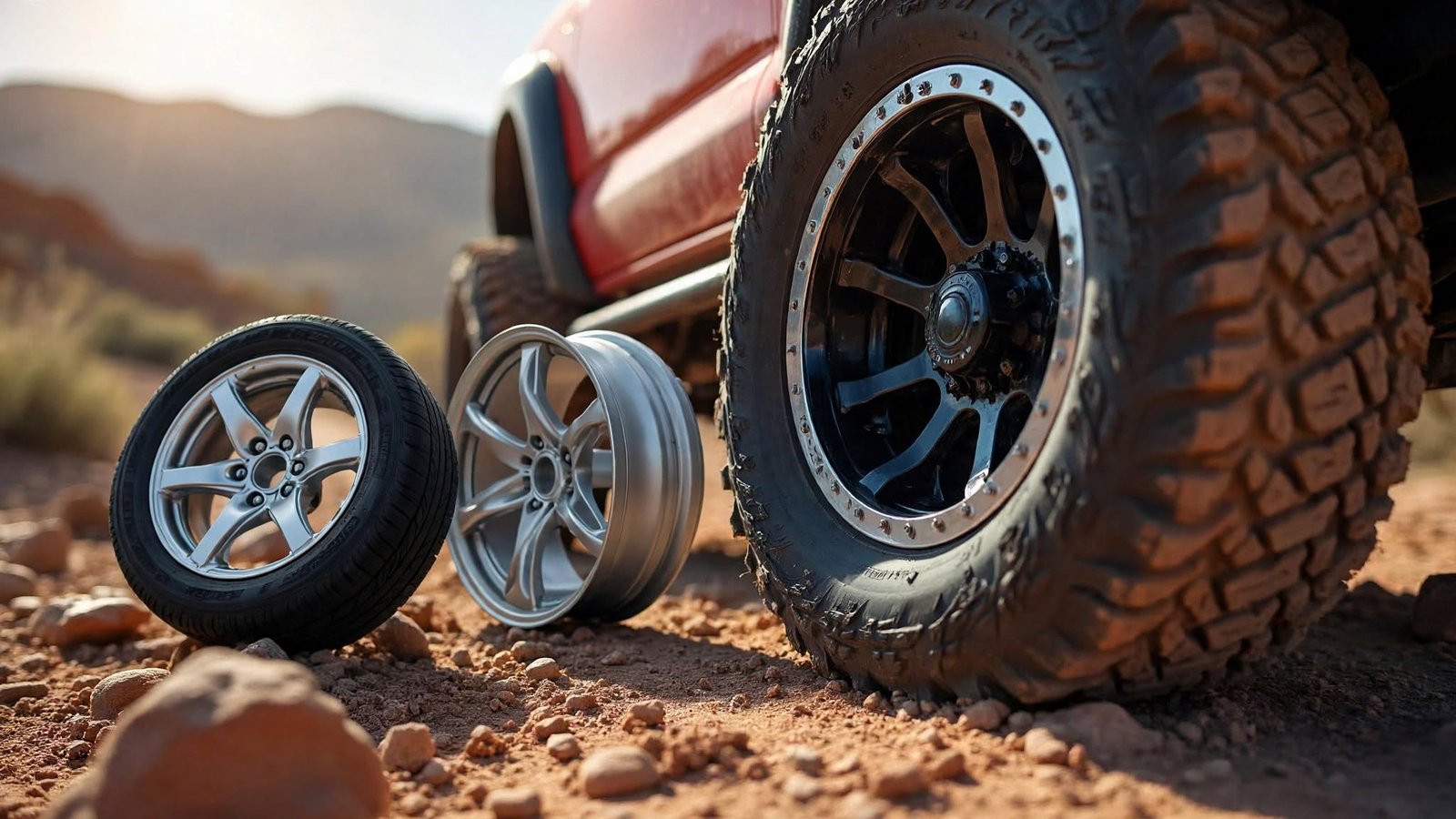
When people think about vehicle performance, they often focus on the engine, transmission, suspension, or brakes. However, wheels play an equally important role in determining how a vehicle feels, handles, and responds on the road.
Wheels are the connection between a vehicle and its tires, and they influence much more than appearance. The right wheels can contribute to handling, ride comfort, braking performance, fuel efficiency, and overall driving stability, while an unsuitable set can negatively affect the way a vehicle performs.
Why Wheels Matter for Vehicle Performance
Wheels matter because their size, weight, construction, and compatibility with the vehicle can directly influence how the car behaves. Every wheel is designed with specific dimensions and load requirements that need to work properly with the vehicle’s suspension, tires, and braking system.
A wheel that matches the vehicle correctly can help maintain predictable handling and a balanced ride. In contrast, wheels that are excessively heavy, incorrectly sized, or poorly fitted may place additional demands on suspension components and affect the vehicle’s response.
The relationship between wheels and tires is particularly important. Wheels determine which tire sizes can be installed, and tire dimensions influence traction, steering response, comfort, and road contact. For this reason, choosing wheels should never be based solely on appearance.
The Impact of Wheel Size on Handling
Wheel diameter is one of the most noticeable factors when selecting new wheels. Larger wheels are often associated with a sportier appearance and can accommodate lower-profile tires, which may provide a more direct steering feel.
Lower-profile tires generally have shorter sidewalls, meaning there is less tire flex during cornering. This can make steering responses feel sharper and may provide drivers with a greater sense of connection to the road.
However, increasing wheel size does not automatically improve performance. Larger wheels can require heavier wheel-and-tire combinations, while lower-profile tires typically provide less cushioning against potholes and rough surfaces.
A larger wheel package can therefore create a trade-off between handling characteristics, comfort, durability, and weight. The ideal choice depends on the vehicle, driving conditions, tire specifications, and the driver’s priorities.
How Wheel Weight Influences Performance
Wheel weight is another important consideration that is sometimes overlooked. Wheels are part of a vehicle’s unsprung mass, which refers to components that are not fully supported by the suspension.
Reducing unnecessary wheel weight can make it easier for the suspension to control wheel movement. This can contribute to more responsive handling and improved contact between the tire and road surface, particularly when driving over uneven pavement.
Heavy wheels, on the other hand, can require more effort from the vehicle to accelerate, decelerate, and change direction. The effect may be especially noticeable when comparing substantially different wheel-and-tire combinations.
Choosing the lightest wheel is not always the best option, as strength, durability, and load capacity are equally important factors to consider, construction quality, and compatibility are also essential. A well-designed wheel needs to balance low weight with the strength required for real-world driving.
Wheels and Acceleration
Because wheels rotate, their weight can influence how quickly a vehicle responds to throttle input. A heavier wheel and tire combination can require more energy to accelerate than a lighter combination with otherwise similar characteristics.
The difference may not be dramatic in every vehicle, but changes in wheel and tire weight can affect the overall driving feel. Drivers may notice differences in throttle response, particularly when moving from a relatively lightweight factory setup to a significantly heavier aftermarket combination.
Wheel diameter can also affect the effective gearing of a vehicle when the overall tire diameter changes. A larger overall tire diameter can alter how far the vehicle travels with each wheel rotation, potentially changing acceleration characteristics and speedometer accuracy if the difference is significant.
For this reason, maintaining an appropriate overall tire diameter is an important part of selecting wheels and tires.
The Connection Between Wheels and Braking
Wheels also have an important relationship with braking performance. The wheel must provide enough clearance for the vehicle’s brake components, including calipers and rotors.
As braking systems become larger and more performance-oriented, wheel design becomes increasingly important. A wheel may have the correct diameter but still fail to provide adequate clearance because of its spoke design, barrel shape, or offset.
Wheel and tire weight can also influence the behavior of a vehicle during braking. A properly matched combination helps the braking and suspension systems operate as intended.
Before installing aftermarket wheels, it is therefore essential to confirm brake clearance and compatibility rather than relying on wheel diameter alone.
Wheels and Ride Comfort
Performance is not only about acceleration and cornering. A comfortable and controlled ride is also an important part of the driving experience, and wheel selection can influence it significantly.
Wheels paired with higher-profile tires generally allow more sidewall flex, which can help absorb smaller road imperfections before they reach the suspension and cabin. This can result in a softer and more comfortable ride on rough roads.
Lower-profile tires tend to provide less cushioning because their shorter sidewalls contain less air volume and have less flexibility. While this can contribute to sharper steering characteristics, it may also make bumps, potholes, and damaged pavement feel more pronounced.
Choosing the right wheel size therefore requires consideration of where and how the vehicle is driven. A setup that works well on smooth highways may not provide the same level of comfort on rough urban roads or uneven surfaces.
Wheel Fitment and Vehicle Safety
Correct wheel fitment is one of the most important aspects of choosing wheels. Fitment involves several measurements, including diameter, width, bolt pattern, center bore, and offset.
The bolt pattern must match the vehicle’s specifications so that the wheel can be securely mounted. The center bore helps ensure proper positioning, while offset determines how far the wheel sits inward or outward relative to the vehicle’s hub.
Incorrect offset can create clearance problems with suspension components, brake parts, or the vehicle’s bodywork. In some cases, it can also affect steering behavior and place additional stress on components.
Proper fitment is therefore essential for both performance and safety. Wheels should always be selected according to the vehicle manufacturer’s specifications or verified compatibility requirements.
How Wheels Affect Fuel Efficiency
Fuel efficiency can also be influenced by wheel and tire selection. One factor is weight, since heavier rotating components can require additional energy to accelerate.
Tire characteristics are equally important. Tire width, construction, tread design, and rolling resistance can all affect the amount of energy required to keep a vehicle moving.
A larger or wider wheel package may look appealing, but if it significantly increases the overall weight or changes the tire characteristics, fuel consumption may be affected.
For drivers who prioritize efficiency, a balanced wheel-and-tire combination can help maintain the vehicle’s intended operating characteristics without adding unnecessary weight.
Wheels and Tire Performance
Wheels and tires should be considered as a single system rather than completely separate components. The wheel determines the dimensions and type of tire that can be used, while the tire provides the actual contact with the road.
A high-quality wheel cannot compensate for an unsuitable tire, and a high-performance tire cannot perform properly if it is mounted on an incorrectly sized or poorly fitted wheel.
The combination affects traction, cornering, braking, steering response, and ride quality. This is why changing wheels should always involve checking the recommended tire sizes and maintaining appropriate load and speed ratings.
When the wheel and tire combination is properly matched to the vehicle, drivers can achieve a balanced blend of performance, comfort, and reliability.
Choosing Wheels for Different Driving Needs
There is no single wheel setup that is ideal for every driver. Someone who primarily drives in a city may value comfort, durability, and resistance to pothole damage, while a driver who frequently travels on highways may prioritize stability and long-distance comfort.
Drivers interested in sporty handling may prefer a wheel and tire combination designed to provide more immediate steering response. However, this can involve compromises in ride comfort and protection against road impacts.
For everyday driving, maintaining a sensible balance between wheel size, weight, tire profile, and durability is often more practical than choosing wheels based purely on visual appeal.
Understanding personal driving conditions makes it easier to choose a setup that delivers useful performance without creating unnecessary compromises.
Maintaining Your Wheels for Long-Term Performance
Even well-designed wheels require regular care. Road debris, potholes, curbs, corrosion, and improper installation can all affect their condition over time.
Drivers should periodically inspect wheels for visible cracks, bends, unusual damage, or corrosion. Tires should also be checked for proper inflation and uneven wear, since tire condition has a direct impact on how the wheel-and-tire package performs.
Correct wheel installation is equally important. Lug nuts or wheel bolts should be tightened according to the vehicle or wheel manufacturer’s specified torque requirements.
Regular inspection can help identify potential problems before they become more serious and can contribute to consistent handling and safer driving.
Why Appearance Should Not Be the Only Consideration
Wheels can dramatically change the appearance of a vehicle, which is one reason aftermarket wheels are so popular. A different design, finish, or size can give a car a more distinctive appearance.
However, visual appeal should be considered alongside practical requirements. A wheel that looks impressive but has unsuitable dimensions, excessive weight, or poor compatibility may compromise the driving experience.
The best wheel choice is one that complements the vehicle while also meeting its technical requirements. Style can be an important factor, but it works best when combined with proper fitment and appropriate performance characteristics.
Final Thoughts on Why Wheels Matter
Wheels matter in every drive because they influence the relationship between the vehicle, tires, suspension, brakes, and road. Their size, weight, construction, and fitment can affect handling, comfort, braking, acceleration, efficiency, and overall driving behavior.
Choosing wheels is therefore more than a styling decision. It is a technical decision that can change how a vehicle feels and performs every time it is driven.
By considering wheel dimensions, weight, fitment, tire compatibility, driving conditions, and vehicle specifications, drivers can make more informed choices. The right combination can provide a balanced driving experience while preserving the safety, comfort, and performance characteristics the vehicle was designed to deliver.
