



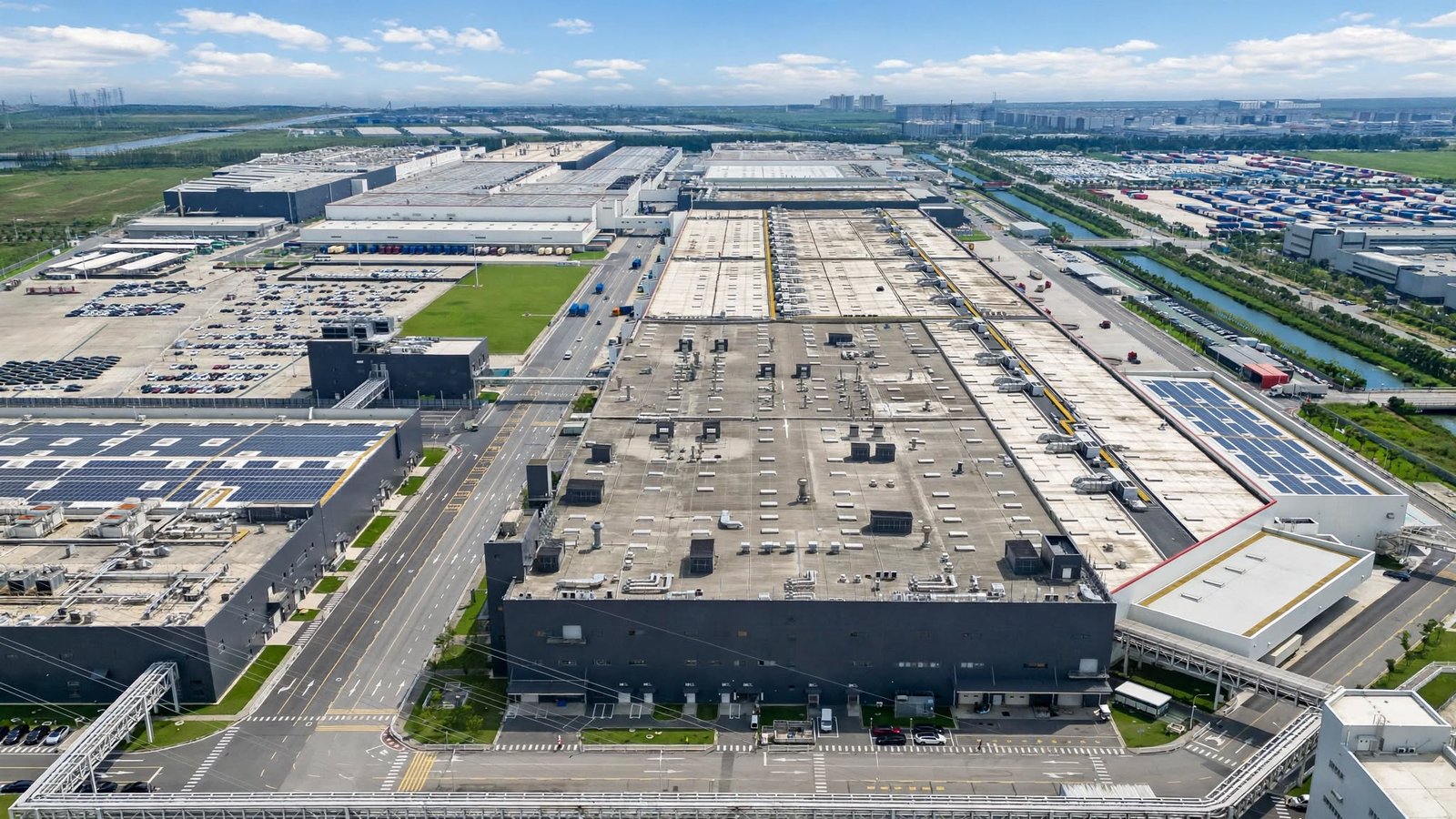
The Tesla China battery project represents an important development in the global transition toward cleaner and more reliable energy systems. As renewable energy continues to expand, large-scale battery storage is becoming increasingly important because solar and wind power do not generate electricity at a constant rate.
Tesla’s expansion of energy-storage manufacturing in China highlights the growing connection between advanced battery technology, renewable energy, and modern electricity grids. By producing large-scale storage systems closer to major energy markets and manufacturing centers, the project has the potential to support the wider adoption of renewable power.
What Is the Tesla China Battery Project?
The Tesla China battery project refers primarily to Tesla’s large-scale energy-storage manufacturing plans in Shanghai. The company has developed its Shanghai energy-storage facility around the production of its Megapack battery systems, which are designed for utility-scale applications rather than individual electric vehicles.
The Megapack is essentially a large, integrated battery-storage unit that can store electricity and release it when needed. This type of technology can help electricity providers manage fluctuations in supply and demand while making it easier to incorporate intermittent renewable sources into the power grid.
Tesla’s decision to expand battery production in China is also significant because China is one of the world’s largest markets for renewable energy and battery manufacturing. The combination of established supply chains, advanced manufacturing capabilities, and rapidly growing clean-energy demand makes the country an important location for large-scale energy-storage development.
Why Battery Storage Matters for Renewable Energy
Renewable energy sources such as solar and wind have a major advantage: they generate electricity without directly relying on fossil fuels. However, their output changes according to weather and natural conditions, creating a challenge for electricity systems that must maintain a reliable balance between supply and demand.
Solar panels, for example, generate the most electricity during daylight hours, while electricity demand can remain high after the sun goes down. Large-scale batteries can store some of the electricity produced when renewable generation is high and release it later when demand increases.
This makes energy storage a critical component of a modern clean-energy system. Instead of treating renewable generation and battery storage as separate technologies, utilities can combine them to create a more flexible electricity network.
Tesla Megapack and Large-Scale Energy Storage
Tesla’s Megapack is designed specifically for large-scale stationary energy storage. Unlike the batteries used in passenger vehicles, these systems are intended to operate as part of electricity infrastructure, where they can store substantial quantities of power and deliver it when required.
A utility can use battery storage for several purposes, including shifting electricity from periods of high renewable production to periods of higher demand. Batteries can also help stabilize the grid, manage short-term fluctuations, and provide additional flexibility when electricity generation changes rapidly.
The importance of these capabilities is increasing as countries add more solar and wind capacity. Greater renewable generation can reduce dependence on conventional power sources, but it also increases the need for technologies capable of responding quickly to changes in electricity production and consumption.
Why China Is Important to the Project
China plays a central role in the global battery industry and has developed extensive manufacturing capabilities for batteries, electric vehicles, and related energy technologies. This industrial ecosystem can provide advantages for companies seeking to manufacture energy-storage products at large scale.
Tesla’s presence in Shanghai also gives the company access to an established manufacturing environment and a significant regional market. The company’s existing operations in China provide additional infrastructure and experience that can support its broader energy-storage ambitions.
At the same time, China is rapidly expanding renewable-energy capacity. The country’s enormous solar and wind installations create significant potential demand for grid-scale storage, making domestic battery production strategically important for the development of future energy infrastructure.
Supporting the Growth of Solar and Wind Power
One of the biggest opportunities created by large-scale battery storage is the ability to make renewable electricity more flexible. When solar or wind farms produce more electricity than the grid immediately needs, storage systems can absorb some of that excess generation.
Later, when renewable production falls or electricity demand rises, stored energy can be released back into the grid. This process can help reduce the mismatch between when renewable electricity is generated and when consumers need it.
As a result, projects such as Tesla’s China battery facility could play a supporting role in the broader expansion of clean electricity. Battery storage does not generate renewable energy itself, but it can make renewable generation easier to integrate into electricity networks.
Economic and Industrial Significance
The Tesla China battery project also has significance beyond renewable energy. Large-scale battery manufacturing can stimulate demand for raw materials, components, engineering services, logistics, construction, and other parts of the industrial supply chain.
The growth of stationary energy storage could therefore become an important part of the broader clean-energy economy. As governments, utilities, and businesses invest in electricity infrastructure, demand for increasingly efficient and scalable storage technologies is expected to remain an important market trend.
Competition is also likely to influence the industry. Tesla operates in a market that includes established battery manufacturers, energy-storage companies, and rapidly growing Chinese competitors. This competition can encourage improvements in battery performance, manufacturing efficiency, software, and overall project economics.
Challenges Facing Large-Scale Battery Projects
Despite their potential benefits, large-scale battery projects face several challenges. Battery manufacturing requires substantial quantities of raw materials, and fluctuations in commodity prices can influence production costs and project economics.
There are also technical considerations surrounding battery lifespan, thermal management, safety, recycling, and long-term performance. Energy-storage facilities must be carefully designed and operated to ensure that they can provide reliable service throughout their intended operating life.
Another challenge is the economics of energy storage. A battery project must generate enough value through energy shifting, grid services, or other applications to justify its construction and operating costs. As technology improves and manufacturing scales up, however, the economics of battery storage can become increasingly attractive.
The Role of Battery Storage in the Global Energy Transition
The shift toward renewable energy is changing the way electricity systems are designed. Traditional grids were largely built around controllable power plants that could increase or decrease generation according to demand, whereas renewable resources introduce greater variability into the system.
Energy storage offers one way to address this challenge. Batteries can respond rapidly and can be deployed alongside renewable projects, near electricity-demand centers, or at strategic locations within transmission and distribution networks.
The Tesla China battery project therefore fits into a much larger global trend. Similar investments around the world demonstrate that energy storage is becoming an increasingly important part of the infrastructure required to support cleaner electricity systems.
What the Project Could Mean for the Future
Tesla’s expansion of battery manufacturing in China could contribute to a future in which large-scale storage becomes more common across electricity markets. Greater production capacity can help meet growing demand from utilities and renewable-energy developers while potentially improving manufacturing efficiency through economies of scale.
If battery costs continue to decline and performance continues to improve, energy-storage systems could become an increasingly standard component of new renewable-energy projects. This could make it easier for electricity systems to accommodate larger amounts of solar and wind generation without relying as heavily on fossil-fuel generation for flexibility.
The long-term impact will depend on many factors, including battery costs, electricity-market regulations, renewable-energy growth, grid investment, technological innovation, and competition among manufacturers. Nevertheless, the development of large-scale battery facilities represents an important step in building the infrastructure needed for a more flexible and lower-carbon energy system.
Conclusion
The Tesla China battery project demonstrates how energy storage is becoming closely connected with the future of renewable energy. Tesla’s Megapack systems are designed to store electricity at utility scale, helping electricity networks manage changing supply and demand while supporting greater integration of renewable power.
China’s position as a major battery-manufacturing center and one of the world’s largest renewable-energy markets makes the Shanghai project particularly significant. As the global demand for clean electricity continues to grow, large-scale battery manufacturing could become increasingly important to the transition away from conventional fossil-fuel-based power systems.
Ultimately, battery storage is not a replacement for renewable generation; it is an enabling technology that can help renewable electricity become more flexible, dependable, and useful. Tesla’s China battery project is therefore part of a much broader transformation in how energy is generated, stored, managed, and delivered around the world.
